题目内容

【题目】假定英语课上老师要求同桌之间交换修改作文,请你修改你同桌写的以下作文。

文中共有10处语言错误,每句中最多有两处。每处错误仅涉及一个单词的增加、删除或修改。

增加:在缺词处加一个漏字符号(),并在其下面写出该加的词。

删除:把多余的词用斜线(\)划掉。

修改:在错的词下划一横线,并在该词下面写出修改后的词。

注意:1. 每处错误及其修改均仅限一词;

2. 只允许修改10处,多者(从第11处起)不计分。

When I was little, Friday’s night was our family game night. After supper, we would play card games of all sort in the sitting room. As the kid, I loved to watch cartoons, but no matter how many times I asked to watching them, my parents would not to let me. They would say to us that playing card games would help my brain. Still I unwilling to play the game for them sometimes. I didn’t realize how right my parents are until I entered high school. The games my parents taught me where I was a child turned out to be very useful later in my life.

【答案】
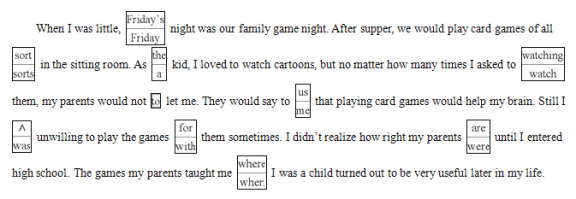
【解析】

这是一篇记叙文。文章讲述了作者的个人经历。小时候周五夜晚家长不允许作者看卡通片,而是让他和他们一块儿玩扑克牌游戏。长大后作者才明白,这些纸牌游戏在后来的生活中很有用。

第一处:考查名词。名词作定语,往往表明被修饰名词的时间、地点、类别、目的或用途、材料或来源等。名词所有格作定语则强调与被修饰的词的所有关系或表示逻辑上的谓语关系。此处表示星期五晚上,并不是所有关系,故把Friday’s改为Friday

第二处:考查名词单复数。all表示三者或三者以上,后用名词复数。故把sort改为sorts

第三处:考查冠词。这里表示作为一个孩子a用在表示泛指的单数名词前,the表示特指。故把the改为a

第四处:考查动词不定式。句意:无论我要求多少次要去看(卡通片)。用不定式表示目的,故把watching改为watch

第五处:考查情态动词。would后跟动词原形,故把to删除。

第六处:考查代词。句意:他们会对我说玩纸牌有助于大脑。偷换人称代词,是对说,前面提到的I,而不是we。故把us改为me

第七处:考查固定搭配。be unwilling to do sth.意为不愿意做某事,不情愿做某事。本文介绍的是过去的情况,故用过去时。所以在unwilling前加was

第八处:考查介词。play the games with sb.表示和某人一块玩游戏,故把for改为with

第九处:考查时态。根据上下文语境可知,此处要用一般过去时。故把are改为were

第十处:考查宾语从句的连接词。句意:当我是个孩子的时候我父母教给我的纸牌游戏在我日后的生活中证明非常有用。宾语从句连接词并不是表示地点状语,而是时间状语。故把where改为when

点晴:名词作定语与名词所有格作定语的区别。一般来说,名词作定语通常说明被修饰的词的性质,而名词所有格作定语则强调对被修饰的词的所有(权)关系或表示逻辑上的谓语关系。“the Party members(党员)中,名词定语表示members的性质;“the Party’s calls(党的号召)中,Party具有动作发出者的作用,calls虽然是名词,却具有动作的含义。a student teacher实习教师,a student’s teacher一位学生的老师。

练习册系列答案
相关题目

【题目】 If you were to travel anywhere in the globe— even to visit remote tribes (部落人) who have little contact with the larger world — would people be able to read your emotions from your facial expressions and would you be able to read theirs?

Charles Darwin argued in The Expression of the Emotions in Man and Animals that basic facial expressions are universal — suggesting that they are hard-wired within us as the product of natural selection. In other words, you would know if someone looked happy, or sad, etc., wherever you were in the world.

Since Darwin’s day, researchers have, indeed, traveled to faraway corners of the world to test the “universality theory”. Paul Ekman, professor of psychology at UC San Francisco and inspiration for the TV show Lie To Me, reported that even Fore tribesmen of New Guinea could look at photos of people from other cultures and identify what emotions were displaying.

Since Ekman’s work, other papers have tested the universality theory and occasionally challenged it. Rachael Jack of the University of Glasgow and co-authors used computer graphics to produce facial animations (动画). They then showed these animations to 15 Western Caucasian people far away from countryside and 15 East Asian from modern cities. They were asked to divide the facial expressions into groups.

This is what they found: They did get six groups from the Western Caucasians. But the results between emotion groups from the East Asians were complexed. They believe this suggests modern cultural factors have a greater influence than before.

1Charles Darwin held the view in his book that ________.

A. facial expressions are understood by all

B. facial expressions are easy to read

C. man and animals share the same emotions

D. some facial expressions can cause confusion

2According to the third paragraph, Fore tribesmen of New Guinea ________.

A. were confused by the photos

B. read the facial expressions in wrong ways

C. could recognize the basic facial expressions

D. had different facial expressions from city people

3Since Darwin, all papers have tested the “universality theory” and _______.

A. no authors have agreed

B. all authors have found the same results

C. some papers have been lost

D. some authors have expressed different ideas

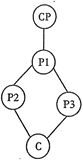
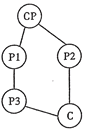
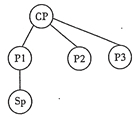
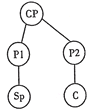
4Which of the following shows the structure of the passage?

CPcentral point P1-P3: Point 1-Point 3 SP sub-point C: Conclusion

A. B.

C. D.

【题目】Grandma Pugh sized up the baby like a pig at the farmers’ market. There was a pause and then she pronounced. “He’s got nice long legs.” She clapped her hands once in approval. But then she frowned and leaned forward. Everyone waited anxiously. The baby had opened his eyes and was staring up. “But those cross eyes won’t do,” she declared firmly, shaking her head in disappointment.

That had been Freddie Pilcher’s first meeting with Grandma Pugh. Since then, ten years had passed. Much to his grandmother’s satisfaction, she’d been proven right about the boy’s legs. He was a regular beanpole. Grandma Pugh had also been correct about his eyes. Freddie had been wearing glasses to correct his vision since he was two years old. His current pair was thick, and cheap-looking, but at least he could see.

Freddie not only had poor eyesight, but he was also clumsy. He wasn’t good at schoolwork either. But there was one thing that the boy was good at and it was all on account of the length of his legs. He could jump.

Freddie was the best jumper in school. Not only could he leap the furthest but also the highest. At breaktimes, he entertained the little ones by leaping over the school wall into Mrs Hobson’s garden and then rapidly jumping back. She had been up to see the head teacher several times because somebody had been crushing her vegetables.

It was badgers (獾), Freddie suggested, when quizzed by Miss Harpy — definitely badgers; no doubt about it. His dad had terrible problems with badgers. Only last week he had lost two rows of carrots. Freddie had woken one night and heard them tearing through the garden, a whole herd of them. They rooted up the lawn and dug up the vegetables. Terrible things, badgers. All the other children nodded their heads wisely. There was a moment’s pause in Class Three as everyone thought about the dreadful damage that badgers could do.

1What do we know about Grandma Pugh?

A. She was present at the birth of baby Freddie.

B. She was unwilling to listen to the ideas of others.

C. She was a figure of great importance in the family.

D. She valued physical appearance over all other things.

2Why did Freddie jump over the school wall?

A. To annoy his teacher.

B. To escape from school.

C. To amuse his schoolmates.

D. To damage Mrs Hobson’s vegetables.

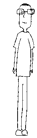
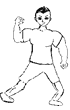
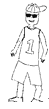
3Which of the following best describes Freddie’s physical appearance?

A. B.

C. D.

4Why does Freddie talk about badgers in the final paragraph?

A. To explain the cause of the damage.

B. To warn the class about their danger.

C. To describe what happened to his father’s garden.

D. To make up an excuse for the cause of the damage.

【题目】Disney’s The Lion King

Venue: Lyceum Theatre

Phone: 020 7492 0810

Duration: 2 hours 30 minutes

Categories: Family & Kids Musicals

Performance dates: Tuesday- Saturday at 7.30 pm

Wednesday, Saturday & Sunday 2.30 pm

Tickets Price: from £42

Walt Disney’s long running and multi-award winning musical The Lion King continues to delight audiences in London’s West End. Based on the Disney animated film, The Lion King came to state on Broadway in 1997 and The Lion King London opened in October 1999, playing to packed houses ever since!

Set against the grand Serengeti Plains and to the unique rhythms of Africa, Disney’s The Lion King is unlike anything ever before seen in musical theatre, and will redefine your expectations of what theatre can be. Director and designer Julie Taymor crafts a colorful, imaginative and highly creative world that brings the plants and animals of Africa to live.

Featuring the original songs from the 1994 film, including “Circle of Life”, Can You Feel the Love Tonight”, “Be Prepared” and “Hakuna Matata” The Lion King musical is a treat for audiences of all ages. Families young and old continue to pack the Lyceum Theatre with their Lion King tickets to celebrate in the impressive storytelling that transports you to a wonderful world that explodes with glorious colours, breathtaking effects and enjoyable music.

“There is simply nothing else like it!”----New York Times.

“You hope all nights at the theatre will be like this.”----Daily Mail.

Please note: The Lion King is recommended for ages 6 and up. Children under the age of 3 will not be admitted into the theatre. All persons aged 16 or under must be accompanied by an adult and may not sit on their own within the auditorium. All persons entering the theatre, regardless of age, must have a ticket.

1According to the passage, The Lion King __________.

A. is to be shown seven days a week B. is an Oscar award winner

C. has been popular for about 20 years D. lasts about 90 minutes

2Which of the following group will not be admitted into the theatre?

A. Four second-year students at university

B. Two primary school girls with a teacher

C. A couple with two sons aged 5 and 7

D. A young mom with her 2-year-old daughter

3This passage is intended to _____________.

A. instruct B. educate

C. advertise D. entertain

违法和不良信息举报电话:027-86699610 举报邮箱:58377363@163.com

精英家教网