题目内容
Most people are aware that outdoor air pollution can damage their health,but many do not know that indoor air pollution can also have significant health effects.Environmental Protection Agency studies indicate that indoor levels of pollutants may be 3~5 times,and occasionally more than 100 times,higher than outdoor levels.These levels of indoor air pollutants may be of particular concern because most people spend about 90% of their time indoors.
There are many sources of indoor air pollution in any home.These include sources such as oil,gas,coal,wood,and tobacco products,building materials,wet or damp carpet,and furniture made of certain pressed wood products,products for household cleaning and maintenance,personal care,or hobbies,central heating and cooling systems.
Immediate effects may show up after a single exposure (暴露) or repeated exposures.These include irritation of the eyes,nose,and throat,headaches,dizziness.Such immediate effects are usually short?term and treatable.Sometimes the treatment is simply removing the person’s exposure to the source of the pollution,if it can be identified.
The likelihood of immediate reactions to indoor air pollutants depends on several factors.Age and pre?existing medical conditions are two important influences.In other cases,whether a person reacts to a pollutant depends on individual sensitivity,which varies tremendously from person to person.Some people can become sensitized to biological pollutants after repeated exposures,and it appears that some people can become sensitized to chemical pollutants as well.
Certain immediate effects are similar to those from colds or other viral (病毒性的) diseases,so it is often difficult to determine if the symptoms are a result of exposure to indoor air pollution.While pollutants commonly found in indoor air are responsible for many harmful effects,there is considerable uncertainty about what concentrations or periods of exposure are necessary to produce specific health problems.People also react very differently to exposure to indoor air pollutants.Therefore,further research is needed to better understand the effects of indoor air pollution and to find efficient ways to protect our health.
1.According to the first paragraph,which of the following is NOT true?
A.People often fail to notice indoor air pollution.
B.Indoor air pollution sometimes is more dangerous than outdoor air pollution.
C.Outdoor air pollution may not be so serious as indoor air pollution.
D.It is obvious that people have been paying more attention to indoor air pollution.
2.According to the author,which may NOT be the source of indoor air pollution?
A.Building materials.? B.Wet carpet.
C.Cooling system.? D.Refrigerators.
3. What does the underlined word “irritation” in the third paragraph probably mean?
A.Bad intention.? B.Much sensitivity.
C.Injury.? D.Carelessness.
4. Which of the following might be the best title for the passage?
A.Reactions of Pollution? B.Danger from Home
C.Pollution Resources? D.Different Pollutions
1.D
2.D
3.B
4.B
【解析】
1.
解析 细节理解题。由第一段第一句可知,A项正确,D项错误;由第一段后两句可知B、C两项正确。
2.2】D
解析 细节理解题。解题范围在第二段,本段内容提到了A、B、C三项内容,未涉及D项。
3.3】 B
解析 词义猜测题。结合该词所在的语境可知,该词是指一种不良的反应或是病症,再结合第四段第三句中的individual sensitivity“个体敏感度”可知,该词是指过敏反应。
4.4】 B
解析 标题归纳题。本文主要讲室内污染,即家里存在的健康隐患,所以B项最贴切。

 天天向上一本好卷系列答案
 小学生10分钟应用题系列答案
 it but later found it made you feel very uncomfortable over time? When you select your career, there’s whole lot more to it than assessing your skills and matching them with a particular position. If you ignore your personality, it will hurt you long-term regardless of your skills or the job's pay. There are several areas of your personality that you need to consider to help you find a good job. Here are a few of those main areas: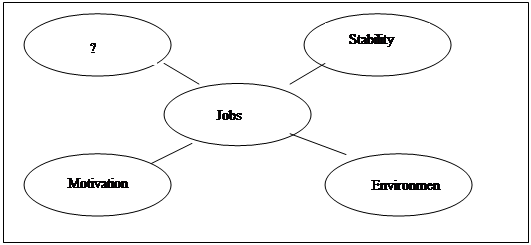
Taiwan will finalize a plan by the end of June to open up the island to tourists from mainland China, though no date has been fixed for formal implementation(执行), an official at the Mainland Affairs Council(MAC)said on Monday.
The official said the reports in the local press on Monday that the MAC has dec ided to postpone its plan to announce the implementation of the new plan on July 1 were inaccurate.
The official said cooperation between different organizations was still underway.The United Daily news quoted the director of the MAC’s legal affairs department, Liu Thehsun, as saying the plan to open up to mainland tourists would not be implemented as scheduled due to a lack of cross-strait communication.
Although relevant authorities, including the Bureau of Immigration and the Tourism Bureau, have complete reports on how to deal with visitors from mainland China, the decision has been taken not to press, ahead with announcement of the plan’s implementation on the first of July, Liu was quoted as saying.
The report also said that while no restrictions would be imposed on the mainland visitors in terms of age or residence in China, the visitors would need to hold a steady job or have more than 50,000RMB(about 6,000, U.S.dollars)in bank savings before they would be eligible(有资格的)to visit Taiwan.
In addition, Taiwan bound mainland tourists would have to come as part of a tour group and would be allowed to stay a maximum of 10 days each time.
The number of mainland tourists allowed to enter the island would also initially be limited to 1,000 people a day.
Although most people from Taiwan are free to travel to China, only a small number of mainland Chinese have been able to visit the island due to restrictions imposed by both sides of the Taiwan Strait after the end of a civil war in 1949.
【小题1】At the moment, according to the passage, ___________.
| A.no mainland Chinese can visit Taiwan now |
| B.any mainland Chinese can visit Taiwan now |
| C.many mainland Chinese have ever visited Taiwan since 1949 |
| D.a few mainland Chinese have ever visited Taiwan since 1949 |
A.there will be no restr ictions to mainland visitors ictions to mainland visitors |
| B.mainland visitors who want to travel in Taiwan must have at least ¥50,000 in the bank savings account |
| C.there will be no age restrictions to the mainland visitors |
| D.mainland visitors will be free to travel to Taiwan |
| A.MAC | B.United Daily |
| C.several organizations | D.Bureau of Immigration |
| A.The implementation of the plan has not been fixed. |
| B.It was originally fixed on July 1 to announce the plan’s implementation. |
| C.For lack of cross-strait communication, the plan will not be officially completed until July. |
| D.When the plan is finalized, it will be announced immediately. |