题目内容
【题目】Directions: Complete the following passage by using the words in the box. Each word can be used only once. Note that there is one word more than you need.

NASA is on a journey to Mars, with a goal of sending humans to the Red Planet in the 2030s. That journey is already well under way.
For decades, the agency and its partners have sent orbiters, landers and rovers(探测器), 【1】 increasing our knowledge about the Red Planet and paving the way for future human explorers. The Curiosity rover has gathered radiation data to help us protect future astronauts, and the upcoming Mars 2020 rover will study the 【2】 of Martian resources, including oxygen.
Building on the robotic legacy(遗产), the human exploration of Mars crosses three thresholds(门槛), each with 【3】 challenges as humans move farther from Earth: Earth Reliant, the Proving Ground, and Earth Independent.
Earth Reliant explorations is 【4】 on research aboard the International Space Station. The orbiting microgravity laboratory serves as a world - class test bed for the technologies and communications systems needed for human missions to deep space. Astronauts are learning about what it takes to live and work in space for long periods of time, improving our understanding of how the body changes in space and how to protect astronauts' health.
Next, we move into the Proving Ground, 【5】 a series of missions near the moon called “cislunar space” to test the capabilities we will need to live and work at Mars. Astronauts on the space station are only hours away from Earth, but the proving ground is days away, a(n) 【6】 stepping stone to a Mars mission, which will be months away from home.
Also in the 2020s, we’ll send astronauts on a year-long mission into this deep space proving ground, confirming habitation and testing our 【7】 for Mars.
Finally, we become Earth Independent, building on the knowledge 【8】 on the space station and in deep space to send humans to low-Mars orbit in the early 2030s.
This phase will also test the entry, descent(降落)and landing techniques needed to get to the Martin surface and study what's needed for in-situ resource utilization or "living off the land". NASA is already studying the 【9】 "Exploration Zones" on Mars that would offer compelling science research and provide resources our astronauts can use.
There are challenges to 【10】 Mars, but we know they are solvable. We are well on our way to getting there, landing there, and living there.
【答案】
【1】D
【2】B
【3】F
【4】E
【5】C
【6】J
【7】K
【8】A
【9】H
【10】I
【解析】
这是一篇说明文。美国国家航空航天局(NASA)正在进行火星之旅,目标是在本世纪30年代将人类送上火星。这一旅程已经开始了。文章主要介绍了人类对火星的探索需要跨越的一些挑战:依赖地球、试验场和独立于地球。
【1】
考查副词。句意:几十年来,该机构及其合作伙伴发射了轨道飞行器、着陆器和探测车,极大地增加了我们对这颗红色星球的了解,并为未来人类探索铺平了道路。该空修饰动词increase,应用副词。表示“显著地,急剧地,极大地”,应用dramatically。故选D。
【2】
考查名词。句意:好奇号漫游者已经收集了辐射数据,以帮助我们保护未来的宇航员,而即将到来的火星2020漫游者将研究火星资源的可用性。该空作study的宾语,且空前有定冠词the,应用名词。表示“可用性”,应用availability。故选B。
【3】
考查形容词。句意:在机器人的基础上,人类对火星的探索跨越了三个门槛,随着人类离地球越来越远,每个门槛都面临着逐渐增长的挑战:依赖地球、试验场和独立于地球。空处修饰名词challenges,应用形容词。表示“增加的,增长的”,应用形容词growing,故选F。
【4】
考查固定短语。句意:“地球依赖探索”专注于国际空间站上的研究。表示“专注于……;以……为中心”,应用be focused on。故选E。
【5】
考查非谓语动词。句意:接下来,我们进入试验场,在月球附近实施一系列名为“地月空间”的任务,以测试我们在火星生活和工作所需的能力。表示“进行,实施……任务“,应用动词conduct,“___5___ a series of missions near the moon called “cislunar space””作伴随状语,主语we和conduct之间是主动关系,应用现在分词作状语。故选C。
【6】
考查形容词。句意:空间站上的宇航员离地球只有几小时的路程,但试验场要几天的时间,这可能是前往火星任务的垫脚石。该空修饰名词stepping stone,应用形容词。表示“可能的”,应用potential。故选J。
【7】
考查名词。句意:同样在21世纪20年代,我们将派遣宇航员到这个深空试验场执行为期一年的任务,确认居住地点并测试我们对火星所做的准备工作。our___7___作test的宾语,应用名词。表示“准备”,应用readiness。故选K。
【8】
考查非谓语动词。句意:最后,我们成为独立的地球人,以在空间站和深空获得的知识为基础,在本世纪30年代早期把人类送到火星低轨道。表示“获得”,应用动词acquire。___8___ on the space station and in deep space作定语,修饰the knowledge。the knowledge和acquire之间是被动关系,应用过去分词作定语。故选A。
【9】
考查形容词。句意:美国宇航局已经在研究火星上的自然“探索区”,这将提供引人注目的科学研究和我们的宇航员可以使用的资源。空处修饰名词Exploration Zones,应用形容词。表示“自然的”,应用natural。故选H。
【10】
考查动名词。句意:开拓火星有挑战,但我们知道它们是可以解决的。表示“开拓”,应用动词pioneer。表示“针对……的挑战”,用the/a challenge to sth.。to是介词,后面接名词或动名词作宾语。故选I。



【题目】 There’s so much to see and do in the coolest little capital. Here’s our list of the top 5 must dos when you visit Wellington.
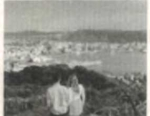
| Erjoy 360°views from the top of Mount Victoria Get a full view of the city and a great photo at the Mount Victoria Lookout. Watch the ships sailing in and plane taking off from Wellington Airport. |
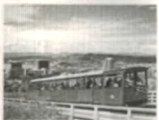
| Ride the historic Wellington Cable Car The Cable Car is a Wellington mark. It runs from Lambton Quay up to Kelburn. At its top, there’s a lookout, the Cable Car Museum, and Space Place at Carter Observatory. |
| Check out our world famous movie-making magic Get into the imagination and the skills of artists behind some of the world’s most wonderful movies at the Weta Cave mini-museum, where you can find yourself in the world of the movie--- TheLord ofthe Rings. |
| Have a close touch at Wellington Zoo Do you want to hand-feed a giraffe, play with a group of meerkats (猫鼬) or touch a cheetah’s (猜豹) fur? All are possible at Wellington Zoo. the best lit- tle zoo in the world. |
| Discover our stories at Te Papa The national museum of New Zealand, Te Papa, is fascinating and fun for any age. The exhibits (展览) tell stories about each side of New Zealand in new and exciting ways. By the way, you can enter the Te papa museum for free. |


【1】Where can visitors have a full view of Wellington?
A.At the Weta Cave mini-museum.B.At the Mount Victoria Lookout.
C.At Wellington Zoo.D.At Te Papa.
【2】Which tourist attraction can be entered for free?
A.The Te Papa museum.B.The Cable Car Museum.
C.Wellington Zoo.D.The Weta Cave mini-museum.
【3】Who will probably be interested in the Wata Cave mini-museum?
A.People who love nature.
B.People who love history.
C.People who love movies
D.Pelple who love animals.
【4】Where does this text probably come from? .
A.A health newspaper.B.A science textbook.
C.A travel website.D.A fashion magazine.