题目内容
79. I wrote to Mr. Green, _______ him _______ the lost case.
A. inform…of B. informing…of C. informed…about D. inform…for
B

 华东师大版一课一练系列答案
Dear Mr. Watson,
CLAIM AL54323432–-STORM DAMAGE TO ROOF
I received a cheque for $623 dated 26 January in payment of my recent claim(索赔). However, I wish to tell you how upset I have been by the way your Claims Assessor, Mr. Michael Tan, handled this claim.
When Mr. Tan first called me, he specifically told me that he believed I had been overcharged, and he would expect to pay that price for work on a double garage, rather than a single garage like mine. Mr. Tan suggested that I neither use nor recommend this contractor again. He continued to tell me it was unlikely for me to receive full payment. Never during this conversation did he mention that the reason for not receiving full payment was because of the nature of my insurance policy.
Consequently, I wrote to Mr. Lance Ashe to complain about his pricing, stating that I was very upset thinking that he could have taken advantage by overcharging a 73-year-old woman. Mr. Ashe telephoned me immediately and explained his charges in detail. He later reported back to me that Mr. Tan explained that I would not receive full payment because of the type of policy I hold, which does not cover wear and tear. This was the first time this issue had been brought to my attention, so you can imagine my surprise.
When I received Mr. Tan’s letter of 2 February, this situation was explained. If this had been explained in the first place I would have accepted it and would not have questioned Mr. Ashe’s charges. Instead, by telling me initially that I had been overcharged for this work, he caused a great deal of upset, not only for me but also for Mr. Ashe.
I believed this claim was handled badly by Mr. Tan from the beginning. Therefore, a great deal of embarrassment has been caused over this issue.
I felt you should know how disappointed and upset I am. I trust you will look into this and ensure that such claims are handled more appropriately in the future.
Yours sincerely,
Mrs. Richard
1.The author writes this letter to ______.
A. inform the manager of a payment
B. complain about a mishandled case
C. demand an apology from Mr. Watson
D. require the manager to fire Mr. Tan
2.The underlined words “the contractor” in Para.2 refer to ______.
A. Mr. Tan B. Mrs. Richard C. Mr. Ashe D. Mr. Watson
3.The author could not receive full payment because _______.
A. her policy doesn’t cover some of the items
B. the contractor overcharged her for the work
C. Mr. Watson doesn’t take the matter seriously
D. she spent too much money fixing her garage
4.We can learn from the passage that Mr. Tan works in a/an _______.
A. welfare organization B. nursing house
C. local affairs office D. insurance company
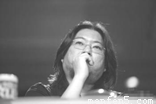
Gao Xiaosong was born with a silver spoon in his mouth. His grandfather was headmaster of the famous Tsinghua University. His wife’s father graduated from the Imperial College London and founded Shenzhen University. He basically grew up on Tsinghua's campus, and studied in the top schools in China, before he, unsurprisingly, entered Tsinghua's electronic engineering department, one of the school's best majors.
He wrote On the Same Page as You are at age 24. Almost overnight, every young person knew the song by heart. That tune and his later works made him a household name in the country. He later became a judge on the hot variety show (综艺节目) China's Got Talent.
Everything has gone right for him aside from one major bump in the road—he was arrested for drunken driving in 2011, after he left the first press conference for his film, My Kingdom.
"For me, the six months was not only a result of the trial but also an atonement,(赎罪)" he says. "Six months is like a leaf falling from the tree of life—no big deal. I was a spoiled person in many ways before 40. So, maybe it was an opportunity to pay for my wildness and arrogance(傲慢) in my youth." The hardest thing for him in prison wasn't sleeping between a thief and a bad man but missing his daughter's development from ages 3.5–4.
Gao has become even busier after getting out of prison for drunken driving. A tour concert of his songs is going around the country, while Morning Talk airs weekly. He is searching for new vocal talent for a music company, and his next film is in progress. But he knows clearly what he wants from life—he plans to focus on music until he turns 60, after which he'll focus on writing and film directing. "You can never write pop music at 60," he says. "I don't complain about that. But you can always write a good book or direct a good film, no matter how old you are."
1.What caused him to become well-known to every family in China?
(No more than 7 words) (3 marks)
___________________________________________________
2.What did he find it the most difficult to do when he was in prison?
(No more than 11 words) (2 marks)
___________________________________________________
3.When is he going to devote himself to writing and directing films ?
(No more than 7 words) (2 marks)
___________________________________________________
4.What words can be used to describe Mr. Gao’s character before he was forty?
(No more than 6 words) (3 marks)
完形填空(共15小题;每小题1分,满分15分)
My job was to make classroom observations and encourage a training program that would enable students to feel good about themselves and take charge of their lives. Donna was one of the volunteer teachers who participated in this 36 .
One day, I entered Donna’s classroom, took a seat in the back of the room and 37 .All the students were working on a task. The student next to me was filling her page with “I Can’ts.” “I can’t kick the soccer ball.” “I can’t get Debbie to like me.” Her page was half full and she showed no 38 of stopping. I walked down the row and found 39 was writing sentences, describing things they couldn’t do.
By this time the activity aroused my 40 , so I decided to check with the teacher to see what was going on, 41 I noticed she too was busy writing “I can’t get John’s mother to come for a parents’ meeting.” …I felt it best not to interrupt.
After another ten minutes, the students were instructed to fold the papers in half and bring them to the front. They placed their “I Can’t” statements into an empty shoe box. Then Donna 42 hers. She put the lid on the box, tucked it under her arm and headed out the door.
Students followed the teacher. I followed the students. Halfway down the hallway Donna got a shovel(铲子) from the tool house, and then marched the students to the farthest corner of the playground. There they began to 43 . The box of “I Can’ts” was placed at the 44 of the hole and then quickly covered with dirt. At this point Donna announced, “Boys and girls, please join hands and 45 your heads.” They quickly formed a circle around the grave.
Donna delivered the eulogy(悼词).“Friends, we gathered here today to honor the memory of ‘I Can’t.’ He is 46 by his brothers and sisters ‘I Can’ and ‘I Will’. May ‘I Can’t’ rest in 47 . Amen!”
She turned the students 48 and marched them back into the classroom. They celebrated the 49 of “I Can’t”. Donna cut a large tombstone from paper. She wrote the words “I Can’t ”at the top and the date at the bottom, then hung it in the classroom. On those rare occasions when a student forgot and said, “I Can’t,” Donna 50 pointed to the paper tombstone. The student then remembered that “I Can’t” was dead and chose other statement.
|
1. |
|
|
2. |
|
|
3. |
|
|
4. |
|
|
5. |
|
|
6. |
|
|
7. |
|
|
8. |
|
|
9. |
|
|
10. |
|
|
11. |
|
|
12. |
|
|
13. |
|
|
14. |
|
|
15. |
|