题目内容
阅读理解
For the people living in the Nile Basin, the river is their life.This 6,825 km waterway, whose
watershed (流域) covers three million square kilometers, flows through mountains, woodlands,
lakes and deserts.Its potential for fishing, tourism and shipping is great-but so are its challenges.
Water shortage, already serious in Egypt and Sudan, will soon influence several other countries
in the watershed as well.Today, about 160 million people depend on the Nile River for their living.
Within the next 25 years, the district's population is expected to double, adding to the demand
brought about by growth in industry and agriculture.The frequent drought (干旱) adds to the
urgency.
Water quality is also a problem.Precious soil is washed out to se a.Wastes from industry and
agriculture create pollution.Higher concentrations of salt influence irrigated soils.Waterborne
diseases continue unchecked.In areas where it's hot and damp, water hyacinths choke off lakes,
dams and other sections of the river, making it difficult for fishing and other businesses to move
forward.
Native people along the narrow area of farmland have watched the sand move closer day by
day.They've seen the river change course, and their only source (来源) of water thickened with
mud.They're very poor and have few choices.
But a new program, the Nile Basin Initiative (NBI), is offering very practical assistance.The
program is more than just a watermanagement project.It's a plan for the social and economic
development of a vast district: it concentrates on the needs of the poorest of the poor and the
environment that supports them.
These are whole ecosystem problems, calling for united solutions (解决办法). Half the Nile
Basin's countries are among the world's poorest nations; yet, somehow, they must find the resources,
skills and political will to overcome these challenges.
watershed (流域) covers three million square kilometers, flows through mountains, woodlands,
lakes and deserts.Its potential for fishing, tourism and shipping is great-but so are its challenges.
Water shortage, already serious in Egypt and Sudan, will soon influence several other countries
in the watershed as well.Today, about 160 million people depend on the Nile River for their living.
Within the next 25 years, the district's population is expected to double, adding to the demand
brought about by growth in industry and agriculture.The frequent drought (干旱) adds to the
urgency.
Water quality is also a problem.Precious soil is washed out to se
 a.Wastes from industry and
agriculture create pollution.Higher concentrations of salt influence irrigated soils.Waterborne
diseases continue unchecked.In areas where it's hot and damp, water hyacinths choke off lakes,
dams and other sections of the river, making it difficult for fishing and other businesses to move
forward.
Native people along the narrow area of farmland have watched the sand move closer day by
day.They've seen the river change course, and their only source (来源) of water thickened with
mud.They're very poor and have few choices.
But a new program, the Nile Basin Initiative (NBI), is offering very practical assistance.The
program is more than just a watermanagement project.It's a plan for the social and economic
development of a vast district: it concentrates on the needs of the poorest of the poor and the
environment that supports them.
These are whole ecosystem problems, calling for united solutions (解决办法). Half the Nile
Basin's countries are among the world's poorest nations; yet, somehow, they must find the resources,
skills and political will to overcome these challenges.
1. What are the great challenges the Nile Basin faces?
A. The development of shipping industry.
B. Overfishing of native people.
C. Water shortage and water quality.
D. Increasing population and tourism.
B. Overfishing of native people.
C. Water shortage and water quality.
D. Increasing population and tourism.
2. The underlined word "hyacinths" ( in Paragraph 3 ) refers to"________".
A. animals
B. plants
C. rocks
D. salts
B. plants
C. rocks
D. salts
3. The program NBI is mainly aimed at ________.
A. preventing water pollution
B. changing the river course
C. improving living conditions of the poor
D. preventing land from becoming desert
B. changing the river course
C. improving living conditions of the poor
D. preventing land from becoming desert
4. What would be the best title of this passage?
A. People's Life in Egypt and Sudan
B. Frequent Drought in Egypt and Sudan
C. The Poorest Countries in the Nile Basin
D. The Ecosystem Problems in the Nile Basin
B. Frequent Drought in Egypt and Sudan
C. The Poorest Countries in the Nile Basin
D. The Ecosystem Problems in the Nile Basin
1-4: CBCD

练习册系列答案
相关题目

 For many of us, printed books are
satisfying in ways beyond the words they contain. Billions of printed books
have been published, read and saved in the 600 years since movable type was
invented, so why mess with a good things?
For many of us, printed books are
satisfying in ways beyond the words they contain. Billions of printed books
have been published, read and saved in the 600 years since movable type was
invented, so why mess with a good things?| 阅读理解 | ||||||||||||||
| For most students, the most difficult part of any exam is the actual studying.Typically, there is so much material to study that students begin to delay, putting off studying until the night before.After a latenight cram session, students arrive at the exam tired and feeling dazed by large amounts of information they've tried to absorb.The easiest way to study, for an exam, and avoid the cram sessions, is to make a study plan. The first step to making a study plan is to decide whether you want to study alone or in a group.When planning study times and organizing study sessions for a group, the needs and schedules of the group are a factor.As a result, you must decide whether you will be studying with a group before continuing with making a study plan. There are two time elements that are important to an effective study plan.The first time element to consider is the amount of time you have until the exam, while the second is the amount of time during the day that you can set aside for studying.Try to study for at least two hours per day for major exams, like entrance exams, and at least thirty minutes per day for lecture exams.If you are limited on the amount of time until the exam, such as one week or less, then you will need to increase your daily study time.Set up a schedule with clearly marked study times for each day. The content to be studied depends on the type of exam.For placement exams, entrance exams, and licensure exams, there are no specific textbooks or prior lecture notes.There are, however, commercially available review guides, and textbooks and lecture notes from past classes often contain a great deal of material that will help with the exam.By looking at the content areas of the test, you can determine what readily available material to study.For coursebased exams, textbooks and lecture notes are both ideal study content.Break the content into chunks(块), and then assign specific chunks to the study times that you have listed on your schedule. Once you have set up study times and assigned material to them, it is time to study.When reading textbooks, take notes on the information.With lecture notes, write notes in the margin.Use a highlighter.The idea is to make key information readily available for review.In addition, making notes and looking up ideas to supplement notes reinforces the material in your mind.Quiz yourself as you finish each area you are studying to determine what you still need to review. Study plans are as unique as the person making them.The most effective study plan will take into account your schedule, the times each day when you are able to study without interruption, and the amount of material that needs to be reviewed.By spreading out the study times and breaking up the information, you make it easier to absorb and retain the necessary material before the exam.
|
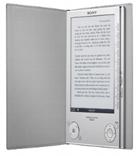 For many of us, printed books are satisfying in ways beyond the words they contain. Billions of printed books have been published, read and saved in the 600 years since movable type was invented, so why mess with a good things?