题目内容

【题目】——Hi, John. Are you busy?
——
A.Yes. I do agree.
B.Yes.That would be nice.
C.No. Are you sure?
D.No. What's up?

【答案】D
【解析】:句意:有人问John是否有空John的回答是没有,怎么了?此题首先要正确理解四个选项的意思,然后分析这种表达使用的场合。交际语的考查要注意上下文的连贯,才可以正确选择到答案。A.Yes.I do agree.的意思是:是的.我同意.这种表达于答是否赞同的情况.B.Yes.That would be nice.的意思是:是的,这会很好,这种表达用于表达观点看法.C. No.Are you sure?的意思是:不,你确定吗?这种表达不确定时的再次询问,D.No.What’s up?意思是不,怎么了?4个选项分别有两个是表肯定的回答.两个是表否定的回答,而在Yes或o之后,其中有两句是陈述语气,表肯定,,还有两个是疑问句式,用于展开下一句话.

练习册系列答案
相关题目

【题目】 Are your eyes irritated, dry, watery, blurry, seeing double or sensitive to light, and do your back and neck ache? If so, you are likely one of many people today who suffer from digital eyestrain, also called computer-vision syndrome.

Eyestrain is often related to the amount of exposure to screens, the distance from eyes to screens and the use of multiple screens simultaneously. However, studies have also shown that the blue light produced by digital devices today reaches further into the eyes than other kinds of light. This light actually assists attention during the day but can result in interrupted sleep patterns at night.

Scientists have also said that eyestrain is not a necessary evil, even in a modern world that revolves around technology. Changing some simple details about your relative position to screens, such as staying about 60 centimeters away, will help. Also, avoid overhead and other direct sources of light, and use shaded lamps and window blinds while looking at digital devices instead.

Beyond the way that relates to digital screens, there are also ways to change how you view screens that are helpful in combating eyestrain. To begin with, your computer screen should be high-resolution(高清的), at least 50 centimeters wide diagonally and may require a screen filter to decrease reflections. Also, be aware that “computer glasses”, which cut down glare and blue light, are available and those contact lenses can increase the risk of eyestrain.

Besides, to reduce your risk for computer-vision syndrome and neck, back and shoulder pain, take frequent breaks during your computer workday. Many workers take only two 15-minute breaks from their computer throughout their day. According to a recent study, discomfort and eyestrain are significantly reduced when computer workers take four additional five-minute “mini-breaks” throughout their workday. And these additional breaks don’t reduce the workers’ productivity.

Finally, many of us fall into bad habits while using digital screens that only worsen the effects of eyestrain. While viewing digital screens, many people blink one third less often than they usually do. Place a reminder on your computer to “blink” so that your eyes don’t dry out. Also, rest your eyes’ focusing muscles by using the 20-20-20 rule: Every 20 minutes, focus on something 20 feet away for 20 seconds.

1What is Paragraph 2mainlyabout?

A. The dangers of eyestrain.B. The causes of eyestrain.

C. The symptoms of eyestrain.D. The effects of eyestrain.

2Which of the following ways might not be helpful in relieving eyestrain?

A. Employing blue light.B. Breaking bad habits.

C. Adjusting your position.D. Changing your hardware.

3It can be inferred from the passage that .

A. overhead lights make the eyes less tired

B. taking frequent breaks reduces eyestrain

C. people tend to blink more often at a computer

D. technology and eyestrain unavoidably go hand in hand

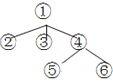
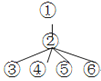
4Which of the following shows the structure of the passage?

A. B.

C. D.

【题目】Section A
Directions: Read the following passage. Fill in the numbered blanks by using the information from the passage.
Write NO MORE THAN THREE WORDS for each answer.
Since the earliest civilizations, people have controlled rivers to meet society's demands. Today, rivers are controlled for many reasons, primarily to maintain reliable water supplies for daily, agricultural and industrial needs, for power generation, for navigation (航行), and to prevent flooding.
River control is achieved by channelization, a term that covers a range of river engineering works, including widening, deepening, straightening and stabilization of banks, and by the construction of dams.
An important period of channelization took place in Europe during the l9'th century, when many large rivers were straightened and their beds deepened. One of the most dramatically changed was the Tisza River, a branch of the Danube that flows through Hungary. The controlling of the Tisza, designed to reduce flooding and make land for agriculture, included cutting off more than 100 meanders (河曲), shortening the river's length by nearly 400 kilometers.
One of the most common ways in which people control rivers is by damming them. The past 50 years or so has seen an increase in dam construction worldwide, and at the beginning of the 21st century, there were about 800,000 dams globally, some towering more than 200 meters in height.
Despite their successes, many dams also cause significant environmental changes that prove harmful. Some particularly deep reservoirs (水库) can bring about earthquakes due to the stress on their bottom rocks caused by huge volumes of water. Downstream of a reservoir, the river is certainly influenced in many ways: water volume, speed and quality are all affected, leading to changes in the landscape and among plants and animals.

违法和不良信息举报电话:027-86699610 举报邮箱:58377363@163.com

精英家教网