题目内容

Family traditions are things that families do together regularly. 1.They can be repeated daily, weekly, monthly or once a year. It is important for families to follow their traditions even as their children get older. Here are reasons:

Family traditions create good feelings and special moments to remember. They are fun things to do. 2.And they are the memories that will last a lifetime.

3.Being a part of a family is more than living in the same home or having the same last name. It is about relationships and family bonds. Since family traditions are something you do together, they create a stronger sense of belonging to the family.

Family traditions help teens a lot when they are trying to figure out who they are, which job teenagers often do. A family encourages a teen to be a part of it and its traditions provide a strong base for teens to stand on.4.

5.Every day teens face some very difficult issues. Knowing that they are secure and have a family to turn to is a powerful tool to use when they are in trouble.

A. Family traditions give teens a sense of security.

B. Family traditions help parents inform their children of the family’s values.

C. These things can be enjoyable activities or a certain food that a family likes

D. Family traditions give every member of the family a strong sense of belonging.

E. Enjoying them together as a family will create positive feelings in each member.

F. Old family traditions are important but easily forgotten in today’s society.

G. It’s very important when they’re looking for their sense of self.

练习册系列答案
相关题目

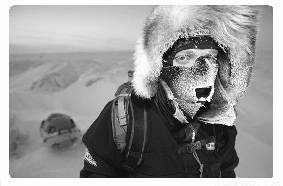
Meet Ben Saunders: adventurer, athlete, motivational speaker. Ben, at the age of 23, was the youngest man to ski solo (单人滑雪) to the North Pole. He dragged a 180-kilogramme sledge (雪橇) over 1,420 miles through the worst Arctic conditions. This year, as well as planning a return to the Arctic, Ben plans to ski solo from the Antarctic coast to the South Pole and back in the autumn, carrying all his supplies on his sledge.

Ben Saunders was fired after persuading the firm to support his disorganized first adventure. “Everything that could go wrong did go wrong. We were attacked by a bear. We started running out of food. It was just desperate. And we didn't get to the Pole; we didn't get there, so we had no media interest. No one heard about it: no book deal, and no speaking. I was so unhappy.”

People said it was impossible for me to get to the Pole. I said, “No, I can get there,” and I did. Self-belief, I see it as being a bit like a muscle — it's my belief that the more you stretch (伸展) yourself the stronger it gets. If you never do anything that's uncomfortable or risky then your self-belief gets weaker. So that's one of the lessons I've figured out along the way. The thing that I've stretched and tested is my self-belief.

“My Antarctic adventure is just practicable and that's what is exciting to me. If I knew it was possible, if I knew I could do it without too much bother, I wouldn't be interested.” Why? “Personally I'm attracted by the human performance element to it. Not that long ago, running a marathon was seen as the top point of human attempt, and now I wouldn't be that surprised if my mum said she was going to run one next year.”

People's horizons (见识) are changing. “I'm not particularly gifted, and I'm absolutely average. I've just chosen this one goal to achieve and I've been working hard to realize it. That's it. And that's the thing that attracts me: with enough training and enough determination, enough focus and preparation, how far can we go? And I don't think I've found out yet.”

1.What do we know about Ben Saunders' first adventure?

A. There was no press coverage.

B. It was supported by his company.

C. It was well planned and organized.

D. He actually reached the North Pole.

2.According to Ben Saunders, if you want to stretch your self-belief, you should _____.

A. often test your confidence B. try something adventurous

C. aim to reach the North Pole D. always stretch your muscles

3.Ben Saunders was excited about his Antarctic adventure because _____.

A. he liked running a marathon

B. he wanted to exercise his body

C. he knew it might be achievable

D. he was sure he could do it easily

4.What can we learn from the last paragraph?

A. We have to change our views about adventure.

B. We can never know our possibilities and energies.

C. We should have a reason for going on an adventure.

D. We have to be especially talented to have an adventure.

Bark
Cover Price: $19.80      Price: $15.00($2.50 / issue (期) )
You save: $4.80 (24%)    Review: By Pat Kane
I extremely love Bark magazine! I love the “smiling” pages and the tips on every topics. I am a dog lover and have saved all of my dogs from either death or from people who were going to put them down. Everyone should have a chance to live and Bark stresses that with its articles. This magazine is a MUST HAVE for any dog lover!!
Dog Fancy
Cover Price: $54.00       Price: $14.99 ($1.25 / issue)
You save: $39.01 (72%)    Review: By Berner Mom
Don't waste your money on this magazine. 60-70 percent of it are advertisements, and the articles offer little useful information. It might be suitable for children, but not adults who are serious about educating themselves about dogs.
Dog World
Cover Price: $48.88       Price: $14.99 ($1.25 / issue)
You save: $33.89 (69%)    Review: By one critic
Dog World has many very interesting articles for people involved in dog showing, breeding(饲养)etc. However, over half of the magazine are ads, which is boring. Still, I recommend(推荐) it for the good articles.

Modern Dog
Cover Price: $45.00       Price: $15.00 ($3.75 / issue)
You save: $30.00 (24%)    Review: By Dinah
My new favorite magazine! Beautiful photos, smart and amusing articles, fashion, art, interviews with famous people… All about dogs!Thanks to Modern Dog I now know how to give a dog-friendly party and how to actually get my dog to come when she was called. Surely worth reading.

1.Which of the following magazines saves the most money?

A. Bark.

B. Dog Fancy.

C. Dog World.

D. Modern Dog.

2.Dog world is recommended for its _________.

A. wonderful articles

B. fashionable cover

C. low price

D. good paper quality

3.According to the text, Modern Dog ________.

A. has lovely dog pictures on the cover

B. is interesting but not helpful

C. has some photos but no articles

D. has interviews with famous people

4.The purpose of the text is to introduce _________

A. some cheap magazines

B. different magazines for different readers

C. some magazines about dogs

D. information on raising dogs

Some unwelcome visitors from North America have been turning up in the waters off the coast of Great Britain.

North American lobsters (龙虾) have been found in the North Sea (between Great Britain and Northwest Europe), far from their own habitat. The lobsters usually live along the eastern coast of Canada and the United States.

It is impossible that the lobsters could have made the 5,600-kilometre journey on their own. They were probably brought to Britain and then got away from containers. Some of the lobsters that were caught had elastic bands (松紧带) holding their legs shut, like lobsters that are kept in containers in stores or restaurants.

Many may have been “set free” from some ships passing through the area. Sometimes passengers order a live lobster from a tank in the dining room and then ask the waiter to throw it overboard instead of cooking it.

According to official records, 26 North American lobsters have been caught in waters off Great Britain since 1988. However, it is believed many more have been found but not reported.

It is against the law to let North American lobsters come into British waters. If they settle down in European waters, it would be bad for the local lobsters. The two live in the same place and eat the same food. But North American lobsters are larger, stronger and more aggressive (好斗的) than European lobsters, and they produce young more quickly.

As a result, they could take food and space away from the local lobsters, and from other types of shellfish that live in the same area. These lobsters may also carry diseases that could harm the local lobsters.

1.Those unwelcome lobsters _____.

A. could travel 5,600 km a day on their own

B. used to live in waters off Great Britain

C. would soon disappear in British waters

D. might have escaped on the way to Britain

2.What can we learn about European lobsters?

A. They are growing too fast to be kept under control.

B. Shellfish often take away their food and space.

C. They are easily harmed by North American lobsters.

D. People become ill easily if they eat these lobsters.

3.The author's purpose of writing the text is most likely to _____.

A. discuss B. report

C. advertise D. introduce

My wife and I were attending a wedding at St. John’s Church. The sound of _______ rang to the heavens as the ceremony continued.

At the church, I _________ an old friend. Casper, who happened to be at the _________. Now 73, Casper was a brilliant and _________ softball pitcher (投球手) back in the Men’s Leagues of Philadelphia in the mid-60s. I did not _________ the now silver-haired fellow until my brother-in- law John mentioned his name to me! After a very pleasant _________, Casper asked if I remembered a letter of _______ I had written to him back in 1964. It appeared Casper fell on hard times, as professional pitchers _________ do, and he wasn’t pitching too well for a period of time. I did not _______ the letter, but he said, “Yes, I still have it, and I read it anytime ____________ aren’t going too well.” He said that he had read the letter many times, and the situation always seemed to improve. I was __________ and speechless!

He continued, “You don’t remember?” I said, “Sadly, no, I don’t.” But I did ask if I could have a(n) ____________ of the letter. He said he would email it to me. After the ____________, we met on the steps of the church. Casper came up to me and __________ the letter. He lived a block from the ____________ and had run home to get it. The envelope was __________ and turned yellow, and so was the letter inside. That letter had to be nearly 50 years old.

In ______________ terms, the letter read:

“These hard times are ____________ ! Keep your enthusiasm for the ____________. Never quit and you’ll be back on top again __________. Hang on there!”

1.A. wind B. music C. traffic D. fireworks

2.A. took over B. ran into C. picked up D. called on

3.A. meeting B. service C. scene D. position

4.A. limited B. balanced C. devoted D. talented

5.A. invite B. recognize C. disturb D. inform

6.A. discussion B. shaking C. journey D. greeting

7.A. encouragement B. appreciation C. apology D. introduction

8.A. sometimes B. entirely C. rarely D. forever

9.A. receive B. write C. remember D. preserve

10.A. jobs B. things C. stages D. effects

11.A. pleased B. disappointed C. puzzled D. annoyed

12.A. address B. copy C. record D. opinion

13.A. party B. break C. wedding D. incident

14.A. dropped B. delivered C. opened D. presented

15.A. theatre B. church C. office D. station

16.A. folded B. faded C. painted D. divided

17.A. gentle B. patient C. modest D. simple

18.A. reasonable B. temporary C. relative D. impressive

19.A. game B. prize C. glory D. lesson

20.A. casually B. properly C. totally D. shortly

违法和不良信息举报电话:027-86699610 举报邮箱:58377363@163.com

精英家教网