题目内容
The key reason for the workers’ strike was their poor living and working conditions.
解析:
|
工人们举行罢工的原因是他们恶劣的生活条件和工作环境。 |

 备战中考寒假系列答案
When we think of leadership, we often think of strength and power. But what are these really, and how do they operate?
Leadership today is not about forcing others to do things. If this is even possible, it is short-term, and tends to backfire. If you order someone to do something against their will, they may do it because they feel they must, but the anger they feel will do more harm in the long-term. They will also experience fear.
Fear causes the thinking brain to shut down, making the person unable to function at his or her best. If they associate you with this emotion of fear, they will become less functional around you, and you will have succeeded in not only shooting yourself in the foot, but possibly making a very good employee or partner unable to perform effectively. Fear has no place in leadership.
The way we influence people in a lasting way is by our own character, and our understanding and use of emotion. We can order someone to do something, which may be part of the work day; or we can employ them at the emotional level, so they became fully devoted to the projects and provide some of their own motivation(积极性). Today’s work place is all about relationships.
Anyone works harder in a positive environment in which they’re recognized and valued as a human being as well as a worker. Everyone produces just a bit more for someone they like. Leaders understand the way things work. They know the pay check is not the single most motivating factor (因素) in the work life of most people.
The true strength of leadership is an inner strength that comes from the confidence of emotional intelligence---knowing your own emotions, and how to handle them, and those of others. Developing your emotional intelligence is the single best thing you can do if you want to develop your relationships with people around you, which is the key to the leadership skills.
【小题1】An employee may have a feeling of fear in the work place when___.
| A.he is forced to do things |
| B.be cannot work at his best |
| C.he feels his brain shut down |
| D.he thinks of his work as too heavy |
| A.People tend to associate leadership with fear |
| B.Working conditions affect people’s physical health |
| C.Good relationship is the key to business success |
| D.Smart people are more functional in the work place |
| A.provide better suggestions |
| B.develop his own personality |
| C.give his employees a pay raise |
| D.hide his own emotion of fear |
| A.provide a variety of project for employees |
| B.help raise employee’s living standards |
| C.give employees specific instructions |
| D.deal wisely with employees’ emotions |
Whenever anyone measures educational success, East Asian countries are always top scorers. But in a recent league table, a European country, Finland, was top of the class. South Korea was still in second place, though. Britain was at number 6.
In Korea the school day is long—typically 7 or 8 hours, followed by hours of private tutoring in the evenings. All this hothousing leaves Korean students so tired, they sometimes fall asleep in class next day. Worries about the effects of late night cramming(填鸭式) led the government to force cramming schools to close by 10 pm. Finnish children spend the least time in class in the developed world, often finishing just after lunch, with about one hour of homework a day. Private tuition is uncommon. The British and American school day is quite long in comparison, around 6 hours, and secondary school pupils do 2 or 3 hours of self-study a night.
The Korean education system, like many in Asia, is intensely competitive, with students even competing to get into the best cramming schools, to help them get ahead. Finnish education is far less cut-throat. Classes are all mixed ability, and there are no league tables. British schools again occupy the middle ground, with quite high levels of competition for places at university, and schools and universities battling to come top of league tables for everything from exam results to student satisfaction. Korea and Finland both do well, yet their education systems are so different.
However, there are some similarities in Korea and Finland. In those countries, teachers have high status in society, and education is very highly valued. Those attitudes can't change quickly. But it can be done. They might be the star pupils now, but until the l970s, Finland's educational system was poor. Their thoroughly different approach to schooling has taken them to the top in just a generation.
【小题1】The students spend the least time in school in .
| A.the UK | B.Finland | C.the USA | D.Korea |
| A.students spend more time in studying |
| B.students are tired of studying in class |
| C.students leave their school early |
| D.students are always top scorers |
| A.private evening tutoring | B.self-study at home |
| C.long-hour study | D.school study |
| A.Finnish students are less stressed in study |
| B.there're also many cramming schools in Britain |
| C.students in Korea are the most competitive in Asia |
| D.British schools are less competitive than universities |
| A.the attitude | B.the schooling time |
| C.star pupils | D.new teaching approach |
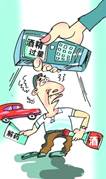
Virginia is set to begin enforcing the toughest drunken-driving punishment, one that will require thousands of first-time offenders—whether they were highly drunk or slightly over the limit—to install in their cars blood- alcohol testing devices that can lock the ignition. The devices work like this—A driver must blow into a blood alcohol device linked to the car’s ignition. If the result is higher than the legal limit, the car will not start. The device also requires random “rolling retests” once the driver is on the road.
Virginia’s current law requires only repeated offenders or those with a blood alcohol level of 0.15 or higher to have an ignition interlock device in their cars.
The new law, which takes effect in July, will roughly increase the number of people required to use ignition interlock devices four times, and offenders will have to pay about $ 480 for a typical six-month installation.
The measure has caused a debate between groups battling drunken driving and those representing offenders. Such groups as Mother Against Drunken Driving and The Washington Regional Alcohol Program say that Virginia’s 274 alcohol-related road deaths and more than 5,500 injuries in 2010 remained unacceptably high despite years of cracking down on drunken driving. Ignition interlock devices, they say, reduce repeat offenses. But some public defenders and lawyers argue that the devices are too severe a punishment for offenders at the legal blood alcohol limit 0.08, and that the court system will be burdened by more cases going to trial and lower-income drivers will be affected by the fees.
Del. Sal R. Iaquinto, who sponsored the bill, had a simple reply for concerns about the costs of the interlock devises: “How much does a life cost?” “Blowing into a tube for six months, you will remember that,” Iaquinto said, “And you’re not likely to offend again.”
【小题1】The underlined word “ignition” in Paragraph 1probably refers to the part in a car where ___________.
| A.the alarm goes off | B.the engine starts | C.the door opens | D.the car is fueled |
| A.The first time drunken-driving offenders. |
| B.The drivers who are not able to pay offence fees. |
| C.The repeat drunken-driving offenders. |
| D.Drivers whose blood alcohol level is below 0.15. |
| A.fewer cases go to trial |
| B.lower-income drivers will not afford to drink again |
| C.interlock devices increase repeat offenses |
| D.the devices are too severe a punishment for offenders |
| A.prevention is better than cure | B.no law is absolutely perfect |
| C.punishment is the key to all | D.justice has long arms |
| A.Negative. | B.Indifferent. | C.flexible. | D.workable. |