ÌâÄ¿ÄÚÈÝ

¡¾ÌâÄ¿¡¿¶ÌÎĸĴí

¼Ù¶¨Ó¢Óï¿ÎÉÏÀÏʦҪÇóͬ×ÀÖ®¼ä½»»»ÐÞ¸Ä×÷ÎÄ£¬ÇëÄãÐÞ¸ÄÄãͬ×ÀдµÄÒÔÏÂ×÷ÎÄ¡£

ÎÄÖй²ÓÐ10´¦ÓïÑÔ´íÎó£¬Ã¿¾äÖÐ×î¶àÓÐÁ½´¦¡£Ã¿´¦´íÎó½öÉæ¼°Ò»¸öµ¥´ÊµÄÔö¼Ó¡¢É¾³ý»òÐ޸ġ£

Ôö¼Ó£ºÔÚȱ´Ê´¦¼ÓÒ»¸ö©×Ö·ûºÅ£¨£©£¬²¢ÔÚÆäÏÂÃæÐ´³ö¸Ã¼ÓµÄ´Ê¡£

ɾ³ý£º°Ñ¶àÓàµÄ´ÊÓÃбÏߣ¨£©»®µô¡£

Ð޸ģºÔÚ´íµÄ´ÊÏ»®Ò»ºáÏߣ¬²¢ÔڸôÊÏÂÃæÐ´³öÐ޸ĺóµÄ´Ê¡£

×¢Ò⣺1.ÿ´¦´íÎó¼°ÆäÐ޸ľù½öÏÞÒ»´Ê£»

2.Ö»ÔÊÐíÐÞ¸Ä10´¦£¬¶àÕߣ¨´ÓµÚ11´¦Æð£©²»¼Æ·Ö¡£

There are various reasons why people write poetry. Some poems tell a story and describe something in a way that will give the reader a strong impression. Others try to convey certain emotion. Poets use different forms of poetry to express them. The nursery rhymes may not make sense of and even seem contradictory. List poems have a flexible line length and repeating phrases what give both a pattern and a rhythm to the poem. The cinquain and haiku can give clear picture use the minimum of words. English speakers also enjoy some forms of Asian poetry--Tang poems from China in particularly. With so many different forms of poetry to choose, students may eventually want to write poems of their own.

¡¾´ð°¸¡¿

¡¾1¡¿and---or

¡¾2¡¿emotion--- emotions

¡¾3¡¿them---themselves

¡¾4¡¿È¥µôof

¡¾5¡¿repeating --- repeated

¡¾6¡¿what--- which/that

¡¾7¡¿giveºÍ clear Ö®¼ä¼Óa

¡¾8¡¿use--- using

¡¾9¡¿particularly --- particular

¡¾10¡¿chooseºó¼Ófrom

¡¾½âÎö¡¿

ÊÔÌâ·ÖÎö:

¡¾1¡¿and---or ¾äÒ⣺һЩʽ²¹ÊÊ»òÃèÊöһЩÊÂÇé¡£¹Ê°Ñand---or¡£

¡¾2¡¿emotion--- emotions ¾äÒ⣺´«µÝijЩÇé¸Ð¡£´Ë´¦Ãû´ÊÓø´ÊýÐÎʽ£¬¹Ê°Ñemotion--- emotions¡£

¡¾3¡¿them---themselves ¾äÒ⣺ʫÈËÓò»Í¬µÄ·½Ê½À´±í´ïËûÃÇ×Ô¼º¡£¹Ê°Ñthem---themselves¡£

¡¾4¡¿È¥µôof ¾äÒ⣺¿ÉÄÜÊÇûÓÐÒâÒåµÄ£¬ÉõÖÁÊÇì¶ÜµÄ¡£make senseûÓÐÒâÒ壬¹ÊÈ¥µôof ¡£

¡¾5¡¿repeating --- repeated ¾äÒ⣺±»Öظ´µÄ¶ÌÓï¡£´Ë´¦ÊǹýÈ¥·Ö´Ê×÷ǰÖö¨Ó¹Ê°Ñrepeating --- repeated¡£

¡¾6¡¿what--- which/that phrasesÊÇÏÈÐдʣ¬Ö¸ÎºóÃæÊǶ¨Óï´Ó¾ä£¬´Ó¾äȱÉÙÖ÷ÓïºÍÒýµ¼´Ê£¬¹Ê°Ñwhat--- which/that¡£

¡¾7¡¿giveºÍ clear Ö®¼ä¼Óa ¾äÒ⣺¸øÒ»¸öÇåÎúµÄͼ»­¡£¹ÊÔÚgiveºÍ clear Ö®¼ä¼Óa¡£

¡¾8¡¿use--- using ¾äÒ⣺ÓÃ×îÉÙµ¥´ÊµÄͼ»­¡£´Ë´¦ÊÇÏÖÔÚ·Ö´Ê×öºóÖö¨Ó¹Ê°Ñuse--- using¡£

¡¾9¡¿particularly --- particular ¹Ì¶¨´Ê×飺in particularÌØ±ðµØ£¬¹Ê°Ñparticularly --- particular¡£

¡¾10¡¿chooseºó¼Ófrom ¾äÒ⣺ÓÐÕâô¶à²»Í¬ÐÎʽµÄÊ«¹©Ñ¡Ôñ¡£¹ÊÔÚchooseºó¼Ófrom¡£

Á·Ï°²áϵÁдð°¸
Ïà¹ØÌâÄ¿

¡¾ÌâÄ¿¡¿ÍêÐÎÌî¿Õ£¬ÔĶÁÏÂÃæ¶ÌÎÄ£¬ÕÆÎÕÆä´óÒ⣬ȻºóÔÚËù¸øµÄËĸöÑ¡ÏA¡¢B¡¢CºÍD£©ÖÐÑ¡³öÒ»¸ö×î¼ÑÑ¡Ïî¡£

During the wars, a soldier looked after his horse with the greatest care. He gave it the best wheat to eat and the ________ water to drink. He dried it carefully with a towel when it got wet and ________ it with a warm blanket on cold winter nights. ________ , the horse was strong and swirl and carried its master ________ out of the dangers of ________ .

When peace came, however, the soldier ________ . He put the ________ out in a field full of wild plants and gave it only a little food to eat. He left the horse ________ in a worn-out place with a ________ roof and a floor made of mud. During the day the________ made the horse work hard on his farm, ________ a large amount of wood and pulling heavy wagons (ËÄÂÖ»õ³µ).

After some time war broke out ________ . The soldier prepared himself for the war and went to the field to ________ his horse. Hurriedly brushing the mud from its coat, he________ the horse. For a moment the horse stood there without ________. Then gradually its ________ legs began to bend ________ it sank slowly to the ground. The horse gave the soldier a look of ________ .

"Master," it said, "you' ll have to ________ on foot this time. You have made me work like a mule (Ââ×Ó) and ________ me like a goat. I cannot change back into a horse in an instant justbecause you Want me to."

¡¾1¡¿A. dearest B. clearest C. coldest D. deepest

¡¾2¡¿A. thanked B. visited C. welcomed D. covered

¡¾3¡¿A. As a result B. At peace C. In a sense D. In fact

¡¾4¡¿A. safely B. politely C. sadly D. angrily

¡¾5¡¿A. fire B. storm C. war D. flood

¡¾6¡¿A. succeeded B. understood C. changed D. left

¡¾7¡¿A. horse B. cow C. mule D. goat

¡¾8¡¿A. dying B. lying C. living D. playing

¡¾9¡¿A. good-looking B. long-lasting C. ready-made D. broken-down

¡¾10¡¿A. farmer B. soldier C. sailor D. officer

¡¾11¡¿A. carrying B. cutting C. selling D. making

¡¾12¡¿A. lately B. often C. again D. soon

¡¾13¡¿A. comfort B. kill C. protect D. catch

¡¾14¡¿A. helped out B. got on C. believed in D. let off

¡¾15¡¿A. speaking B. complaining C. crying D. moving

¡¾16¡¿A. long B. lovely C. skinny D. strong

¡¾17¡¿A. though B. and C. but D. for

¡¾18¡¿A. dissatisfaction B. pleasure C. surprise D. fear

¡¾19¡¿A. fight B. compete C. travel D. finish

¡¾20¡¿A. talked about B. shouted at C. used D. fed

¡¾ÌâÄ¿¡¿Jeanne Calment, a French woman, became a record breaker on 17 October, 1995, when at the age of 120 years and 238 days, she became the longest-lived human being on record. A Japanese man died in 1986 at the age of 120 years and 237 days.

Jeanne Calment lives in a small old people¡¯s home in the south of France; her husband, her only child and her grandson have all died. She is nearly blind and deaf and is always in a wheelchair, but her doctor describes her as being more like a 90-year-old woman in good health than someone of 120. She still has a lively sense of humor. When asked on her 120th birthday what she expected of the future, she replied: A very short one. She also remarked that she thought the good Lord had forgotten all about her.So what is the key to a long life? According to some doctors, diet, exercise and no smoking are the three important factors. Jeanne Calment has followed two of the tips. She has always eaten a healthy diet, and she used to do exercise every day until she broke her leg at the age of 115. However, until recently she drank two glasses of strong red wine a day, and she does smoke (now only a little). Besides, Jeanne Calment might have got very good genes from her parents. Her father lived to the age of 94 and her mother to 86.

A local lawyer bought her house when she was 80 under an agreement that he would pay her some money every year until her death. It must have seemed a good move at the time, but so far the lawyer has paid her at least three times the value of the house. Every year on her birthday, Jeanne Calment sends him a card saying: Sorry, I¡¯m still alive!

¡¾1¡¿How does Jeanne Calment feel about her old age?

A. She is miserable and unhappy.

B. She feels she is going to die very soon.

C. She would like to live much younger.

D. She is cheerful and humorous.

¡¾2¡¿Which of the following word could best replace the word ¡°move¡± in the fourth paragraph?

A. trick B. deal C. march D. sport

¡¾3¡¿Why does Jeanne Calment say ¡°Sorry, I¡¯m still alive¡± to the lawyer every year on her birthday?

A. Because the lawyer has paid her much more money than the value of the house.

B. Because she has asked the lawyer to pay her more rent than they first agreed.

C. Because she had an agreement at 80 with the lawyer which was to her advantage.

D. Because the house she sold to the lawyer is worth the money he has already paid.

¡¾ÌâÄ¿¡¿Technological change is everywhere and affects every aspect of life, mostly for the better. However, social changes are brought about by new technology are often mistaken for a change in attitudes.

An example at hand is the involvement of parents in the lives of their children who are attending college. Surveys (µ÷²é) on this topic suggests that parents today continue to be ¡°very¡± or ¡°somewhat¡± overly-protective even after their children move into college dormitories. The same surveys also indicate that the rate of parental involvement is greater today than it was a generation ago. This is usually interpreted as a sign that today¡¯s parents are trying to manage their children¡¯s lives past the point where this behavior is appropriate.

However, greater parental involvement does not necessarily indicate that parents are failing to let go of their ¡°adult¡± children.

In the context (±³¾°) of this discussion, it seems valuable to first find out the cause of change in the case of parents¡¯ involvement with their grown children. If parents of earlier generations had wanted to be in touch with their college-age children frequently, would this have been possible? Probably not. On the other hand, does the possibility of frequent communication today mean that the urge to do so wasn¡¯t present a generation ago? Many studies show that older parents - today¡¯s grandparents - would have called their children more often if the means and cost of doing so had not been a barrier.

Furthermore, studies show that finances are the most frequent subject of communication between parents and their college children. The fact that college students are financially dependent on their parents is nothing new; nor are requests for more money to be sent from home. This phenomenon is neither good nor bad; it is a fact of college life, today and in the past.

Thanks to the advanced technology, we live in an age of bettered communication. This has many implications well beyond the role that parents seem to play in the lives of their children who have left for college. But it is useful to bear in mind that all such changes come from the technology and not some imagined desire by parents to keep their children under their wings.

¡¾1¡¿The surveys inform us of ______.

A. the development of technology

B. the changes of adult children¡¯s behavior

C. the parents¡¯ over-protection of their college children

D. the means and expenses of students¡¯ communication

¡¾2¡¿The writer believes that ______.

A. parents today are more protective than those in the past

B. the disadvantages of new technology outweigh its advantages

C. technology explains greater parental involvement with their children

D. parents¡¯ changed attitudes lead to college children¡¯s delayed independence

¡¾3¡¿ What is the best title for the passage?

A. Technology or Attitude

B. Dependence or Independence

C. Family Influence or Social Changes

D. College Management or Communication Advancement

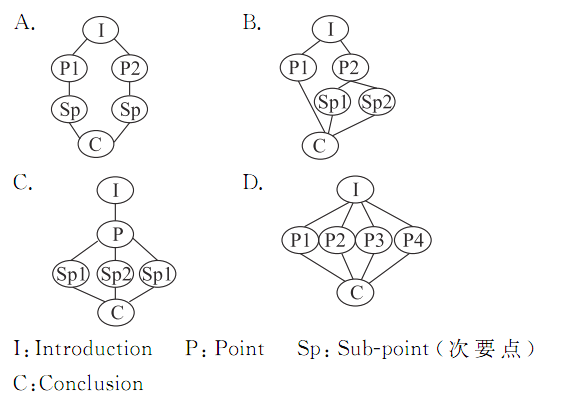
¡¾4¡¿ Which of the following shows the development of ideas in this passage?

Î¥·¨ºÍ²»Á¼ÐÅÏ¢¾Ù±¨µç»°£º027-86699610 ¾Ù±¨ÓÊÏ䣺58377363@163.com

¾«Ó¢¼Ò½ÌÍø