题目内容
Most people think that the older you get, the harder it is to learn a new language. That is, they believe that children learn more easily and efficiently than adults. Thus, at some point in our lives, maybe around age 12 or 13, we lose the ability to learn languages well. Is this idea a fact or myth(悬念)?
Is it true that children learn a foreign language more efficiently than adults? On the contrary, research studies suggest that the opposite may be true. One report, on 2,000 Danish children studying Swedish, concluded that the teenagers learned more, in less time, than the younger children. Another report, on Americans learning Russian, showed a direct improvement of ability over the age range tested; that is, the ability to learn increased as the age increased, from childhood to adulthood.
There are several possible explanations for these findings. For one thing, adults know more about the world and therefore are able to understand meanings more easily than children. Moreover, adults can use logical(逻辑的) thinking to help themselves see patterns in the language. Finally, adults have more self-discipline (self-control) than children.
All in all, it seems that the common idea that children are better language learners than adults may not be a fact, but a myth.
- 1.
The main idea of the passage is that .
- A.teenagers are more difficult to teach
- B.Danish teenagers can learn Swedish faster than younger children
- C.adults are more logical than children
- D.the ability to learn languages increases with age
- A.
- 2.
If most people’s idea of learning languages is true, people may lose ability to learn languages well .
- A.at an early age
- B.when they reach their twenties
- C.at an old age
- D.after they become young men
- A.
- 3.
According to the passage, teenagers can learn a foreign language __________ than younger children.
- A.harder
- B.more efficiently
- C.more slowly
- D.more carefully
- A.
- 4.
The reason why adults understand meanings more easily than children is that .
- A.adults have more self-discipline
- B.adults like to play more than children
- C.adults have more knowledge than children
- D.adults accept new things more easily than children
- A.
- 5.
The explanation for older student’s better achievement not mentioned in the above passage is that .
- A.adults know more about the world.
- B.adults can use logical thinking
- C.adults have more self-discipline.
- D.adults can read better.
- A.

 同步拓展阅读系列答案
 it but later found it made you feel very uncomfortable over time? When you select your career, there’s whole lot more to it than assessing your skills and matching them with a particular position. If you ignore your personality, it will hurt you long-term regardless of your skills or the job's pay. There are several areas of your personality that you need to consider to help you find a good job. Here are a few of those main areas: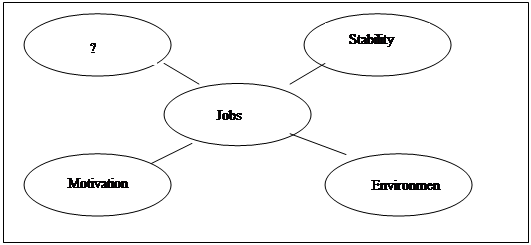
 right hand, and in many countries and regions in Europe some people still follow this tradition.
 .You can have an inscription put on the inside the band.
Farming was once the chief way of life in nearly every country. People cannot live without food, and nearly all their food comes from crops and animals raised on farms. Not many people farm for a living any more, but farming remains the most important work in the world.
Before the nineteenth century, the typical American family lived on a small farm. They raised pigs, cattle, sheep, chickens, and planted corn, frui ts, garden vegetables, and wheat. Everyone worked long and hard, but the results were often poor. Families barely harvested enough food for themselves. This situation began to change during the last half of the 1800's and it changed remarkably(明显地) in the next century.
Scientific methods and labor-saving machinery have made farming increasingly productive. The development of improved plant varieties and fertilizers has helped double and even triple the production of some major crops. More scientific animal care and animal raising have helped increase the amount of meat and products that animals produce. At the same time, the use of tractors and other modern farm equipment has sharply reduced the need for farm labor.
As farming has become less important as a way of life in the United States, it has become more important as a source which offers materials to industry. Today's successful farmers are experts not just in agriculture but also in accounting, marketing, and finance. Farms that are not run in a similar way have great difficulty surviving.
【小题1】 We are told in the first paragraph about ____.
| A.the history of farming | B.the importance of farming |
| C.the development of farming | D.the changes of farming |
| A.Farmers didn’t work hard on their farms. |
| B.Farmers used tractors to help them. |
| C.Farming was the main way of living for most people. |
| D.Farmers could supply materials to industry. |
| A.scientific methods | B.labor- saving machinery |
| C.farmers’ hard work | D.chemical fertilizers |
| A.the advantages of American farming | B.the changes in American farming |
| C.the situation of American farms | D.how rapidly farming has developed |