题目内容

Who Owns the Moon?

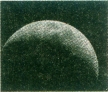
Within the next ten years, the US, China, Israel, and a crowd of private companies plan to set up camp on the moon. So if and when they plant a flag, does that give them property rights?

A NASA working group hosted a discussion this week to ask: Who owns the moon? The answer, of course, is no use. The Outer Space Treaty, the international law signed by more than 100 countries, states that the moon and other celestial bodies(天体) are the province of all mankind. No doubt that would annoy all of the people throughout the ages, like monks from the Middle Ages, who have tried to claim the moon was theirs.

But ownership is different from property rights. People who rent apartments, for example, don’t own where they live, but they still hold rights. So with all of the upcoming missions(派遣团) to visit the moon and beyond, space industry thought leaders are seriously asking themselves how to deal with a potential land rush.

“This is a very relevant discussion right now. We’ve got this wave of new lunar missions from around the world,” said William Marshall, a scientist in the small-spacecraft office at NASA, but who spoke this week at an event hosted by NASA’s Co Lab, a collaborative(协力的) public-private working group. He was peaking from his personal interest and not on behalf of the agency.

To be sure, the United States aims to send astronauts back to the moon by as early as 2015, in a mission that would include a long-term settlement. China and Israel, among others, are also working on lunar projects. And for the first time, several private groups are building spacecraft to land on the moon in an attempt to win millions of dollars in the Google Lunar X Prize. Some participants say that they plan to gain some property rights in the mission.
1.In the passage the writer seems to be worrying that .

A. the US will live on the moon forever

B. the moon will not be able to hold all mankind

C. the potential land rush will become more and more frequent

D. no one can answer the question “Who owns the moon?”

2.The “Google Lunar X Prize” aims to .

A. encourage private groups to land on the moon

B. help NASA host a discussion about land rush on the moon

C. help some developing countries complete their lunar projects

D. reward some countries or private groups which haven’t stepped on the moon

3.The underlined word “that” in the first paragraph refers to .

A. the Outer Space Treaty B. if and when they plant a flag

C. the NASA working group D. monks from the Middle Ages

4.What is the main idea of the last paragraph?

A. The US astronauts will live on the moon for a longer time.

B. Many countries and private groups plan to go to the moon.

C. Why some private groups wish to land on the moon.

D. It is easy to gain some property rights on the moon.
练习册系列答案
相关题目

What benefits can you have from a film? A well-made film offers a whole world of things to watch. First there are the story aspects — the plot, characters, dialogue and themes. Then there are the technical aspects — the camera work, cuttings and special effects. And there are many other things, like the credits, musical score and the acting. A well-made film offers much more than you see in one viewing (观看).

Films are a means of communication. They can tell you things, just as newspapers do, or television, or any other means of communication. Sometimes they communicate important things to you, like ideas or lifestyles or ways of looking at the world. Sometimes people are aware of this, and sometimes not. The more you are aware of this, the better you are.

Notice, for example, the way films sometimes affect fashion. A star dresses or wears her hair in a certain way, and suddenly everyone is imitating (模仿) her. Boys in the 1950s could sometimes be seen wearing black leather jackets, idling (闲逛) on street corners and smoking cigarettes. They were imitating Marion Brando. His films taught them a certain way to behave.

Films can also teach politics. In Star Wars, the heroes were a bunch of lovable incompetents (无能者) fighting with guts (胆量) and not much else. They were, in fact, rather like the British in the early days of WW II. Their enemies, like the Nazis, had a big advantage in equipment and numbers of troops, and they were like the Nazis in discipline and heartlessness too. The whole film, in fact, was a re-run (重演) of WW II, and taught values like faith and love of liberty. This is all to the good, but the point is, did you notice it?

1.All of the following are mentioned as noticeable aspects of a film EXCEPT________.

A. the list of names of actors and directors,etc.

B. the cost of a film

C. the music for a film

D. the language used in a film

2.The last sentence in Paragraph 1 probably means ________.

A. a high quality film can be appreciated repeatedly from different angles

B. a good film always attracts a lot of viewers

C. a well­ made film usually has more than one theme

D. one can never find out how many characters there are in a good film

3.It can be inferred from the passage that in his film,Marion Brando was ________.

A. a motorist who always wore a black leather jacket

B. a homeless man who died of excessive smoking

C. a rebellious man during WWⅡ

D. an idler who didn't have any serious things to do

4.Star Wars is a film________.

A. about WWⅡ B. for politics

C. reflecting WWⅡ D. for peace lovers

Our house was directly across the street from the clinic entrance of John Hopkins Hospital in Baltimore. We lived downstairs and rented the upstairs rooms to the patients at the clinic.

One evening as I was fixing supper, there was a knock at the door. I opened it to see a truly awful-looking man. He’s hardly taller than my eight-year-old son. “Good evening. I’ve come to see if you’ve a room. I came for a treatment this morning from the eastern shore, and there’s no bus till morning.” He told me he’d been hunting for a room since noon but with no success. “I guess it’s my face…I know it looks terrible, but my doctor says with a few more treatments…” For a moment I hesitated, but his next words convinced me: “I could sleep in this chair on the porch. My bus leaves early in the morning.”

I told him we would find him a bed. When I had finished the dishes, I talked with him. He told me he fished for a living to support his five children, and his wife, who was hopelessly crippled (残疾的) from a back injury. He didn’t tell it by way of complaint. Next morning, just before he left, as if asking a great favor, he said, “Could I come back and stay the next time?” He added, “Your children made me feel at home.”

On his next trip he arrived a little after seven in the morning. As a gift, he brought a big fish and the largest oysters (牡蛎) I had ever seen. I knew his bus left at 4:00 a.m. and I wondered what time he had to get up in order to do this for us.

In the years he came to stay overnight with us and there was never a time that he did not bring us vegetables from his garden. I know our family always will be grateful to have known him; from him we learned how to accept the bad without complaint when facing the misfortune.

1.Why did the author agree to let the man spend the night in his house at last?

A. Because the man said others refused to accommodate him.

B. Because the man said he would not cause much inconvenience.

C. Because the man said he had come from the eastern shore.

D. Because the man said he had been hunting for a room since noon.

2. How long would it take the man to travel from his home to Baltimore by bus?

A. About 1 hour. B. About 2 hours.

C. About 3 hours. D. About 4 hours.

3.From the text we can know that __________.

A. the author’s children were kind and friendly to the man

B. the man was fed up with his hard-work and his family

C. John Hopkins Hospital provided rooms for the patients to live in

D. the author and his family were thought highly of by his neighbors

4.The author’s family were grateful to know the man because __________.

A. he often brought them fish and vegetables from his garden

B. he paid them money for his staying

C. he taught them how to accept the bad without complaint

D. he stayed only overnight with the writer’s family

阅读下面短文,从短文后各题所给的四个选项(A、B, C和D)中,选出可以填入空白处的最佳选项,并在答题卡上将该项涂黑。

In the depths of my memory, many things I did with my father still live. These things have come to represent, in fact, what I call and love.

I don’t remember my father ever getting into a swimming pool. But he did the water. Any kind of ride seemed to give him pleasure. he loved to fish; sometimes he took me along.

But I never really liked being on the water, the way my father did. I liked being the water, moving through it, it all around me. I was not a strong , or one who learned to swim early, for I had my . But I loved being in the swimming pool close to my fathers’ office and those summer days with my father, who come by on a break. I needed him to see what I could do. My father would stand there in his suit, the person not in swimsuit.

After swimming, I would go his office and sit on the wooden chair in front of his big desk, where he let me anything I found in his top desk drawer. Sometimes, if I was left alone at his desk he worked in the lab, an assistant or a student might come in and tell me perhaps I shouldn’t be playing with his . But my father always and said easily, “Oh, no, it’s .” Sometimes he handed me coins and told me to get an ice cream...

A poet once said, “We look at life once, in childhood; the rest is .”And I think it is not only what we “look at once, in childhood” that determines our memories, but , in that childhood, looks at us.

1.A. desire B. joy C. anger D. worry

2.A. avoid B. refuse C. praise D. love

3.A. boat B. bus C. train D. bike

4.A. But B. Then C. And D. Still

5.A. on B. off C. by D. in

6.A. having B. leaving C. making D. getting

7.A. swimmer B. rider C. walker D. runner

8.A. hopes B. faiths C. rights D. fears

9.A. spending B. saving C. wasting D. ruining

10.A. should B. would C. had to D. ought to

11.A. next B. only C. other D. last

12.A. away from B. out of C. by D. inside

13.A. put up B. break down C. play with D. work out

14.A. the moment B. the first time C. while D. before

15.A. fishing net B. office things C. wooden chair D. lab equipment

16.A. stood up B. set out C. showed up D. turned out

17.A. fine B. strange C. terrible D. funny

18.A. the student B. the assistant C. myself D. himself

19.A. memory B. wealth C. experience D. practice

20.A. which B. who C. what D. whose

Is gun play good or bad for children? For many years I emphasized its harmlessness. When concerned parents expressed doubt about letting their children have toy guns, because they didn’t want to encourage them in the slightest degree to become criminals, I would explain how little connection there was. In the course of growing up, children have a natural tendency to bring their aggressiveness more and more under control if their parents encourage this. One- to two-year-olds, when they are angry with another child, may bite the child’s arm without hesitation. But by 3 or 4 they have already learned that aggression is not right. However, they may pretend to shoot their mother or father, but smiling to assure them that the gun and the aggressive behaviour aren’t to be taken seriously.

In the 6- to 12-year-old period, children will play an earnest game of war, but it has lots of rules. There may be arguments, but real fights are relatively rare. At this age children don’t shoot at their mother or father, even in fun. It’s not that the parents have turned stricter; the children’s own conscience has. In adolescence aggressive feelings become much stronger, but well brought-up children can turn them into athletics and other competition or into kidding their friends.

In other words, I’d explain that playing at war is a natural step in the disciplining of the aggression of young children; that a cautious parent doesn’t really need to worry about producing a criminal.

But nowadays I’d give parents much more encouragement to guide their child away from violence. A number of incidents have convinced me of the importance of this.

One of the first things that made me change my mind, several years ago, was an observation that an experienced nursery school teacher told me about. Her children were hitting each other much more than previously, without reason. When she talked to them, they would protest, “But that’s what the Three Stooges do.” (This was a children’s TV program full of violence which immediately became very popular.)

What further shocked me into reconsidering my view was the assassination(暗杀)of the former President, and the fact that some schoolchildren cheered about this. (I didn’t so much blame the children as I blamed the kind of parents who will say about a President they dislike, “I’d shoot him if I got the chance!”)

These incidents made me think of other evidences that Americans often tolerate lawlessness and violence. We were hard on the Indians and the later waves of immigrants. At times we denied justice to groups with different religions or political views. And now a great percentage of our adult as well as our child population has been endlessly fascinated with dramas of Western violence and with cruel crime stories, in movies and on television. This doesn’t necessarily mean that we Americans on the average have more aggressiveness inside us than the people of other nations. I think rather that the aggressiveness we have is less controlled, from childhood on.

To me it seems very clear that in order to have a more stable and civilized national life we must bring up the next generation of Americans with a greater respect for law and for other people’s rights than in the past. There are many ways in which we could and should teach these attitudes. One simple opportunity we could seize in the first half of childhood is to show our disapproval of lawlessness and violence in television programs and in children’s gun play.

I also believe that the survival of the world now depends on a much greater awareness of the need to avoid war and to actively seek peaceful agreements. There are enough nuclear arms to completely destroy all civilization. This terrifying situation demands a much greater stability and self-control on the part of national leaders and citizens than they have ever shown in the past. We owe it to our children to prepare them deliberately for this awesome responsibility.

1.The underlined word “this” in Paragraph 1 refers to______.

A. controlling their aggressiveness

B. playing with toy guns

C. aggressive behavior

D. the course of growing up

2.Based on the author’s view about the relationship between children’s aggressiveness and their age, which of the following is true?

A. A 2-year old boy knows that it is not correct to behave aggressively.

B. The older children become, the less aggressive they will be.

C. 6- to 12-year-olds enjoy war games but develop them into argument and serious fights.

D. Adolescents’ aggressiveness is often displayed in the form of competition.

3.What conclusion does the author intend to draw from the story told by the nursery school teacher?

A. Watching violence can lower a child’s standard of behaviour.

B. Violent TV programs should be banned in nursery schools.

C. Children are generally lawless or violent nowadays. I

D. It is acceptable to let children have toy guns

4.What does Paragraph 7 mainly talk about?

A. Examples showing that Americans are more aggressive than other nations.

B. Evidences proving that America has a long history of lawlessness and violence.

C. The idea that children are less able to put their aggressiveness under control.

D. More reasons why the author changed his view on the main issue of the article.

5.What is a must if people intend to enjoy stability and civilized national life?

A. To show disapproval of gun play in television programs.

B. To make people aware that there are already enough nuclear arms.

C. To elect national leaders with greater stability and self-control.

D. To bring up children who show more respect for the law and others’ rights.

6.Which of the following serves best as the title of the article?

A. How Does Age Influence Aggressiveness?

B. Are American Children Becoming More Aggressive?

C. Should Children Play With Guns?

D. What Should Parents Teach Their Children

违法和不良信息举报电话:027-86699610 举报邮箱:58377363@163.com

精英家教网