题目内容
Most people who experience bad service while traveling, shopping, or dining out do no complain. They accept bad services or products without making a sound. Why? Many feel complaining won’t do any good. In fact, they’re wrong, because companies don’t want their customers unhappy. Not sure you can do it? Here are some ways to use when things go wrong.
1.If you have a complaint, do something about it right away. The longer you wait, the harder it will be to get your complaint solved.
2.First, complain to the servers. If they are not going to solve your problem, then ask politely to speak to a manager. And if that doesn’t work, you can always request to speak to the manager’s manager!
3.Demand a discount(折扣). Let’s say you were promised a hotel room with an ocean view, but got a view of a brick wall instead; if you were promised a seat in the front of a plane, but got a seat in the back. You should do something about both of these situations. Ask a special discount.
4.Don’t be passive. Offer ways you think the company can satisfy you.
5.Insist on the price you were told. If you are refused, get a manager’s name and telephone number, and promise to follow up with a letter and a telephone call.
6.If all else fails, wait until you get home and take action. Call the company’s head office, and speak to the most powerful person possible. Then follow up your call with a letter of complaint. If necessary, call the customer protection office in your city and complain.
- 1.
According to the text, people don’t complain because________.
- A.they think complaining doesn’t work
- B.they consider it wrong to complain
- C.they don’t want to waste their time
- D.they don’t want to become unpopular
- A.
- 2.
To complain about something, you should________.
- A.wait until you come back home
- B.prepare for a long time
- C.talk to the manager directly
- D.try to solve the problem actively
- A.
- 3.
What might be the best title for the text?
- A.Get what you should get
- B.Complain as you please
- C.Take action to deal with problems
- D.Avoid trouble and don’t complain
- A.

 it but later found it made you feel very uncomfortable over time? When you select your career, there’s whole lot more to it than assessing your skills and matching them with a particular position. If you ignore your personality, it will hurt you long-term regardless of your skills or the job's pay. There are several areas of your personality that you need to consider to help you find a good job. Here are a few of those main areas: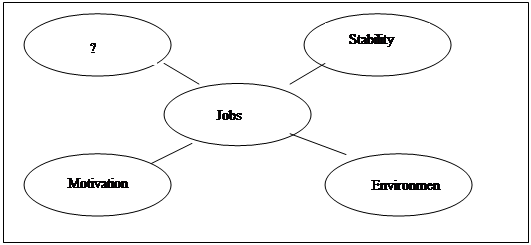
 right hand, and in many countries and regions in Europe some people still follow this tradition.
 .You can have an inscription put on the inside the band.
Farming was once the chief way of life in nearly every country. People cannot live without food, and nearly all their food comes from crops and animals raised on farms. Not many people farm for a living any more, but farming remains the most important work in the world.
Before the nineteenth century, the typical American family lived on a small farm. They raised pigs, cattle, sheep, chickens, and planted corn, frui ts, garden vegetables, and wheat. Everyone worked long and hard, but the results were often poor. Families barely harvested enough food for themselves. This situation began to change during the last half of the 1800's and it changed remarkably(明显地) in the next century.
Scientific methods and labor-saving machinery have made farming increasingly productive. The development of improved plant varieties and fertilizers has helped double and even triple the production of some major crops. More scientific animal care and animal raising have helped increase the amount of meat and products that animals produce. At the same time, the use of tractors and other modern farm equipment has sharply reduced the need for farm labor.
As farming has become less important as a way of life in the United States, it has become more important as a source which offers materials to industry. Today's successful farmers are experts not just in agriculture but also in accounting, marketing, and finance. Farms that are not run in a similar way have great difficulty surviving.
【小题1】 We are told in the first paragraph about ____.
| A.the history of farming | B.the importance of farming |
| C.the development of farming | D.the changes of farming |
| A.Farmers didn’t work hard on their farms. |
| B.Farmers used tractors to help them. |
| C.Farming was the main way of living for most people. |
| D.Farmers could supply materials to industry. |
| A.scientific methods | B.labor- saving machinery |
| C.farmers’ hard work | D.chemical fertilizers |
| A.the advantages of American farming | B.the changes in American farming |
| C.the situation of American farms | D.how rapidly farming has developed |