题目内容


A shopkeeper sent his son to learn about the secret of happiness. The boy wandered through the wilds for many days. He ____ reached a beautiful castle, where a wise man lived.

Entering the ____, the boy saw the wise man talking with some people listening ____. It was two hours before it was his ____. The boy explained why he had come. The wise man suggested that the boy ____ and return in two hours.

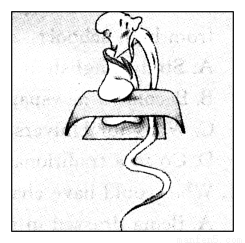
“Meanwhile, I want you to do something”, said the wise man, handing the boy a spoon that held two drops of ____. “As you walk around, carry this spoon without allowing the oil to spill (溢出).”

The boy began ___ up and down many stairs, keeping his eyes fixed on the ____. After two hours, he returned to the room where the wise man was.

The wise man asked, “Did you see the Persian tapestries (壁毯) ____ in my dining hall? Did you see the ____ that took a master gardener ten years to build?”

The boy was ___, and admitted that he had observed nothing. His only ____ was not to spill the oil he was given.

“Go back and observe the marvels of my world”, said the wise man. “You cannot ____ a man if you know nothing about his house.”

Relieved, the boy picked up the spoon and ____ his exploration again. This time he observed all the ____ of art on the ceilings and the walls. Upon returning, he related ____ everything he had seen.

“But where are the drops of oil I had given to you?” asked the wise man. Looking down at the spoon he ____, the boy saw that the oil was ____.

“Well, there is only one piece of ____ I can give you”, said the wise man. “The secret of happiness is to ____ all the marvels of the world and never to forget the drops of oil on the spoon.”

1.A.suddenly      B.happily

C.finally D.accidentally

2.A.castle B.palace

C.cottage D.kitchen

3.A.eagerly B.attentively

C.seriously D.quietly

4.A.conversation B.report

C.chance D.turn

5.A.look around B.look back

C.set down D.set out

6.A.milk B.water

C.oil D.coffee

7.A.sweeping B.climbing

C.running D.jumping

8.A.man B.castle

C.way D.spoon

9.A.hanging B.knitting

C.storing D.flying

10.A.house B.farm

C.garden D.lake

11.A.disappointed B.embarrassed

C.surprised D.confused

12.A.worry B.plan

C.energy D.concern

13.A.trust B.suggest

C.accept D.thank

14.A.sought B.continued

C.began D.stopped

15.A.treasures B.works

C.designs D.exhibits

16.A.in detail B.in common

C.in general D.in particular

17.A.contained B.needed

C.bought D.held

18.A.stolen B.gone

C.dry D.ready

19.A.discover B.keep

C.own D.see

20.A.information B.clothing

C.advice D.equipment


1.C

2.A

3.B

4.D

5.A

6.C

7.B

8.D

9.A

10.C

11.B

12.D

13.A

14.C

15.B

16.A

17.D

18.B

19.C

20.D

【解析】

文章大意:本文是一篇记叙文。一个小伙子向一位智者请教快乐的秘密,智者让他手拿一个装有两滴油的勺子在城堡里四处走走。最后,智者告诉他快乐的秘密就是:在观看世界所有奇迹的同时,永远不要忘记勺子里的油。

1.答案:C finally“最终;终于”。根据前面的“for many days”可知,他在找了很多天以后,终于到了智者居住的城堡。

2.2】答案:A 根据第一段最后一句中的“reached a beautiful castle”可知,他进入了城堡(castle)。

3.3】答案:B 句意:他看到智者在和一些人讲话,这些人很专心地听着。attentively“专心地”。

4.4】答案:D 句意:小伙子等了两个小时,才轮到他和智者说话。turn“(依次轮到的)机会”。

5.5】答案:A 句意:智者让小伙子在城堡里面四处走走,两小时后回来。

6.6】答案:C 根据后面一句可知,小伙子手里拿着一个勺子,里面有两滴油(oil)。

7.7】答案:B 他开始沿着城堡的楼梯爬上爬下(climbing)。

8.8】答案:D 在走动的时候,他的眼睛一直盯着勺子(spoon)。

9.9】答案:A 智者问他:“你看到我的餐厅的墙上悬挂着(hanging)的波斯壁毯了吗?”

10.0】答案:C 此处表示“你看到一个熟练的园丁花了十年的时间修建的花园(garden)了吗?”由后面的“master gardener”可判断出此处应是garden。

11.1】答案:B 句意:面对智者提出的问题,小伙子感到十分尴尬(embarrassed)。他承认,自己转了一圈却什么也没有看到。

12.2】答案:D 因为他的全部注意力都放在了勺子里面的油上,所以他什么也没有观察到。concern“重要的事情”。

13.3】答案:A 句意:如果你不了解他的住所,你就不能信任(trust)一个人。

14.4】答案:C 句意:小伙子松了口气拿起了勺子,再次开始(began)了他的探索之旅。

15.5】答案:B 这次他看到了墙壁上和天花板上所有的艺术品。work“作品;著作”。

16.6】答案:A 句意:当他回到智者身边时,他详细地讲述了这次他看到的一切。in detail“详细地”;in common“共有;公有”;in general“总的说来”;in particular“特别;尤其”。

17.7】答案:D 句意:看看手里拿着(held)的勺子,小伙子发现里面的油没有了。

18.8】答案:B 由于这次他只注重观察城堡的环境,以至于油洒了,故此处表示油没有(gone)了。

19.9】答案:C 最后,智者给了他一条忠告(advice)。

20.20】答案:D 句意:快乐的秘密就是,在观看(see)世界所有奇迹的同时,永远不要忘记勺子里的油。

练习册系列答案
相关题目

Here I'd like to talk about how to develop your curiosity and make use of it to make discoveries. Asking questions is the first step to make discoveries and find interesting answers when you are curious about something and want to know more about it.

Firstly, write down the subject that you are interested in on a note card or piece of paper. Just put the main idea down, such as “Discover more about dinosaurs.”

Next, think for a moment about what you already know about your subject and list information like the sentences below:

1. Dinosaurs lived long before human beings appeared.

2. Dinosaurs lived on the earth for more than 150 million years.

3. Some dinosaurs fed on plants, some on meat.

Thirdly, ask yourself “What can I do with what I want to learn?” On your paper, start writing down questions about the dinosaurs as you think of them:

1. What's the best weather for dinosaurs to live in?

2. How many kinds of dinosaurs are there?

3. Have dinosaurs really disappeared?

Fourthly, armed_with_your_list_of_questions,_you can now visit the nearest library or turn to computer to begin your research. As you learn more about your subject, you'll probably discover some new questions.

For example, you might discover that dinosaurs disappeared about 65 million years ago. Why? What happened? Asking new questions can help you research your subject more deeply.

The next time you find something interesting to research, take time to organize your thinking by asking good questions. And remember—learning more always bring more questions.

1.While doing some research, you should take the following steps________.

①list what you want to know

②choose a research subject

③list what you already know

④discover new problems

A.①④③②       B.①②④③

C.②③①④ D.②①④③

2.What does the underlined sentence “armed with your list of questions” mean?

A.Taking your list of questions with you to do more research.

B.Writing down your list of questions before turning to the computer.

C.Discussing your questions with your classmates for solution.

D.Putting your questions aside before going to the library.

3.According to the passage, which of the following is TRUE?

A.You can find all the answers online.

B.Learn more, and you'll have no questions.

C.Asking questions is the only way for research.

D.During the research, more questions may arise.

4.The best title for this passage is________.

A.Discovering Dinosaurs

B.Asking Good Questions

C.Finding Suitable Subjects

D.Having Interesting Answers


We can make all the jokes we want about taking baths ourselves, but if we are ill in bed and can't get up, we'll be thankful to the nurses who help us get clean. While I am not a nurse, and have never given anyone a bath, I would imagine that it would take a lot of sympathy (同情) and patience to do so.

Yet those who attended the International Conference on Intelligent Robots and Systems last month were introduced to Cody, a robot that can bathe human beings.

The robot has a base that can be turned to all directions, two human?like arms, and movable wrists (腕). It uses a camera to locate parts of the human body. It then uses bath gloves to clean with a little pressure.

The robot was designed at the Georgia Institute of Technology. Charles Kemp of the Healthcare Robotics Lab is the senior researcher for the project. In a test run, Cody was able to remove 96% of a test subject's dirt—not bad for a robot.

But don't go asking for Cody yet—he's still a model. Yet researchers believe that one day Cody may take the place of nurses for this task. Researchers say that Cody will give patients dignity and protect their personal information. I suppose that would depend on the patient. I'm not sure whether a robot using a camera would make me feel very dignified.

Even so, I can appreciate the need. We don't have enough nurses to go around, and those places that are the most short?handed, for example, nursing homes, are those that have the most patients who are unable to bathe themselves. Still, before I get there, I hope they think of a better way to solve the problem.

1.The writer thinks bathing others must ________.

A.be a lot of fun

B.make you feel thankful

C.take a lot of patience

D.make you feel dignified

2.What is the third paragraph mainly about?

A.Why and where Cody was designed.

B.What Cody looks like and who designed it.

C.What Cody can do and where it will work soon.

D.How Cody works and what has made that possible.

3.We know from the fourth and fifth paragraphs that ________.

A.Cody can bathe patients better than a real nurse can

B.robots like Cody are being produced in large numbers right now

C.Cody can take the place of nurses completely in hospitals

D.researchers think Cody can protect patients' personal information

4.There is a need for Cody because ________.

A.people are becoming lazier

B.it can bring down the cost of nursing

C.there are not enough nurses

D.there are too many nursing homes

5.In the writer's opinion, Cody is ________.

A.acceptable but not perfect

B.strange but not creative

C.clever and strong

D.lovely and careful


违法和不良信息举报电话:027-86699610 举报邮箱:58377363@163.com

精英家教网