题目内容

—Who should be responsible for the accident?

—The boss, not the workers. They just carry the orders _______.

A. as told B. as are told

C. as telling D. as they told


A

【解析】

试题分析:考查省略。根据句意可知,应该是被告知的。排除C,当状语从句主语和主句的主语一致,并且状语从句的有个be动词时,可以将状语从句的主语和be动词同时省略。句意:——谁应当为这起事故负责?——是老板,不是工人。他们只是执行老板命令。故A正确。

考点:考查省略


练习册系列答案
相关题目

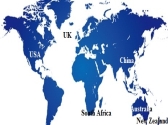
English is currently one of the most widely spoken and written languages worldwide, with some 380 million native speakers, who live in the UK, the USA, Australia, New Zealand, South Africa and other countries. It is spoken as an official language or second language in countries such as India and Nigeria. In these countries, English is the language of the government, newspapers, radios and TV stations. Besides, it is one of the working languages of the UN as well.

And there are some other facts about English you might be interested in knowing.

Over 700 million people, speak English, as a foreign language.

Did you know that of all the world's languages (over 2,700), English is the richest in vocabulary; and that the Oxford English Dictionary lists about 500,000 words,

Five of the largest broadcasting companies in the world (CBS, NBC, ABC, BBC and CBC) broadcast in English, reaching millions and millions of people all over the world.

It is said that over 90 percent of Internet web pages and over 80 per cent of the world’s emails are in English.

As a foreign language, it is learnt in almost all non- English speaking countries. In China, for example, it is not just students who learn English, but also many adults.

Although there are some differences between the English spoken in different countries, people from these countries usually have no problems communicating with each other.
English is one of the most widely 1. languages.

Facts

Detailed information

English-speaking countries

The UK, the USA, Australia, New Zealand, South Africa…

Official or working language

India, Nigeria and 2.

Widespread use

On the radio, on the web page, and in 3.

4.

With 500,000 words in Oxford English Dictionary

Conclusion

Despite the 5. that exist, people have no difficulty in communicating.


Coffee has become a popular drink in our culture. Most people have a coffee maker at home for guests who come to visit. It naturally contains caffeine (咖啡因), which people in today’s society have somewhat come to rely on (依靠) to provide them with energy.

In the workplace many people start their day with a cup of coffee, and then continue to drink it until it’s time to go home. Many meetings also begin with a cup of coffee --- which is why so many workplaces now have a steady flow of office coffee.

Coffee is unsurprisingly one of the most traded agricultural products in the world, supporting the economy in many countries. Coffee is made from the roasted(烤,烘,焙) seeds of coffee cherries, which grow on trees in over 70 countries. The seeds are roasted to different degrees depending on the flavors wanted, and then are brewed (泡,煮) to create the coffee drink. Coffee is usually sold already roasted, so that all you have to do is add hot water.

Coffee is labeled according to its appearance --- light, medium light, medium, medium dark, dark, or very dark.

People argue a lot about whether the effect of drinking coffee is positive or negative. Some people think that drinking too much coffee is bad for our health. But you can buy decaffeinated (脱去咖啡因的) coffee, which has a lot less caffeine. Most people, however, would not care about the negative effects of drinking coffee.

Title: Coffee --- A Modern Trend

The reason for coffee’s popularity

containing caffeine which makes people 1. ______

The places where people drink coffee

●providing coffee for 2. __________ at home

●drinking coffee 3._____________


The coffee-making 4. ___________

●made from seeds on coffee trees

●roasted to create coffee drinks

●mixed with 5. ________ before it is drunk

The category of coffee

●classified based on its 6.__________


People’s attitude towards the

7. _________ of coffee

●arguing as to whether drinking coffee is8. ________

●worrying about the risk of drinking 9. __________

●10.______ the side effect of drinking coffee


If English is not your first language, it is a good idea to take English language classes to improve your written and spoken communication skills. There are many ways to learn English. You can learn from a book, a DVD, on the Internet or by attending classes. One of the most successful ways to improve your English is to join a course in a country where English is widely spoken. The more you practice, the more you will learn. But why learn the English language? English is an important language for anyone who is planning to travel or become involved in business.

  Many people love traveling, but if their English is poor, it can be difficult to understand signs, read directions and make themselves understood. Before traveling, it is important to understand the culture and customs of the places you visit. Learning basic English before you travel will help you to understand these customs and avoid mistakes that could be embarrassing. When you are traveling, you will also enjoy meeting new people. If you can speak English, you will have a better chance of being able to communicate with the people you meet. Many of your new friends will speak English and others will have English as a second language. Without English, your friendships will be limited as you travel around the world.

  If you are involved in business, it is important to be able to communicate in English. The Internet, world travel and modern communication systems have made the world seem like a much smaller place. These days business people interact with customers and other business people from all over the world. That makes your English language skills more important than ever. There are many English language courses that major in business communications. Improving your English skills is one of the best things you could ever do to increase your chances of business success.

1.What kind of people is English important to according to the passage?

A. Travelers. B. Teachers. C. Students. D. Language experts.

2.Which of the following is the best way to learn English well?

A. Traveling around the world with English-speakers.

B. Taking a course in an English-speaking country.

C. Learning from all kinds of books or DVDs.

D. Learning on the Internet by yourselves.

3.According to the passage, which of the following is NOT the aim of learning basic English?

A. To have more opportunities to communicate with others.

B. To understand the customs of your destination.

C. To avoid embarrassing mistakes on your journey.

D. To research the causes of cultural differences.

4.What is the main idea of the third paragraph?

A. The more you practice, the more you will learn.

B. Doing business helps to improve your communication skills.

C. English is important for anyone who is involved in business.

D. The Internet has made the world become smaller and smaller.

5.We can infer from the passage that _____.

A. learning English well will make you achieve goals more easily

B. learning English only aims at achieving business success

C. without learning English, your friendships will be limited wherever you are

D. you needn’t learn English if you don’t want to travel


There are some things humans can go without. We can lose a kidney (肾)or a lung, an arm or two and still live perfectly well. But some fish put us to shame. They can get by without stomachs.

One such fish is the stout longtom(尖嘴魚 ). The group it belongs to carries a more appropriate name: the needlefish. All needlefish lack stomachs. Their ancestors had them, but later they were lost.

The stout longtom can reach 1.3 meters in length, and lives near the sea surface. Like all needlefish, it can jump out of the water to escape its enemies. Tropical(热带) fishermen are sometimes injured by needlefish. In 1977, a 10-year-old Hawaiian boy was killed when a needlefish jumped through his brain. The longtom eats smaller fish. Its teeth are not good at cutting fish into pieces, so it swallows fish whole.

Ryan Day from Australia and his colleagues wanted to know how the longtom digests its meaty meals without a stomach, so they ran some chemical tests about the fish.

Day’s results show that the longtom can consume food without the help of a stomach. It uses a special material called trypsin(胰岛素) that can break down proteins without acid — although the approach is less efficient than using a stomach.

Because it’s a meat-eating animal, the longtom gets a lot of protein in its food, so it can afford this slightly less efficient system for absorbing it. Two plant-eating fish that Day studies actually had higher levels of trypsin in their body, as their food was low in protein.

Day thinks that the longtom and its stomachless relatives might actually have arrived at an energy-saving solution. He says that although the stomach is critical to many kinds of animal, the organ is “a fairly expensive organ to run”. This perhaps explains why some animals have got rid of theirs.

1.What does the underlined phrase “get by” mean?

A. Live.B. Fight.C. Hunt.D. Recover.

2.Ryan Day ran the chemical tests in order to find out how the longtom ______.

A. catches smaller fish in the water

B. can jump so high to escape its enemies

C. digests the smaller fish in its body

D. uses acid to break down the protein

3.What plays a key role in the longtom’s digestion process?

A. AcidB. Trypsin.C. The stomach.D. Protein in its body.

4.Ryan Day’s results show that ______.

A. the longtom often waste energy

B. the longtom can make acid easily

C. the longtom’s high-protein food helps its unique way of consuming food.

D. meat-eating fish have higher levels of trypsin in their bodies than plant-eating fish


违法和不良信息举报电话:027-86699610 举报邮箱:58377363@163.com

精英家教网