
It was the end-of-the-year party at school. I asked my mother to______us cookies. Mom’s chocolate chips were the______. But two o’clock passed, and she didn’t appear(出现). Most of______mothers came and then left, dropping off their cookies, chips and cupcakes. I took my bag and left for________.

The house was empty when I______. My heart was filled with anger(生气)._____the first time in my life, my mother let me_____. I was lying on my bed upstairs when I heard her________the front door. “ Robbie,” she called out. “Where are you?” I could hear her running from room to room. She was________me. I kept silent(寂静的). When she walked into my room and sat beside me, I didn’t move. “I’m so sorry, dear.” She said, “I was busy and forgot.” I still kept________.

Then my mother began to laugh. I couldn’t believe_______. I rolled (翻滚)over and faced her. But my mother wasn’t______at all. She was crying . “I’m so sorry, I let my boy down.” She cried like a little girl. I never______my mother cry. “It’s OK, Mom,” I reached out and stroke(抚摸) her hair. “ We didn’t even need those_______. There was lots of food to eat. Don’t cry. It’s all right.”

My______made my mother sit up. She pulled me to her. We didn’t say another word. We just held each other in a long hug(拥抱).

1.A. make B. put C. have D. give

2.A. better B. best C. more D. most

3.A. the other B. others C. another D. the others

4.A. school B. home C. hospital D. park

5.A. got B. went C. reached D. arrived

6.A. At B. On C. By D. For

7.A. up B. down C. back D. out

8.A. come over B. come through C. come into D. come out

9.A. looking at B. looking around C. looking for D. looking up

10.A. silent B. surprised C. angry D. sad

11.A. him B. it C. her D. them

12.A. standing B. laughing C. smiling D. crying

13.A. felt B. looked C. found D. saw

14.A. sweets B. cupcakes C. cookies D. hamburgers

15.A. words B. thoughts C. actions D. crying

I work as a volunteer for an organization(组织) that helps the poor in Haiti. I decided to take my son Brain there for a week, hoping to educate him.

Before getting out, I told Brain this trip would be tiring and hard. For the first two days, he said almost nothing. Then on the third day, when we were climbing over high rocky mountains, he turned to me and smiled, “Really hard.”

After that, a five-year-old girl, wearing a too large dress and broken shoes, followed Brain around. Later he said regretfully(遗憾地), “I wish I could speak French.” I was surprised that this was from a boy who always hated French classes.

However, the moment that really reached my heart occurred in a village deep in the mountains. I was interviewing a woman villager for an article. By working hard, she had learned to read and write and became part of the leadership(领导层) of the village.

Learning her story, Brain was greatly touched. His eyes were wet and there was love and respect on his face. He finally understood the importance of my work. When leaving for home, Brain even offered to stay in as a volunteer. This trip was very meaningful.

1.Why did the writer take his son to Haiti?

A. Because they wanted to take a trip there.

B. Because the writer wanted to educate his son.

C. Because his son wanted to help the poor there.

D. Because they went there to visit a friend.

2.Why was the writer surprised about his son?

A. Because his son said nothing about the hard trip.

B. Because a little girl liked his son.

C. Because his son wished to speak French.

D. Because his son wanted to talk with the little girl.

3.What does the underlined word “occurred” mean?

A. Left. B. Offered. C. Happened. D. Reached.

4.What is the passage mainly about?

A. An exciting trip. B. How to be a volunteer.

C. A story of a volunteering trip. D. The importance of voluntary work.

“I will think of it.” It is easy to say this, but do you know what great things have come from thinking?

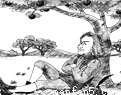
Sir Isaac Newton was sitting in his garden when he saw an apple fall from a tree. He began to think and tried to find out why the apple fell. Then he discovered how the sun, moon, and stars are kept in their places.

A boy named James Watt sat quietly by the fire, watching the lid of the kettle move up and down. He wanted to find out why the steam in the kettle moved the lid. From that time he went on thinking and thinking. And when he became a man, he improved the steam engine(蒸汽机) so much that it could easily do the work of many horses.

James Ferguson was a poor boy. Once, seeing the inside of a watch, he wondered. “Why should I not make a watch?” But how could he get the materials to make the mainspring(钟表的主发条)? He soon found he could make it with whalebone(鲸骨). He then made a wooden clock which kept good time. His motto(座右铭) was “I will think of it.” And he made his thoughts useful to himself and the world.

Boys and girls, when you have a difficult lesson to learn, don’t lose heart, and don’t ask someone for help before helping yourselves. Think, and by thinking you will learn how to think to some purpose.

1.From the passage, we know that some great things come from __________.

A. listening B. reading C. speaking D. thinking

2.The achievement(成就) of James Watt was that he __________.

A. kept thinking B. found the steam in the kettle

C. improved the steam engine much D. watched the lid move up and down

3.The right order of the following sentences is __________.

① James Ferguson made a wooden clock.

② James Ferguson saw the inside of a watch.

③ James Ferguson made the mainspring with whalebone.

A. ③②① B. ②③① C. ②①③ D. ③①②

4.What is the main idea of the passage?

A. Learn to ask for help.

B. A difficult lesson to learn.

C. It is easy to say “I will think of it.”

D. Think, and by thinking you will learn how to think to some purpose.

It’s a sad story: someone keeps failing an exam for four years. It’s the story of Torobo, a robot from Japan.

Torobo has been trying to enter the University of Tokyo in Japan. The university, also called Todai, is one of Asia’s top universities. Since 2013, Torobo has taken the national college entrance exam with other Japanese students. However, the robot has failed to get the required (必需的) score for Todai every year. This year was no exception.

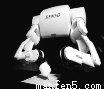
Torobo is part of a project called “Can a Robot Get into the University of Tokyo?” Japan’s National Institute of Informatics started the project in 2011. Torobo does not walk around. It is a robot brain that has arms to complete the test.

? Researchers of the project want to find out what intellectual abilities (智能) will be replaced by machines. Results show that Torobo has grown in ability year by year. This year it got a score higher than Japan’s national average(平均分), which is enough to enter other good universities, but not Todai. With its big database, Torobo is good at solving knowledge-based problems and mathematical calculations (数学运算). That’s why it got good scores in physics, history and math. But Torobo has a hard time thinking independently (独立地). As a result, it got weak scores in language and writing.

Luckily, after four years of suffering, researchers have decided to free Torobo from taking the test. They will grow Torobo’s ability in the fields it’s doing well in, so that it can be used in those industries(工业) in the future.

So while Torobo will never graduate from Todai, it can still look forward to a bright future!

1.According to the story, Torobo is _______while Todai is _______.

A. a university, a robot B. a robot, a university

C. a student, a computer D. a computer, a student

2.We can tell from the story that Torobo _______for four years.

A. has taken the college entrance exam B. has missed the college entrance exam

C. has been studying in the University of Tokyo D. has taught the college courses

3.Which of the following is TRUE about Torobo?

A. Torobo can’t have a bright future because it will never graduate from Todai.

B. Torobo will go on taking the college entrance exam.

C. Torobo is useless to humans.

D. Torobo’s ability in the fields it’s doing well in will be better in the future.

4.Why did Torobo get low scores in two subjects?

A. Because it cannot solve knowledge-based problems.

B. Because it is not good at mathematical calculations.

C. Because it cannot think independently.

D. Because it only has arms to complete the test.

A game of catch is not difficult at all. Two people throw a ball back and forth (来回地掷球). It seems a little boring. The two people are close enough to talk, but too far to touch.

In fact, playing catch is part of baseball practice. It’s a popular game. Because baseball is an American sport, and a big part of being American, playing catch is kind of an all-American dad activity. Outside cities, most people have backyards – not large enough to play baseball in, but just big enough for a game of catch. Those without yards can play in streets.

But any American kid will tell you it’s much more than a game. Playing catch is a time to be with your father. It’s a time when there’s nothing to worry about except catching a ball. When they play it, words move together with the ball itself, back and forth, easy and relaxing(放松). Kids and dads spend time together.

The game can be good memories(记忆) of dads. Why? Dads are usually very busy. This is a time when a kid has all of his or her dad’s attention(注意力). There is no work, no phone and no other people around to take your dad away from you. For the time that it takes to play a game of catch, your dad is all yours.

The Game of 1.

What’s the game

It’s part of baseball 2..

A(n)3. and “boring” game

Two people throw a ball back and forth. They can talk but can’t 4.each other when playing it.

A(n) 5.game

Catch is an all-American activity because6. is part of being American.

People play the game in yards or 7..

A game between kids and dad

Players needn’t worry about8. except (除了)catching a ball.

9. and the ball move together.

A kid can have all his or her Dad’s 10.. He or she can have the whole of his or her dad when they play the game.

 0  130071  130079  130085  130089  130095  130097  130101  130107  130109  130115  130121  130125  130127  130131  130137  130139  130145  130149  130151  130155  130157  130161  130163  130165  130166  130167  130169  130170  130171  130173  130175  130179  130181  130185  130187  130191  130197  130199  130205  130209  130211  130215  130221  130227  130229  130235  130239  130241  130247  130251  130257  130265  159627 

违法和不良信息举报电话:027-86699610 举报邮箱:58377363@163.com

精英家教网