题目内容
When you feel a sneeze(喷嚏)or cough coming on, covering your mouth prevents the spread of germs(细菌). You probably knew that.
But how to cover your mouth is very important. You might use tissues(纸巾), and put your used tissues into the bin. “If you don’t have tissues, you should sneeze into your elbow, not your hand, even if you are used to doing that.” The doctors advised.
“If somebody sneezes into his hands, those germs will be passed on to other people, or other objects that people touch.” said Dr. Hill.
Germs are most commonly spread by sneezing and coughing. When they land on your hands, they are passed from hands to things like bills, door knobs(扶手), elevator buttons(电梯按钮) and other surfaces. At the same time, the people around you can touch them.
This isn’t nagging(唠叨). The Centers for Disease Control also suggest that sneezing and coughing into your elbow is necessary. Even the New York City subway officers ask the passengers to “cough or sneeze into elbow or use a tissue.”
“The suggestion was taken seriously about 10 years ago. However, most people didn’t pay much attention to it. That means the adults may have missed the advice. But children are often taught in school the right way to cough or sneeze.” Dr. Benjamin said.
To be clear, people can’t keep away from all the risks in this way, but it’s the best choice. At the same time, we’d better wear masks(口罩) and often wash our hands. “Hand washing is one of the most important things people can do to keep healthy.” Dr. Hill said.
1.According to this passage, when sneezing or coughing, you’d better NOT .
A. sneeze into your elbow
B. cover your mouth with tissues
C. use your hand to cover mouth
D. put the used tissues in the bin
2.If you sneeze or cough into hands, germs can spread through the following activities EXEPT .
A. 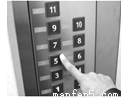
B. 
C. 
D. 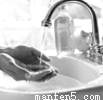
3.Which is NOT true according to the passage?
A. The New York City subway officers ask passengers to use a tissue.
B. The adult may be used to sneezing into their elbow.
C. The children are often taught in school the right way to cough or sneeze.
D. Wearing masks is a good way to keep away from germs.
4.What’s the main purpose of this article? .
A. To tell us the correct way to cover mouth when sneezing or coughing.
B. To tell us how to prevent the spread of germs.
C. To tell us it’s necessary to sneeze or cough into elbow.
D. To tell us how to keep away from all risks.
5.In which layout(版面) of the newspaper can we find this kind of passage? .
A. Health B. Sports C. Business D. Education
 1.C
2.D
3.B
4.B
5.A
【解析】
这是一篇有关健康方面的文章。告诉我们打喷嚏或咳嗽时最好不要用手捂住嘴,因为细菌会落到手上,它们会从手中传递到纸币、门把手、电梯按钮等其他物体的表面而传播给他人。只有及时洗手才能洗掉细菌,防止细菌传播。戴口罩也是有效防止细菌传播的好方法。
1.细节理解题。根据文中句子“If you don’t have ti...
1.C
2.D
3.B
4.B
5.A
【解析】
这是一篇有关健康方面的文章。告诉我们打喷嚏或咳嗽时最好不要用手捂住嘴,因为细菌会落到手上,它们会从手中传递到纸币、门把手、电梯按钮等其他物体的表面而传播给他人。只有及时洗手才能洗掉细菌,防止细菌传播。戴口罩也是有效防止细菌传播的好方法。
1.细节理解题。根据文中句子“If you don’t have ti...

根据句意,用括号中所给词或音标的正确形式填空, 每空一词。
1.It ______ ([t?t?t]) me deeply to see how these poor people lived at yesterday’s show.
2.I was afraid of the______(dark)in my room at night when I was very young.
3.The wetland park is home to the ______ (tiny) birds in China. They are only 10 cm long.
4.People in the _____([?s???n])cities suffered from rainstorms last two months.
5.Look! Jim’s and Tom’s ______ (stomach) are bigger. They should keep on a diet.
1.touched
2.dark
3.tiniest
4.southern
5.stomaches
【解析】
1.句意:在昨天的节目中看到这些穷人是怎样生活的,我深受感动。本句it是形式主语,后面的不定式结构是真正主语,句子缺谓语动词;根据句意语境和音标提示,可知填touched。
2.句意:当我很小的时候,我害怕夜晚房间里的黑暗。be afraid of... When we write an article, we can use “ ” to show sequence.
A. as a result B. for example C. in fact D. at first
D
【解析】
句意:当我们写文章时,我们可以用“ ”来表示顺序。考查介词短语辨析题。as a result结果,表结果;for example例如,表举例;in fact事实上;at first首先,表顺序。句中sequence是名词,意思是“顺序”;根据句意语境,可知选D。 (题文)在你的成长历程中,一定收到过礼物。有件礼物不一定贵重,但是在你看来却非常珍贵。
某英语杂志以“A Precious Present(一件珍贵的礼物)”为题举办征文活动,请写一篇短文,跟大家分享。内容包括:
1.这件礼物是什么?
2.你为什么觉得它珍贵?
3.它背后有什么故事?
要求: 1.100词左右; 2.文中不得出现真实姓名及校名。
A precious present
The title “A Precious Present” reminds me of quite a few gifts I’ve got. Yet, the first come to my mind is the book, the Adventures of Tom Sawyer.
On my tenth birthday, my fat... –It is said that children in South Korea have to hike and walk through mountains at night their military(军事的) training.
--Really? So their training is much harder than ours.
A. after B. since C. during D. before
C
【解析】
句意:——据说,韩国的孩子们在夜间进行军事训练时,必须在山上徒步旅行。——真的吗?所以他们的训练比我们的要艰苦得多。A. after在……之后;B. since自从;C. during 在……期间;D. before在……之前。结合句意可知,韩国的孩子们在夜间军事训练期间,必须在山上徒步旅行。故答案选C。 -- Hi, Li Mei. How is your new school?
-- Fantastic. We can choose the courses according to our . I love operas, so I took the Beijing Opera class.
A. grades B. talents C. interests D. experiences
C
【解析】
句意:——嗨,李梅。你的新学校怎么样?——太棒了。我们可以根据自己的兴趣选择课程。我喜欢歌剧,所以我参加了京剧班。A. grades成绩,分数; B. talents才艺;C. interests兴趣;D. experiences经验。根据“I love operas, so I took the Beijing Opera class.”可知,每个人可以根据自己的兴趣爱... What ______ great fun we had ______ the changes _____ the birds’ numbers!
A. a; recorded; in B. a; to record; of
C. /; recording; in D. /; record; of
C
【解析】
句意:在记录鸟类数量的变化活动中我们多么开心啊!考查感叹句、动词固定搭配以及介词用法。根据What ______ great fun we had ______ the changes _____ the birds’ numbers!可以推断句意为在记录鸟类数量的变化活动中我们多么开心啊!句子have fun doing为固定词组“做某事很高兴”,其中fun为不可数名词... Do you think everyone _____ their weekends? Old Henry does ___ . Last month, he went _____ a walk ___ Wang Wang, his cute dog. It was a nice day and old Henry was happy. He _____ down and watched Wang Wang
______ with a friendly black cat.
Then it was time to go home. Old Henry _____ for his dog. “Wang Wang!” But Wang Wang wasn’t there. Now old Henry is very _____ . He has no dog and _____ family. He _____want to do anything.
1.A. enjoy B. enjoyed C. enjoys D. enjoying
2.A. not B. no C. any D. so
3.A. to B. for C. on D. in
4.A. and B. or C. with D. has
5.A. sit B. sits C. sitting D. sat
6.A. play B. plays C. to play D. played
7.A. looking B. looks C. to look D. looked
8.A. sad B. happy C. luck D. lucky
9.A. not B. any C. no D. some
10.A. didn’t B. don’t C. doesn’t D. isn’t
1.C
2.A
3.B
4.C
5.D
6.A
7.D
8.A
9.C
10.C
【解析】
本篇文章讲诉了一位老人周末带着自己可爱的狗狗出去散步,看到狗狗和一只猫玩得开心,老人也很开心,正准备回家时,却发现狗不见了,他很伤心,因为老人把狗狗当成自己的家人一样看待。
1.句意:你觉得每个人都会享受他们的周末吗?考查语境及动词。分...