题目内容

【题目】看图短文填空(本大题有10小题,每小题1.5分,共15)

阅读下面短文,并借助上下文和插图补充所缺信息。每个空只能填写一个形式正确、意义相符的单词。请将答案填写在答卷相应题目的答题位置上。
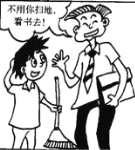
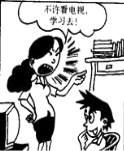
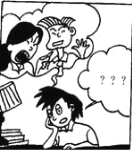
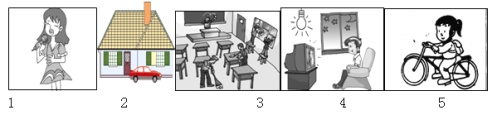
Yesterday afternoon, when Liu Jun got home after school, he wanted to do some housework. While he was sweeping the floor, his father came back and 1 him doing it. Later when he was 2 TV, his mother came up and turned3________ the TV and said, "You shouldn't waste your4________. Go to study!"

In China, more and more families have only one child. Parents only hope that their children can learn their lessons well so as to find a good job in the future. So they won’t let their children do5 at home. In fact, 6 the child has few chances to practise in their daily life, they will not be 7 to prepare themselves for the future. They can not do anything 8 the help of others. So9 is not good for the children to learn only the knowledge (知识) from books. They have to learn about life. 10 keep themselves in books only!

【答案】

1stopped

2watching

3off

4time

5anything

6because

7able

8without

9it

10don’t

【解析】

试题分析:该短文主要讲述的是中国家长对孩子教育的一个问题。在中国许多家长把孩子局限在学习上,不让他们体验生活。文中针对这种现象指出这是个错误的观点,认为这其实对孩子将来的成长生活将产生不利的影响,因此应该拒绝将孩子局限在学习上这种观点。

1】细节理解题。借助图片可知,刘军放学后想要帮家长做一些家务。但是当他在拖地时,他的爸爸回来了,让他不要拖了。所以填stop,这里是stop的过去式。

2】细节理解题。根据图片可知,当他正看电视时,他的妈妈上来把他的电视关掉了,然后对他说,不应该浪费时间,去学习!”watching TV固定搭配。

3】细节理解题。结合图片和句意可知,他的妈妈上来后把电视关掉了。Turn off关掉。

4】细节理解题。Waste time固定搭配,浪费时间。Do something 做事情,否定句应用anything

5】细节理解题。联系上下文可知,在中国,越来越多的家庭就只有一个孩子,所以他们只希望孩子能够好好学习,将来找个好工作。所以他们不想让孩子做任何事情。Do something 做事情,在否定句中,用anything

6】细节理解题。句意:事实上,因为在日常生活中许多孩子得不到锻炼,他们不能为将来做好准备。Because,因为。

7】细节理解题。Be able to do sth能够做某事。句意:因为许多的孩子在日常生活中得不到很好的锻炼,以至于他们都无法为将来做好准备。

8】细节理解题。句意:没有他人的帮助,他们什么也做不了。Without介词,没有。

9】细节理解题。句意:所以只让孩子学习课本上的知识是不好的。It做形式主语。

10】细节理解题。联系上文可知作者强调,孩子们必须学习生活,不能让他们只局限在学习上。Don’t do sth不要做某事。

练习册系列答案
相关题目

【题目】A greeting is a way of saying “Hello” to someone.People in different countries greet each other in different ways.Here are some.

World Greetings

Philippines

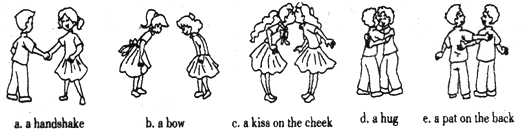
The everyday greeting for friends is a handshake for both men and women.Men sometimes pat each other on the back.

Japan

When people meet for the first time, they usually bow.In business, people also shake hands.In formal situations, people often exchange business cards.When you give a business card, give it with two hands.This is polite.Special note: In Japan, a smile can have different meanings.It usually means that the person is happy, or that the person thinks something is funny.But it can also mean that the person is embarrassed.

New Zealand

Usually, both men and women shake hands when they meet someone for the first time.

Fun fact: If you see two people pressing their noses together, they are probably Maori.The Maori are the native(当地的)people of New Zealand.This is their traditional greeting.

Brazil

Men often shake hands when they meet for the first time.

When women meet, they kiss each other on the cheek.Women also kiss male friends to say hello.

When you shake hands, look at the person in the eyes.This shows interest and friendliness.

【1In which country do men sometimes pat each other on the back?

A.Philippines B.Brazil C.Japan D.New Zealand

【2In this passage, which of the following is NOT mentioned(提及)?

A.Kisses B.Hugs C.Bows D.Handshakes

【3Of the five pictures above (a, b, c, d and e), which is the same way to greet each other in the four countries?

A.a B.b C.c D.d

【4Which of the following is TRUE according to the passage?

A.Both men and women shake hands in Brazil when they meet.

B.Japanese won’t smile until they feel very happy.

C.The Maori often press their noses together to greet each other.

D.In Philippines, people shake hands only when they meet for the first time.

【5】What does the writer mainly want to tell us in the passage?

A.Different ways of greetings.

B.Four countries.

C.Some fun facts.

D.Some special notes.

违法和不良信息举报电话:027-86699610 举报邮箱:58377363@163.com

精英家教网