题目内容
B. lend; lend
C. borrow; borrow
D. borrow; lend

 天天向上一本好卷系列答案
 小学生10分钟应用题系列答案
“Are you happy?” The simple question usually makes people confused (迷惑的). Even Mo Yan, who won a Nobel Prize, replied to it by saying, “I don’t know.”
When a migrant worker (农民工) was asked, “Are you happy? (Ni Xing Fu Ma?)” by a CCTV reporter, he looked confused before replying, “My family name is Zeng. (Wo Xing Zeng.)” This has become a joke. But his answer showed migrant workers and TV reporters live in different worlds and they cannot even communicate with each other.
Similarly, when asked, “Are you happy?” a 73-year-old man, collecting used plastic bottles in a street in Zhejiang, said, “The bottles can be sold for 0.1 yuan each.” Asked again, he said, “The government is good.” The reporter went on, “My question is ‘Are you happy?’” The old man answered, “My hearing is not good.”
The reporter probably tried to reach the same answer that the interviewees(被采访者) including the migrant worker and the old man are “happy”.
In fact, when the question is asked, we should learn about people’s true situation and their true wishes and opinions but their “Yes” or “No”.
Luckily, the government has paid more attention to the importance. Now there are many TV programs giving common people the chance to give their opinions.
“Everything we do is aimed at letting people live more happily.” At last year’s National People’s Congress (人大), Wen Jiabao said and agreed that increasing happiness would be a top aim for the 12th five-year plan.
【小题1】Ten plastic bottles could be sold for ________ to the 73-year-old.
| A.0.1 yuan | B.1 yuan | C.10 yuan | D.20 yuan |
| A.learning about people’s true wishes and opinions |
| B.people’s different replies to “Are you happy?” |
| C.improving migrant workers’ education |
| D.keeping the old people’s health |
| A.The reporters wanted the people to say “Yes” when asked “Are you happy?” |
| B.Letting people live more happily is a top aim in the next five years. |
| C.The reporter asked the old man three different questions. |
| D.We can call the migrant worker Mr. Zeng. |
| A.the questions | B.the happiness |
| C.the popular songs | D.the education |
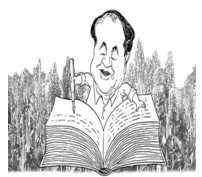
Born into a farmer’s family, life was not easy when I was a kid. We were so poor that we often did not know where our next meal was coming from. I had to sell cabbages at the marketplace to support my family.
A storyteller once came to the marketplace, and I went to listen to him. My mother was unhappy with me for forgetting my job. But that night, while she was making clothes for us under the weak light of an oil lamp, I couldn't help retelling stories I'd heard that day. She listened impatiently at first, since in her eyes professional(职业的) storytellers were smooth-talking men—nothing good ever came out of their mouths. But slowly she was attracted by my retold stories, and from that day on, she never gave me any task on market days, unspoken agreement to enjoy new stories. As a repayment(回报)for Mother's kindness and a way to show off my memory, I'd retell the stories for her in lively detail. Soon, she wasn't the only member of my audience, which later included my elder sisters, my aunts, even my stubborn grandmother.
I knew she was worried about me. Talkative kids are not well thought of in our village, for they can bring trouble to themselves and to their families when they talk too much. Mother often reminded me not to talk so much, wanting me to be a silent and modest teenager. However, my natural desire(渴望)to talk never went away, and that is what makes my name – Mo Yan, which means ‘no speaking’. This strong wish to talk also improved my ability to express myself, which is important for writers who are also considered as storytellers.
【小题1】Mo Yan lived a/an ________ life when he was young.
| A.hard | B.colourful | C.easy | D.rich |
| A.little Mo Yan was interested in selling vegetables |
| B.his mother was attracted by the retold story at first |
| C.his mother didn’t let him listen to the new stories again |
| D.little Mo Yan had quite a good memory |
| A.Because she thought they never said anything good. |
| B.Because she thought they couldn’t make much money. |
| C.Because she thought they would affect Mo Yan’s schoolwork. |
| D.Because she thought most people didn’t like listening to stories. |
| A.silent | B.modest | C.talkative | D.trouble-making |
| A.My Unlucky Childhood | B.A Storyteller’s Childhood |
| C.My Kind Grandmother | D.More talking leads to success |

Born into a farmer’s family, life was not easy when I was a kid. We were so poor that we often did not know where our next meal was coming from. I had to sell cabbages at the marketplace to support my family.
A storyteller once came to the marketplace, and I went to listen to him. My mother was unhappy with me for forgetting my job. But that night, while she was making clothes for us under the weak light of an oil lamp, I couldn't help retelling stories I'd heard that day. She listened impatiently at first, since in her eyes professional(职业的) storytellers were smooth-talking men—nothing good ever came out of their mouths. But slowly she was attracted by my retold stories, and from that day on, she never gave me any task on market days, unspoken agreement to enjoy new stories. As a repayment(回报)for Mother's kindness and a way to show off my memory, I'd retell the stories for her in lively detail. Soon, she wasn't the only member of my audience, which later included my elder sisters, my aunts, even my stubborn grandmother.
I knew she was worried about me. Talkative kids are not well thought of in our village, for they can bring trouble to themselves and to their families when they talk too much. Mother often reminded me not to talk so much, wanting me to be a silent and modest teenager. However, my natural desire(渴望)to talk never went away, and that is what makes my name – Mo Yan, which means ‘no speaking’. This strong wish to talk also improved my ability to express myself, which is important for writers who are also considered as storytellers.
【小题1】Mo Yan lived a/an ________ life when he was young.
| A.hard | B.colourful | C.easy | D.rich |
| A.little Mo Yan was interested in selling vegetables |
| B.his mother was attracted by the retold story at first |
| C.his mother didn’t let him listen to the new stories again |
| D.little Mo Yan had quite a good memory |
| A.Because she thought they never said anything good. |
| B.Because she thought they couldn’t make much money. |
| C.Because she thought they would affect Mo Yan’s schoolwork. |
| D.Because she thought most people didn’t like listening to stories. |
| A.silent | B.modest | C.talkative | D.trouble-making |
| A.My Unlucky Childhood | B.A Storyteller’s Childhood |
| C.My Kind Grandmother | D.More talking leads to success |
