题目内容
书面表达(计30分)
A.根据所给汉语完成下列句子,词数不限。(共5小题;每题2分,计10分)
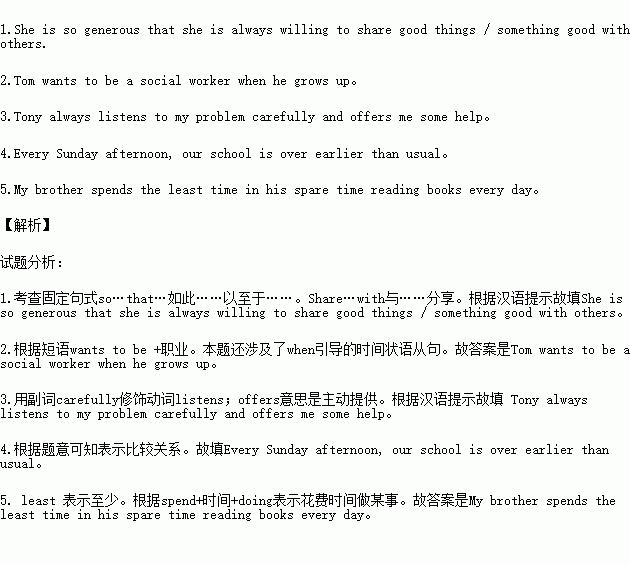
1.Millie很慷慨,她总是乐意和别人分享她的东西。
__________________________________________________________________________
2.Simon长大后想当一名社会工作者。
__________________________________________________________________________
3.Tony总是仔细倾听我的问题并给我提供帮助。
___________________________________________________________________________
4.每周日下午,我们学校放学比平时要早些。
___________________________________________________________________________
5.我的弟弟每天花最少的业余时间看书。
___________________________________________________________________________

 新课标阶梯阅读训练系列答案
任务型阅读 (共10空;每空1分,计10分)
阅读下列短文,根据短文中的信息完成文后表格。(每空一词)
Although many Chinese students say that their knowledge of English grammar is good, most would admit that their spoken English is poor. Whenever I speak to some Chinese students, they always say, “My spoken English is poor.” However, their spoken English does not have to remain “poor.” I would like to suggest that there may be some reasons for their problems with spoken English.
First, they fail to find suitable words to express themselves because of a limited vocabulary. Obviously the better answer is to enlarge their vocabulary. However, you can speak with a limited vocabulary, if your attitude is positive. Others will follow you as long as you use the words that you know.
Second, they are afraid of making mistakes. Sometimes they make mistakes when they are speaking because they are shy and nervous. Yet students should remember that their goal should be FLUENCY NOT ACCURACY(准确性). Your aim in writing is to be accurate following the rules for grammar and using them to get your message across. But talk to someone in English, as quickly and well as you can, even though sometimes you may use a wrong word or tense, but it doesn’t matter because the person you are speaking to will understand and forgive you for any mistakes he hears.
The third reason is that not enough attention is paid to listening. You have one mouth but two ears! All that hearing is necessary for you to start speaking.
Fourth, most Chinese students are inactive rather than positive language learners. Instead of actively seeking out opportunities to improve their spoken English, they passively wait for speaking opportunities to come to them and wonder why their English always remains poor. If you have this positive outlook(观点), then, you will see English opportunities wherever you go.
If you do not use your English beyond the classroom you will forget the English you know. Remember: USE IT OR LOSE IT! You can learn how to speak English better by speaking English more.
_1.__ | Context (内容) |
A limited vocabulary | You have to enlarge your vocabulary. |
You should take a positive attitude towards __2._ English. | |
Being afraid of making mistakes | Being shy and__3.__ makes it easy to make mistakes. |
Fluency is more important. Talk to someone in English as quickly and well as__4._ It doesn’t__5._ any difference if you may use a wrong word or tense. | |
Lack of _6.while listening | All that __7.__ is necessary for you to start speaking. |
Lack of positive outlook | __8._ language learners, most Chinese students passively wait for speaking opportunities instead of seeking them out __9.__ |
You won’t see English opportunities __10.__ you have positive outlook. |