题目内容
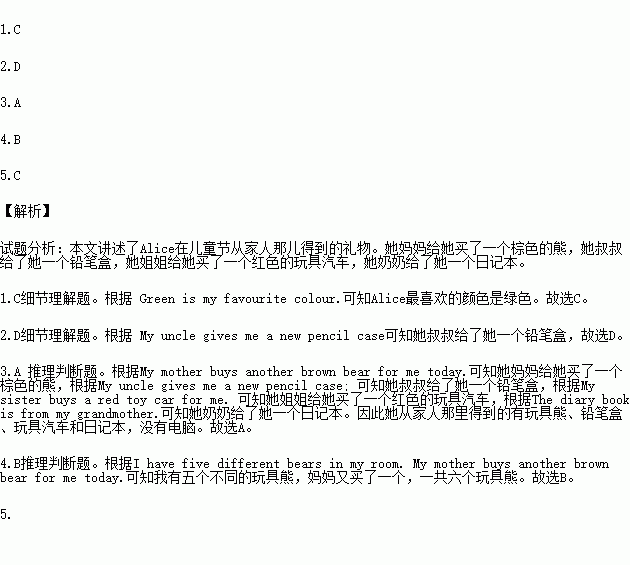
I'm Alice. Today is Children's Day. I get many presents (礼物) from my family. Do you want to have a look?
I like toy bears very much. I have five different bears in my room. My mother buys another brown bear for me today. It's very cute;
My uncle gives me a new pencil case; It's so nice. There's an interesting picture on it. My uncle buys it in Canada.
My sister buys a red toy car for me. I like cars very much. My sister is so nice. Green is my favourite colour. But I like the car best.
The diary book is from my grandmother. I like writing a diary in the evening. I want to be a writer when I grow up.
1.What's Alice's favourite colour?
A. Brown. B. Red. C. Green. D. Yellow.
2.Who gives Alice a pencil case?
A. Her grandmother. B. Her mother.
C. Her sister. D. Her uncle.
3. Alice doesn't get_______ from her family.
A. a computer B. a diary book
C. a toy bear D. a toy car
4. How many toy bears does Alice have now?
A. Five. B. Six. C. One. D. Two.
5. What's the best title?
A. A Writer B. Children's Day
C. My Presents D. My Family

 天天向上一本好卷系列答案
 小学生10分钟应用题系列答案
1.Mrs. Li wants to send her daughter to take some piano lessons during the coming summer holiday. 2.Betty and her boyfriend want to spend the weekend to watch something new. They both like dancing. 3.Darning wants to buy some newspaper to read so that he can improve his English. 4.Mr. Black wants to come to Beijing for the first time in August. He wants to enjoy the real Beijing Opera very much. 5. Tony and his colleagues will have a trip in Guangzhou next week.They need to rent a car and a driver who understands English. | A. Watch Your Neck: This modern ballet is telling the story of “Dracula” which is the classic novel by Irish playwright Bram Stoker. Time: 8:30p.m. February2-9. Tel: 98558588 B. Children’s Activity Center: Tel: 66589982. Add: No.2 Zhongshan Road. ( Singing lessons, piano lessons and dancing lessons.) C. Art Show: A total of 10 artists living close to each other are jointly giving an art exhibition. D. Peking Opera: Mei Lanfang’s brave fighting against the Japanese during the War of Resistance against Japanese will open your mind. E. Foreign Book Center: More and more increasing learning English books and newspapers, CDs. Etc. F. The Changcheng Hotel: Five star hotel. Looking for much experienced receptionists. Tel: (010) 55883326 G. Car-Hire Service: 12 seat Forit transit van for hire in Zhujiang Business and Private Hire. We have English speaking drivers. |
信息归纳(共5小题,每小题1分,共5分)
请仔细阅读下面关于电视调查的几个问题,然后按信息表中的要求填写信息。
How many hours do you watch TV in a week? Less than 7 hours...20% 7 to 14 hours...30% 15 to 28 hours...34% 29 to 42 hours...13% 42 to 70 hours...3% |
How many TV sets does your family have at home? 1 set...10% 2 or 3 sets...75% more than 3 sets...15% |
What else do you do while the TV set is on? Have dinner...63% Do other things...37% |
Would you give up TV for the rest of your life for 50,000 dollars? Yes...23% No...77% |
Information Card
1.______________of people watch TV for 7 to 14 hours for a week. |
2.3% of people watch TV for______________in a week. |
3.75% of people have _____________ at home. |
4.63% of people_____________while they watch TV. |
5.77% of people wouldn’t____________for the rest of their life for 50.000dollars. |