题目内容
________ wonderful news report you made yesterday!
A. What aB. How
C. WhatD. How a

 亮点激活精编提优100分大试卷系列答案
Almost all the students go to traditional schools now. But there will probably be a new type of education in the future—open education.
There are some very good things about open education. This way of teaching allows the students to develop their interests in many subjects. Open education asks students to be strict with their own education. The open classroom may help them to enjoy learning. Some students will be happier in an open education school. They will not have to worry about grades or rules.
But many students may not do well in open education. They will not make good use of open education. Because open education is so different from traditional education, these students may have a problem of getting used to making so many choices. The last point about open education is that some teachers do not like it. They do not believe in open education.
I think that open education is only a good idea. It may not work very well in a real class or school. I believe that most students want and need to have some rules. They have to study some subjects. Many students are pleased to find the subjects that they have to study so interesting. They will not study those subjects if they do not have to in an open education school.
Open 1. | |
Explanation | ☆ It is a way of teaching which 2. the students to learn what they are interested in without many rules. |
Advantages | ☆ It is good to develop the students’ 3. in many subjects. ☆ In open education, many students don’t need to 4. about grades or rules. ☆ Some students will be 5. in an open education school. |
6. | ☆ Many students cannot prove themselves as good in open education as in 7. classrooms. ☆ There are so many 8. for students to make that they can’t use open education properly. |
The writer’s opinion | ☆ It is just a good idea, but in a 9. class or school, it may not work very well. ☆ Some students will not study some subjects 10. they have to. |
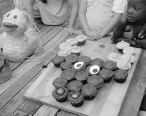
Birthdays are celebrated all over the world. Some ways to celebrate birthdays are rather similar from county to country---candles, cakes and birthday wishes. But there are also different ways to celebrate birthdays. Here are a few:
Denmark
A flag is flown outside a window to show that someone who lives in the house is having a birthday. Presents are placed around the child’s bed while he is sleeping so he will see them at once when he wakes up. |
India Usually Indian children wear white to school. However, on their birthdays, children wear colored clothes to school and give out chocolate to everyone in the class. Their best friends help them to do this. |
Japan
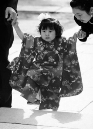
The birthday child wears new clothes to mark the special time. Certain birthdays are more important than others. These are the third and seventh for girls and fifth for boys. | Holland
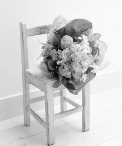
The birthday child receives an especially large present. The family also puts flowers on the birthday child’s chair to make it beautiful. |

1.When someone is having a birthday in Denmark, what can you see outside the window?
A. flowersB. presents
C. a flagD. a chair
2.Flowers are put on the chair of the birthday child in .
A. JapanB. Denmark
C. IndiaD. Holland
3.In India, birthday children .
A. give out chocolate to their classmates
B. share chocolate with their best friends
C. go to school in white clothes
D. wear new clothes to mark the special time
书面表达(共1题,计15分)
初中阶段的学习和生活即将结束,你的老师陪伴你度过了三年的校园生活。回顾其中的许多点点滴滴,久久不能忘记。请你用英文给你的某一位教师写一封信,和他(她)说说感激的心里话。要点提示:
教师表现 | 1.工作认真; 2.严格要求也关爱学生; …… |
留存记忆 | 1.师生相处和睦; 2.学业取得了进步; …… |
要求:1.内容包括所有提示要点,意思完整,语言规范。
2.可适当发挥,增加细节,使语句连贯通畅。
3.文中不要出现你的真实姓名和学校。
4.90词左右,信的首尾写好.不计入总词数。
Dear my teacher,
Leaving you-lovely junior school life, I have so many words from my heart to say.
Thank you again for what you've done for us! All the best to you!
Yours,
×××