题目内容

Who Runs Faster
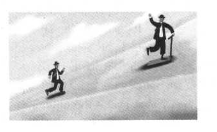
Mr. Brown is one of my friends. He can run very fast and likes to show people how fast he can run.

One day,a thief (/j、偷) got into his house,took some of his things and ran out of the house fast. Mr. Brown found and ran after him,and shouted, “Hey!Don’t  you know you can’ t get away from me?”

But the thief ran much faster. Mr. Brown got angry and ran faster,too. He was soon a few kilometers away from his house. He was running hard when he met me. “Why are you running so fast?” I asked ,“I want to catch a thief. ” said Mr. Brown. “But where is the thief?” I asked. “Kilometers and kilometers behind. ” Said Mr. Brown proudly.“He thought he could run faster than me,but you see he is wrong. ” 

() 1. Did the thief steal () anything from Mr. Brown's house?

   A. Yes,he was. B. No,he wasn’ t. C. Yes,he did. D. No,he didn't.

() 2. Who ran faster,Mr. Brown or the thief?

   A. Yes,Mr. Brown. B. No,the thief. C. Mr. Brown. D. The thief.

() 3. Did Mr. Brown catch the thief?

   A. Yes,he did. B. No,he didn't.

   C. Yes,but he let him go away. D. No,but his friend did.

() 4. The thief .

   A. ran away   B. was angry   C. was caught   D. was sad

() 5. What does the word proudly”mean?

A.自豪地 B.难过地 C.兴奋地 D.不慌不忙

WEEK SIX Thursday 星期四

本文为记叙文。讲述了发生在布朗先生身上的一件事情。布朗先生为了证明自己比小偷跑得快,而把小偷拉下好几里路远,事实上小偷已经逃跑了。

1. C细节理解题。根据第二段第一句“One day, a thief

got into his house, took some of his things and ran out of the house fast. ”可知选C


2. C细节理解题。根据第三段最后一句“He thought he

could run faster than me,but you see he is wrong.”可知选C


3. B细节理解题。根据第三段倒数第三句“Kilometers and kilometers behind. ” 可知选B


4. A推理判断题。根据第三段最后两句可推测出小偷已经跑了。

练习册系列答案
相关题目

Travel Abroad


If you travel abroad (到国外) for the first time,you should know some important things about traveling.

First,before you start your tour,you must make sure that you

have a passport (护照) ,and you should also leam some culture and living habits of the country you are going to visit.

Second,learn some useful words before traveling to a new country. Though few people can learn a new language in a short time,learning some will make the tour more interesting.

Then konwing the vehicles (交通工具)is also important for your tour.When you fires arrive in a foreign country,your first task will be from your arriving airport to a nice hotel. Find out how to get there and how much money it will take.

Finally,exchange money before you go abroad. You will feel convenient (方便的) when you buy food and other things with local money. If everything is ready,your happy tour will begin.

() 1. You must take a when you go abroad.

   A. key   B. ticket   C. passport   D. book

() 2.You should learn all of the following things before going abroad EXCEPT.

   A. some culture   B. living habits   C. some useful words   D. some singers

() 3. You need to firstly when you arrive in a foreign country.

   A. have a good sleep

   B. eat delicious food

   C. get to a hotel from the airport

   D. learn some easy expressions

() 4. people can learn a new language in a short time.

   A. Few   B. Most   C. All   D. Many

() 5. The passage is mainly about.

   A. what to do for the first time to travel abroad

   B. where to go for the first time to travel abroad

   C. how to learn a new language

   D. how to plan your work

Mr. Smith

Mr. Smith was in trouble those days. He drove a car for Mr. Black,a rich businessman. He worked hard and the shopkeeper liked him. But he couldn91 work when he drank too much. And once he almost fell into the river when he drove along the bridge. Mr Black became angry and was going to send him a-

way. He had a big family and was afraid of it and promised (许诺) he would stop drinking at once. The

man told him to wait to be dealt with (处置).

One Monday morning Mr. Smith came into the office with two badly burnt (烧伤的) ears.

“What happened to your ears?” asked Mr. Black.

“Well ,” said the man. “I went to watch a football match yesterday while my wife was ironing (烫) clothes. She had put the iron (褽斗) near the telephone before she went to cook supper. Our team lost the game and I felt sorry for it. As soon as I went into the sitting-room,the phone rang and I answered the iron!”

“And what happened to the other ear?”

“ When I put the iron down on the table,the telephone rang again! ”

() 1. , so he almost drove the car into the river.

   A. Mr. Smith was not careful   B. Mr. Smith drank too much

   C. Mr. Smith forgot they were on the bridge

() 2. Mr. Smith went to watch the football match on .

   A. Monday   B. Saturday   C. Sunday

() 3. We can guess .

   A. Mr. Smith drank much after the match

   B. Mr. Smith was angry with his team

   C. Mr. Smith didn ’ t drink those days

() 4. The badly burned Mr. Smith ’ s ears.

   A. telephone   B. drinking   C. iron

() 5. What would happen to Mr. Smith?

   A. He would go on driving for Mr. Black.

   B. He would never watch any match.

   C. Mr. Black would send him away

B

If you spend some time in an English-speaking country,you might hear the term “etiquette”. It means normal and polite social behavior. This may seem like a difficult word at first,but it can be very useful to understand.

Etiquette is not the same in every culture or in every situation. For example,standing very close to the person you are talking with is quite common in some Asian countries. However,if you do this in Europe,some people might feel uncomfortable. Even in China,we all know that etiquette is not the same in all situations. Perhaps we think that talking loudly in our own homes is fine,but there are other places where talking loudly is not allowed. For example,most people would agree that talking loudly in a library,a museum or a movie theater is impolite. Even if you are with your friends,it is better to keep your voice down in public places.

If we see someone breaking the rules of etiquette,we may politely give them some suggestions. One of the most polite ways is to ask someone, Would you mind doing this or Would you mind not doing that. People donJ t usually like to be criticized,so we have to be careful how we do this.

Although rules of etiquette can often be different,some rules are the same almost everywhere in the world!For example,dropping litter is almost never allowed. If you see someone you know doing this, you can ask him, “Would you mind picking it up?”

根据短文内容,回答问题。

1. What does the word “etiquette” mean?

2. Find out the key sentence of Paragraph 2.

3. If your friend talks loudly in the library,what would you say to him/her?(根据你对短文的理

解,写出一个委婉的建议

4. 请将最后一段中的划线句子译成汉语。

5. 请给短文拟个标题。

Tigers

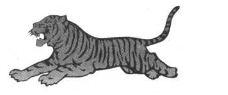
Tigers are strong and dangerous animals. But now they are in danger.

In the past,there were eight kinds of tigers in the world. But during the 20th century,only five were left. The number of Siberian tigers (东北虎) was about 300,.but now it is less than 22. They’re in danger oi dying out. li the government does nothing,we won,t  be able to see them in ten to twenty years.

In order to stop people from hunting and killing wild tigers,and in order to make wild tigers more,

the World Wildlife Fund (世界自然基金会) has started a program (项目) recently (最近). China and twelve other countries joined it.

However,it's not enough. Remember that nature is a Tood chain (). If we hurt and kill too many wild deer and pigs,wild tigers will die out because of hunger (饥饿). So the most important thing is to save the animals that tigers eat. In order to protect the wild tigers,we need call on (号召) more people

to stop eating,hunting and killing wild animals.

() 1. During the 20th century,   kinds of wild tigers died out.

A. 3   B. 5   C. 8   D. 20

() 2. The number of the wild Siberian tigers reduced (减少) about.______

   A. 5%   B. 22%   C. 93%   D. 30%

() 3. Wild tigers will be in danger of dying out without.____

   A. pigs   B. deer   C. people   D. A and B

() 4. Which of the following statements is NOT true?

   A. There are less than 22 wild Siberian tigers now.

   B. There are twelve countries in the World Wildlife Fund.

   C. Wild tigers mainly feed on pigs and deer.

   D. It ’ s our duty to protect the wild tigers.

() 5. The passage mainly tells us .

   A. why and how do we protect the wild tigers

   B. The government does everything they could to protect the wild tigers

   C. the wild tigers will die out in ten to twenty years

   D. the most important thing is to save the animals that tigers eat

Clever Man

One day a poor man was traveling on horseback. At noon,he tied his horse to a tree and then 1 down to eat something. A few minutes later,a rich man came along and tied his horse to the same tree.

“ Please tie your horse to another tree ,” said the poor man. “ My horse is wild. It will kill yours. ” 2 the rich man said ,“ I shall tie my horse as I like!” He tied up his horse and had his lunch nearby. After a moment they heard a terrible 3 ,the two horses were fighting. They went up to them,

but it was too 4 . The rich man’s  horse was killed. “ See what your horse has done!” cried the rich man. “You will have to 5 for it. ” And he brought the poor man before Mr. Know.

Mr. Know asked the poor man some questions. But he made no 6 . At last Mr. Know said ,“ This

man is dumb. He cannot speak.

“ Ohthe rich man shouted 7 . “ He can!He spoke to me when I met him. ”

“Are you sure?” asked Mr. Know. “What did he 8 ?”

“He told me not to tie my horse to the same tree because his horse was wild and would kill my horse.

“Oh ,” said Mr. Know. “So he 9 you. Then can you expect to get money 10 him?”

The rich man said nothing and left silently.

() 1. A. put   B. set   C. sat   D. turned

() 2. A. So   B. But   C. And   D. Though

() 3. A. song   B. word   C. bell   D. noise

() 4. A. late   B. slow   C. hard   D. quick

() 5. A. pay   B. look   C. wait   D. care

() 6. A. idea   B. mistake   C. money   D. answer

() 7. A. quietly   B. angrily   C. happily   D. heavily

() 8. A. speak   B. tell   C. talk   D. say

() 9. A. helped   B. thanked   C. warned   D. ordered

() 10. A. for   B. from   C. with   D. about

违法和不良信息举报电话:027-86699610 举报邮箱:58377363@163.com

精英家教网