ÌâÄ¿ÄÚÈÝ

I can¡¯t understand ______the boy alone.

A. why she left B. why did she leave

C. why she had left D. why had she left

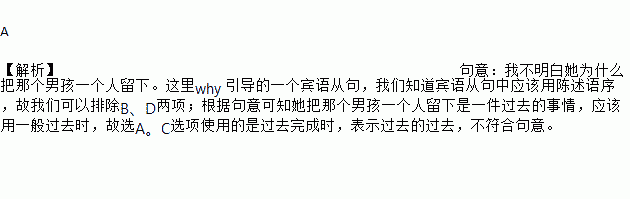
A ¡¾½âÎö¡¿¾äÒ⣺ÎÒ²»Ã÷°×ËýΪʲô°ÑÄǸöÄк¢Ò»¸öÈËÁôÏ¡£ÕâÀïwhy Òýµ¼µÄÒ»¸ö±öÓï´Ó¾ä£¬ÎÒÃÇÖªµÀ±öÓï´Ó¾äÖÐÓ¦¸ÃÓóÂÊöÓïÐò£¬¹ÊÎÒÃÇ¿ÉÒÔÅųýB¡¢DÁ½Ï¸ù¾Ý¾äÒâ¿ÉÖªËý°ÑÄǸöÄк¢Ò»¸öÈËÁôÏÂÊÇÒ»¼þ¹ýÈ¥µÄÊÂÇ飬Ӧ¸ÃÓÃÒ»°ã¹ýȥʱ£¬¹ÊÑ¡A¡£CÑ¡ÏîʹÓõÄÊǹýÈ¥Íê³Éʱ£¬±íʾ¹ýÈ¥µÄ¹ýÈ¥£¬²»·ûºÏ¾äÒâ¡£
Á·Ï°²áϵÁдð°¸
Ïà¹ØÌâÄ¿

¸ù¾ÝËù¸øººÓïÌáʾÍê³ÉÏÂÁоä×Ó¡£

1.ѯÎÊÐÅÏ¢»òÇëÇó°ïÖúÊǷdz£ÆÕ±é¶ø±ØÒªµÄ»î¶¯

______ _______ _______ or help is a very ______ and ______ activity

2.ʹÓÃÕýÈ·µÄÓïÑÔºÜÖØÒª£¬µ«ÓÐʱֻÕâÑùÊDz»¹»µÄ¡£

It¡¯s important _____ ____ ______ _______ _______ proper language, but ________ this alone is not ______.

3.ÎÒÃÇÓ¦µ±Ñ§Ï°ÔõÑùÓÐÀñòµØÌá³öÇëÇó

We need to learn how ______ _______ polite when we _____ ______.

4.Äã˵»°µÄ·½Ê½È¡¾öÓÚÄãºÍ˭˵»°ºÍÄã¶ÔËûÁ˽âµÄ³Ì¶È¡£

The expressions you use might ______ ______ whom you are speaking to or ______ _____ you know them.

5.ΪÁ˲»É˺¦±ðÈË£¬Á˽âÓïÑÔµÄÀñ½ÚºÍѧÓï·¨¡¢´Ê»ãÒ»ÑùÖØÒª¡£

______ _______ ______ _______offend people, _______ language etiquette is just_________ important _____ ______ grammar or vocabulary.

6.ÕâÑù×ö½«ÓÐÖúÄã¸üºÃµØÕÆÎÕÓ¢Óï¡£

_________ will also help you become _______ at English.

7.ËÆºõÀñòµÄ˵±ÈÖ±½Ó±í´ï¸üÀ§ÄÑ£¬´Óij·½ÃæÀ´¿´£¬Õâ¿ÉÄÜÊÇÊÂʵ¡£

______ _______ _______ _______ speaking politely is more difficult than being direct, and ___ ____ ___this may be true.

1.Asking for informationcommonnecessary 2.to learn how to; usesometimesenough 3.to bemake requests 4.depend on how well 5.Inorder not to knowingas aslearning 6.Thisbetter 7.It might ...

Î¥·¨ºÍ²»Á¼ÐÅÏ¢¾Ù±¨µç»°£º027-86699610 ¾Ù±¨ÓÊÏ䣺58377363@163.com

¾«Ó¢¼Ò½ÌÍø