题目内容
—Do you have any pocket money ________?
—Sorry, I spent all my pocket money on my books yesterday.
A. leftB. leavingC. leaveD. to leave
A
【解析】
试题分析:句意:--你还有一些零花钱吗?--对不起,昨天,我花了所有的零花钱去买了书。分析:have sth. done(动词的过去分词),体现被动之意,本句意为零花钱被剩下。故选 A
考点:考查非谓语动词的用法。

 名校课堂系列答案
Western China is a large and beautiful region. It includes one major city, Chongqing, six provinces, and five autonomous regions (自治区). The six provinces are Sichuan, Shanxi, Gansu, Yunnan, Qinghai, and Guizhou. The five autonomous regions are Tibet, Ningxia Hui, Xinjiang Uygur, Guangxi Zhuang, and Inner Mongolia. Among all these provinces and autonomous regions, Xinjiang is the largest region and Ningxia is the smallest region.
Western China has an area of 5,400,000 square kilometers. This is about 56% of the total area of the country. However, there are many mountains, highlands, and deserts, and there are fewer rivers and lakes than in the East. Only around 22% of the population (人口) of China lives in the West, so there are far more people living in the East than living there.
Western China has a lot of natural resources. It is rich in oil and gas and it has many different kinds of minerals (矿). Tourists like to visit the area. There are many famous museums, ancient palaces, tombs (坟墓), and caves (洞), such as the Dazu museum, Shanxi History Museum, the Potala Palace, the Dunhuang Caves, and many other beautiful places such as Yunnan Dali and Sichuan Jiuzhaigou Valley.
Western China | |
Regions | It includes the city of Chongqing, six provinces and five autonomous regions. Among them, Ningxia is 1. than any other region. |
Land | It covers over half of the total area of China, more than five 2. square kilometers. It has many mountains but 3. water than that in the East. |
Population | Only about 22% of the population of China is here. |
4. resources | It is rich in oil, gas and different kinds of minerals. |
Tourism | Travellers can visit the famous5. , old palaces, tombs and caves. |
Daniel likes to do something to protect the environment in his daily life. Next Sunday is his friend’s birthday. He is going to buy some gifts online for his friend. Now he is visiting the following website for some information about gifts.
Welcome to Nature Posters - the world's largest collection(收集) of nature posters and fine art prints!
We make a donation to help the environment when each nature poster is sold through this website! Please tell your friends about us, and remember us when you are gift shopping. |

Daniel chose the following two beautiful pictures as gifts from the website:
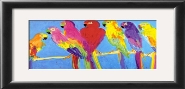
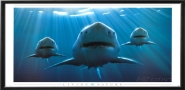
Parrots in Blue: $5.99 Sharks: $7.99
1.Nature Posters is a website ________.
A. to help people plan their birthday parties
B. only to provide information about nature
C. to tell people how to buy birthday presents
D. to help protect nature by selling posters or prints
2. Daniel should pay ________ for his gifts.
A. $5.99B. $13.98C. $7.99D. $2.00