题目内容
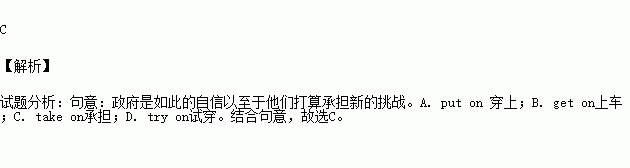
The government is so confident that they are ready to __________ new challenges.
A. put on B. get on C. take on D. try on

 提分百分百检测卷系列答案
In classroom, your teachers will talk about topics that you are studying. The information they provide will be important for you to know when you take tests. So you must be able to take good written notes from what your teachers say.
Here are the three stages (阶段) of taking notes and what you should do during each stage.
1. Before Class
Review your notes you have taken before you come to class. This will be good for remembering what was covered. Get you ready to understand new information your teacher will provide.
2. During Class
Keep your attention on what your teacher is saying and “the signal words” that tell you what your teacher is going to say and it is important to write them down in your notes. Examples of signal words are “The most important point...” and “Remember that...” Be sure to include in your notes information that your teacher repeats or writes on the blackboard. Write quickly so that you can include all the important information in your notes. Do this by writing abbreviations (缩写) such as med for medicine, using symbols such as % for percent, and writing short sentences.
3. After Class
Rewrite your notes to make them more complete and accurate (准确的) by changing abbreviations into whole words, symbols into words, and shortened sentences into longer sentences. Use them to answer your questions. If necessary, ask your teacher for help.
Taking Notes | ||
_____1.____ | The information ____2._ by the teachers about studying topics is useful for your tests, so it is necessary for you to learn to take good notes. | |
Stages | Before Class | ※ Review the notes you have taken to ※ Remember what was covered. ※Be ____3.___ to understand new information. |
During Class | ※ Listen to your teacher carefully. ※ Be sure to include the important points. ※ Write them down _____4.____ | |
After Class | ※ Make your notes more complete and accurate to ___5.____ your questions. ※ Ask for your teacher’s help. | |