题目内容
–Why you come and play basketballwith us?
–Good idea.
- A.not you
- B.not to
- C.not
- D.don't
Why don't you 后跟动词原形,意思是“为什么不...?”

 浙江名校名师金卷系列答案
 全优冲刺100分系列答案
When I was a child I never said, "When I grow up, I want to be a CEO," but here I am. When I look back on my career, I realize the road to becoming a CEO isn't a straight, clear path. In fact, no two paths are the same. But whether you want to be a boss one day or not, there's a lot to learn from how leaders rise to the top of successful companies.
As this series of stories shows, the paths to becoming a CEO may be different, but the people in that position(位置) share the qualities of commitment(义务), work ethic(道德) and a strong desire for building something new. And every CEO take risks along the way—putting your life savings on the line to start a software company or leaving a big business to be one of the first employees at a startup.
I grew up in Minnesota, and learned how to be an entrepreneur(企业家)from my father, who has run a small business for almost 30 years. I went to Georgetown University and tried a lot of business activities in college with success. And I always had a dream job pattern(模式): to walk to work, work for myself and build something for consumers(顾客).
I'm only 29, so it's been a quick ride to CEO. Out of college, I worked for AOL as a product manager, then moved to Revolution Health and ran the consumer product team. In mid-2007 I left Revolution Health and started LivingSocial with several other workmates, where I became a CEO.
Career advice: Don't figure out where you want to work, or even what industry you'd like to work at. Figure out what makes you do so. What gives you a really big rush? Answer why you like things, not what you like doing. . . and then apply it to your work life. Also, just because you're graduating, don't stop learning. Read more books than you did in college. If you do, and they're not, you're really well-positioned to succeed in whatever you do.
【小题1】What can we know from the first paragraph?
| A.The writer hasn't achieved his childhood ambition. |
| B.The writer thinks there is some easy way to become a CEO. |
| C.The writer had an ambition of becoming a CEO in his childhood. |
| D.The writer believes success stories of CEOs can be beneficial(有益的) to everybody. |
| A.try not to take risks | B.stay in the same business |
| C.have a strong sense of creativity | D.save every possible penny |
| A.He started LivingSocial when he was still a student of Georgetown University. |
| B.He used to run the consumer product team for AOL. |
| C.His business activities at college ended up in more failure than success. |
| D.His father had far-reaching influence on him. |
| A.断定 | B.弄清 | C.理解 | D.领会 |
| A.Well begun is half done. |
| B.Everything comes to him who waits. |
| C.Time and tide wait for no man. |
| D.One is never too old to learn. |
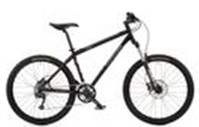
Walk to school every day? That will work, but not if you like sleep in. If you like bad smells and crowding(拥挤), the bus might be your best Choice. But why not a bicycle? A bicycle will get you there faster than your feet and will save your money.
This is why you see more bicycles than any other kind of transportation in China, about 500 million of them. That’s close to one for every two people in the whole country. But if you survey your class at school, you may will find a higher rate(比率).
Bicycles became popular because they are fun for people and at the same time help develop a strong body. No vehicle is better than a bicycle for enjoying an autumn weekend outside the city with parents or friends. You can travel on small, quiet paths. You also can park your bicycle beside the path wherever you want to stop to admire the beauty.
Cycling every day helps people build with city healthier hearts and stronger muscles(肌肉). Scientists say a 30-minute ride every day can help you lose weight.
Today, bicycles also are popular with city planners. They see bicycles as a good way to reduce heavy traffic. Unlike buses, bicycles produce no exhaust(尾气) and don’t burn energy. Many countries are encouraging more daily use of bicycles.
【小题1】What’s the main subject of the passage?
| A.Pollution reduction |
| B.Pollution of bicycle |
| C.Transportation of China |
| D.advantages of bicycling |
| A.Bicycling makes people stronger |
| B.Bicycles can travel on narrow paths |
| C.Many bicycles are stolen every year |
| D.Bicycles seldom(很少)get stuck in traffic jams |
| A.Paragraph 1 | B.Paragraph 2 | C.Paragraph 5 | D.Paragraph 6 |
| A.all Chinese students ride bicycles |
| B.if you ride a bicycle for 30 minutes a day, you’ll be thinner |
| C.there are no bicycles that burn energy |
| D.you can’t enjoy beautiful views unless you ride a bicycle |
| A.A train | B.A chair | C.An orange | D.A television |