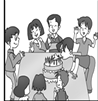
What will you have for lunch today? In some countries, lunchtime often m1.soup time! There are many kinds of soups served around the world. Some are as t2., and clear as water. Some are as thick as stews(纯煮的菜肴).Others are full of noodles!

Soup is just one thing that can be e3.for lunch. What you have for lunch may be d4. from the lunch of someone who lives in another country. Let’s take a look around the world to see w 5. kids are eating for lunch.

Mexico

Many children in Mexico eat tortillas(玉米粉圆饼) for lunch. Most tortillas are made from ground corn, but sometimes wheat is used. Tortillas are usually flat and round, but they can also be made into other s6..Taco(墨西哥肉卷) shells are made from com tortillas and f7. with beans or meat. Tasty sauces(酱汁),called salsas(沙司),are often added to tacos. These sauces are made from tomatoes, onions, hot peppers(辣椒)and spices(香料).

Russia

Winters in Russia are very cold. Maybe that’s why many Russian children eat soup for lunch. Two of their favourites are cabbage soup and beef soup.

Many Russian soups also include potatoes. Potatoes are an i8.crop in Russia .They make soups thick. Eating thick soups can help keep people w9.and can fill them up, so hunger is no problem!

South Korea

Meals in Korea are made up of many dishes. No matter what else is served, there is always rich.

Kimchi is also always on the table. Kimchi is pickled(腌制的)meat or vegetables. Korean children mix together many dishes and flavors at meals. It’s c10.for their food to be hot and spicy.

Thailand

Lunch in Thailand often includes noodles. There are many ways to serve noodles. One popular dish is made with thin rice noodles, tofu and shrimp. Another favourite way to eat rich noodles is with meat, vegetables and thick gravy(肉汁).

Readers(《朗读者》)is a popular TV show in China. It invites people to read aloud on the stage(舞台). The show also tells moving stories behind those people. They can read everything, like poems, books, and letters. Many people are fans of the show. They begin to enjoy reading aloud at home.

Now, the show gives people a place to read. It is a reading pavilion(朗读亭).It shows up in cities like Shanghai, Hangzhou and Xi’an. Let’s have a look!

The pavilion is not very big. Only one person can come into it each time. There is a microphone in it and it records(记录)people’s voices.

Everyone can read for three minutes in it. You can read anything you like. The show will pick some of the readers and invite them to read on TV.

Lots of people come to the pavilion to read. Yu Duohan is an 11-year-old girl from Shanghai. She read the story Take a Snail for a Walk(《牵一只蜗牛去散步》). “I love reading aloud,” she said. “It makes the story become more beautiful.”

The pavilion will also come to other cities across the country. You can read your favorite stories in the pavilion soon.

1.What can’t people read in Readers?

A. Poems. B. Letters. C. Ads. D. Stories.

2.Which of the following sentences is TRUE?

A. Readers is a popular book.

B. The show will ask some of the readers to read on TV.

C. Yu Duohan, a 12-year-old boy, likes reading aloud very much.

D. You and your friends can get into the pavilion together.

3.What does the underlined sentence mean?

A. There will be pavilions in each city.

B. People from more and more cities can read aloud in pavilions.

C. Readers invites people to read in the pavilion.

D. People have to read aloud in their cities.

4.The best title(标题)is .

A. A Small Place for Reading Aloud B. People Who Like to Read Aloud

C. Why We Need to Read Aloud D. Reading Aloud Is Good

违法和不良信息举报电话:027-86699610 举报邮箱:58377363@163.com

精英家教网