题目内容
Reform the gaokao
The college entrance examination is one of the most important tests in our lives. Now, the big exam has got a big change.
the government announced a reform(改革) plan on Sept 4, 2014. According to the plan, there are only three required(要求的) tests that everyone to take – Chinese, maths and foreign language. Each subject is marked out of 150. Students can take foreign language tests twice.
Students also have to learn six other subject – physics, chemistry, biology, geography, politics and history. They will have a final test after finishing their studies in each subject. They can choose three to hand in when applying for(报考) universities.
Nowadays, liberal arts(文科) and science(理科) have different tests. For example, in some places, liberal arts students get easier math questions. Under the new system, everyone will have same tests.
The reform will begin trials(试验) from this year in some cities. Current Senior 1 students in Shanghai and Zhejiang don’t have to choose between studying liberal arts and science.
Liu Yunsong, and English teacher at Beijing 101 Middle School, believes the reform is good news for junior students, especially for the English tests. “Two opportunities help the students show their real level better. As a result, we will pa y more attention to helping students be interested in the language instead of just teaching them the skills of dealing with tests. We will give them more chances to use the language, such as reading English.”
1.What will be reformed according to the passage?
A. The college graduation examination.
B. The middle s chool graduation exam ination.
C. The college entrance examination.
D. The middle school entrance exanmination.
2. Which of the following is TRUE according to the reform plan?
A. Everyone has to take five tests.
B. Students can take all of the tests twice.
C. Students choose their best English scores.
D. Only Chinese and math are marked out of 150.
3.How many subjects do students have to learn?
A. Three. B. Five. C. Six. D. Nine.
4.The underlined word “opportunities” in the passage means ________.
A.机会 B. 相反 C.看法 D.操作
5.According to Liu Yunsong, ______.
a. students can’t show their real level
B. the reform is bad news for students
C. students have to read more newspapers
D. students can benefit from the two English tests



Helen Keller was an American educator and journalist, who became one of the leading humanitarians in the history of the United States. Born on June 27, 1880 in Tuscumbia, a small town in Alabama, Keller was stricken with a childhood disease that left her deaf, and blind. The illness Keller suffered (遭受) is a mystery to this day. Unable to see, or hear, Keller became difficult to deal with as her behaviour was described as wild by her family and friends.
Soon Keller and her family developed their own type of sign language that allowed them to communicate with each other. Helen’s mother needed help for her anguished (痛苦的) child, which eventually led to Anne Sullivan, who was a recent graduate (毕业生) of the Perkins Institute for the Blind. The school had been successful in the past in educating blind students, and Sullivan was one of its star graduates. Once Sullivan and Keller got through the difficult beginnings, their friendship, and association (合作) lasted for 49 years.
Keller was determined to become educated, and to teach herself to communicate. After attending several schools, she became the first deaf and blind person to earn a college degree. She became very well-known, and began a lecture tour where she made speeches on social and political issues, including women’s suffrage (选举权), and birth control. Also she required the government to raise awareness to the situation of the blind. She devoted much of her later life to raising funds for the American Foundation for the Blind.
On September 14, 1964, President Lyndon B. Johnson awarded her the Presidential Medal of Freedom, one of the United States’ two highest civilian honours. In 1999, Keller was listed in Gallup’s Most Widely Admired People of the 20th century.
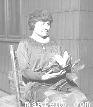
Helen Keller—Overcoming Disability | |
Childhood | Keller was made deaf and blind by an 1. illness. Her family and friends 2. her as wild because of her disabilities. |
3. | The Keller family 4. their own type of sign language to make their communication possible. Anne Sullivan 5. Keller’s life and gave her a lot of help. Keller made up her 6. to teach herself to communicate. Keller earned a college degree after 7. several schools. |
Social Activities | While travelling around the country, Keller made a series of 8. on social and political issues. Keller 9. much of her later life in raising funds for the American Foundation for the Blind. |
Awards | In 1964, Keller was awarded the Presidential Medal of Freedom. In 1999, her name was on the 10. in Gallup’s Most Widely Admired People of the 20th century. |