题目内容
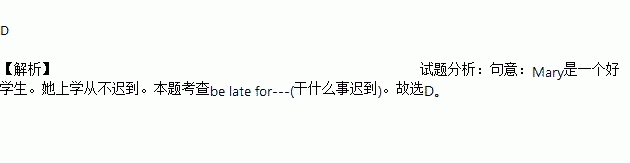
Mary is a good student. She’s never late _______ school.
A. about B. to
C. of D. for
听下面一段对话, 回答以下小题。
1.Where are they?
A. In the classroom. B. In a shop. C. In the hotel.
2.What’s on the desk?
A. A book. B. A computer. C. A Christmas tree.
3.Who gives Jenny the present?
A. Sally. B. Jim. C. Jenny’s parents.
Tony suffered ______ great pain in the hurdling last year.
A. at B. off C. to D. from
Every day Tim gets up at five thirty and then goes to take a shower. After that he makes breakfast for him and his wife (妻子), Betty. For breakfast, Tim has milk and bread and Betty has an egg and some salad. After breakfast, Tim goes to work. He is a train driver (列车司机) and he loves his job.
Tim starts working at seven o’clock and drives trains on the London Underground. He usually works from Monday to Friday, but he sometimes works on weekends, too. At about one o’clock he has lunch. He eats sandwiches (三明治). After lunch he works to four o’clock and then he goes home.
In the evening Tim watches TV with Betty and plays games with his baby son, Ben. At ten he goes to bed. He usually reads books for half an hour in bed. He thinks reading is a good habit.
根据材料内容简要回答下列问题。
1.What does Tim have for breakfast?
________________________________________________
2.What’s Tim’s job?
_______________________________________________
3.How many days does Tim usually work a week?
4.When does Tim finish his work?
5.What does Tim usually do in bed in the evening?
Either I or my sister _______ the shoes for my parents on weekends.
A. brush B. ask
C. brushes D. asks
1.从那时起,我们已经读了50本书。
We have read 50 books ________ ________.
2.为了让他们在聚会上玩得愉快我们应该做点什么。
We should do something to make them ________ ________ at the party.
3.让我们一起来加入关于世界环境的讨论。
Let’s ___________ _____________ the discussion about the world environment..
4.我们的老师病了,但她只休息了一天。
Our teacher was ill , but she only _________ one day ___________.
5.他从未放弃过赢得比赛的梦想。
He didn’t ever _________ _____________ his dream of winning the game .
The government of Chongqing is building ________ cheap and good houses for the people.
A. thousand B. thousands C. thousand of D. thousands of
I think English is useful language, and it’s also important language.
A. an, a B. a, an C. an, the D. a, the
Mary didn’t understand such sentences as “She is blue today”, “You are yellow”, “He has a green thumb(拇指)”, “He has told a white lie” and so on. And she went to the teacher Mrs. James for help.
Mary: Mrs. James, there is a colour in each of the sentences. What do they mean?
Mrs. James: In everyday English, Mary, blue sometimes means sad, yellow afraid. A person with a green thumb grows plants well and a white lie is not a bad one.”
Mary: I’m afraid I don’t understand them all. Would you give me an example for “a white lie”?
Mrs. James: Certainly. Now I just give you some cakes. In fact you don’t like it, but you don’t want to let me know it. Instead you say, “No, thanks. I’m not hungry.” That’s a white lie.
Mary: It sounds very interesting. Thanks very much.
Mrs. James: You are welcome. Colours are meaningful. I think you will meet more sentences like these in the future. Please come to me if you have any questions.
1.Blue sometimes means sad in _______________ English.
A. good B. spoken C. usual D. poor
2.I don’t have a green thumb, so all my plants ________________.
A. die off B. grow well C. look nice D. are good
3.David is yellow and he is ___________ to climb the tall tree!
A. happy B. clever C. brave D. afraid
4.He didn’t like me to know ___________ of the accident. He told me a white lie at last.
A. the reason B. the true story C. the meaning D. the answer
5.He is ______________today. He is told that his father is seriously ill.
A. blue B. yellow C. green D. white