题目内容
7.The Australian government researchers did research on the eyesight and habits of 100seven-year-old children in Singapore and Australia.The research shows that sunlight is good for people's eyes.If you spend two or three hours playing outdoors each day,it is not easy for you to become short-sighted.Both groups spent a similar amount of time reading,watching TV and playing computer games.However,the Australian children spent an average(平均)of two hours a day outdoors-90minutes more than the Singaporean children.As a result 30% of the Singaporean children were short-sighted-this rate(比率)was ten times higher than Australian children.
Dr.Ian Morgan said,"Humans are naturally long-sighted,but when people begin to go to school and spend little or no time outdoors,the number of short-sighted people gets larger.We're also seeing more and more short-sighted children in cities all around the world-and the main reason may be that city children spend less time outdoors."
Daylight can be hundreds of times brighter than indoor light.But why does playing outside stop us from becoming short-sighted?Scientists believe that natural light has a special chemical(化学物质).It can stops the eyeball from growing out of shape and stop people becoming short-sighted.
So be outdoors.It doesn't matter if that time is spent having a picnic or playing sports.
66.The researchers did research onB of the children in two countries.
A.habits and foodB.eyesight and habits C.eyesight and food D.eyesight and studies
67.The Australian government researchers think thatD is good for people's eyes.
A.food B.studies C.indoor light D.sunlight
68.According to the second paragraph,the Singapore children spend an average ofA outdoors a day.
A.30minutes B.90minutes C.1hour D.2hours
69.What is the fourth paragraph mainly about?C
A.Why people become short-sighted.
B.Why natural light has a special chemical.
C.Why playing outside is good for one's eyesight.
D.Why sunlight is much brighter than indoor light.
70.From the passage,we learn thatB.
A.children in Australia are more likely to become short-sighted than those in Singapore.
B.children in the city are more likely to become short-sighted than those in the countryside.
C.people won't become short-sighted if they stay indoors every day.
D.people will all become short-sighted after they begin to go to school.
分析 文章大意:这是一篇说明文,主要介绍澳大利亚政府研究人员对新加坡和澳大利亚100名七岁儿童的视力和习惯进行了研究,研究表明阳光是有益于人类的眼睛.如果你每天花两到三个小时在户外玩耍,你就不容易变得近视.所以要多去户外活动,不管是野餐还是运动都可以.
解答 66.答案:B.细节理解题.根据第一段The Australian government researchers did research on the eyesight and habits of 100seven-year-old children in Singapore and Australia澳大利亚政府研究人员对新加坡和澳大利亚100名七岁儿童的视力和习惯进行了研究.可知,是研究孩子们的视力和行为,选B.
67.答案:D.细节理解题.根据第一段第二句The research shows that sunlight is good for people's eyes.研究表明,阳光对人的眼睛有益.可知,对人们眼睛有益的是阳光.选D.
68.答案:A.细节理解题.根据第二段第一行However,the Australian children spent an average(平均)of two hours a day outdoors-90minutes more than the Singaporean children.然而,澳大利亚的孩子平均每天花两个小时在户外,这比新加坡的孩子们多90分钟.可知,新加坡孩子户外活动平均每天花费30分钟.选A.
69.答案:C.大意理解题.根据第四段段意:日光可以比室内光线亮几百倍,但为什么户外活动会使我们不近视呢?科学家认为自然光有特殊的化学成分,它能阻止眼球生长,阻止人变得近视.可知,第四段主要介绍"为什么在外面玩对视力有益.",选C.
70.答案:B.细节理解题.根据第三段第二行We're also seeing more and more short-sighted children in cities all around the world-and the main reason may be that city children spend less time outdoors."我们也看到越来越多的近视的儿童在世界各地的城市,主要的原因可能是城市孩子花更少的时间在户外.可知,城市里的孩子比乡村的孩子更容易近视.选B.
点评 阅读题型,要注重句子与句子之间、段落与段落之间逻辑关系以及对篇章的整体理解.根据所给问题选择正确选项完成试题.

| A.How old are you? B.What class are you in? C.You're welcome. D.Where are you from? E.Good morning.. |
B:Good morning.
A:(42)D
B:I'm from Canada.
A:(43)A
B:I am thirteen years old.
A:(44)B
B I‘m in Class Three,Grade Seven.
A:What's your telephone number?
B:It's 0734-233456.
A:Thank you.
B:(45)C.
| programs open up direct since for bottom |
59.I am a Singer is one of the most popular TVprograms in China.
60.-How long have you lived there?
-I have lived heresince the end of last year.
61.Good books canopen up a new world to us.
62.The children wrote their names at thebottom of their pictures carefully.
 In winter,when the sun hides behind the clouds,everyone feels a bit low.You may be tired and find you want to sleep all the time.What you may not know is:you are suffering from (患有) SAD(季节性抑郁症).
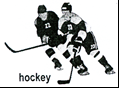 The willful blindness in hockey toward concussions (头部撞击) has dropped.Hockey Canada has followed the lead of USA Hockey in preventing bodychecking (身体拦截) below age 13.A bad head injury of Sidney Crosby,the hockey's greatest star,opened the eyes of hockey people everywhere.This country's children have been facing similar danger at early ages,and Hockey Canada had to deal with a deepworry in the minds of Canadians to make the rule change.The liking for bodychecking from an early age is part of what makes Canadian hockey what it is.
| A. | Those | B. | They're | C. | They |