Birthdays are celebrated all over the world. Some ways to celebrate birthdays are rather similar from country to country: candles, cakes, and birthday wishes. But there are also different ways to celebrate birthdays. Here are a few:

Denmark
A flag is flown outside a window to show that someone who lives in the house is having a birthday. Presents are placed around the child’s bed while he is sleeping so he will see them at once when he wakes up.
 

India
Usually Indian children wear white to school. However, on their birthday children wear colored clothes to school and give out chocolates to everyone in the class. Their best friends help them to do this.
 

Japan
The birthday child wears new clothes to mark the special time. Certain birthdays are more important than others. These are the third and seventh birthdays for girls and the fifth for boys.
 

Holland
The birthday child receives an especially large present. The family also put flowers on the birthday child’s chair to make it beautiful.
 

1.When someone is having a birthday in Denmark, you can see_______outside the window.

A.flowers B.presents

C.a flag D.a chair

2.In________flowers are put on the chair of the birthday child.

A.Japan B.Denmark

C.India. D.Holland

3.In________, only birthday children wear colored clothes to school.

A.India B.Holland

C.Denmark D.Japan

4.In Japan, the birthday is more important for boys when they are_________.

A.15 B.7 C.5 D.3

5.The passage is mainly about___________.

A.similar ways of celebrating birthdays in some countries.

B.different ways of celebrating birthdays in some countries.

C.children’s birthdays in western countries.

D.The importance of children’s birthdays.
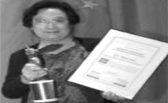
Tu Youyou, born in 1930, is a Chinese medical scientist. She won the 2015 Nobel Prize in Physiology or Medicine for finding out artemisinin (also known as Qinghaosu), which saved millions of lives. When Tu was a high school student, she became interested in both traditional Chinese medicine and modern western medicine. She kept her work in the1960s and1970s. In that age, Malaria (疟疾) could take away people's lives. Scientists all over the world had already tried over 240,000 times but failed. Tu Youyou, a member of the Academy of Traditional Chinese Medicine, BeiJing, began to study Chinese herbs (药草).

Before 2011, people didn’t know Tu very much. Many friends played jokes on her “the Professor of Three None’s”: no high degree (学历), no study experience abroad, not a member of any Chinese national academies. But she is hard-working. She read a lot of traditional Chinese medicine books and did a lot of research.

In February, 2012, Tu was named “National Outstanding Females” (One of the Ten). Tu is now a model of Chinese medical workers.

1.Tu Youyou won the2015 Nobel Prize in Physiology or Medicine because ________.

A.she found out Qinghaosu B.she grew some new herb

C.she studied traditional Chinese medicine D.she saved many lives with Chinese herbs

2.Tu Youyou became interested in medicine as ________.

A.a member of an academy B.a Junior school student

C.a high school student D.a college student

3.Tu Youyou is a successful scientist with ________.

A.a high degree B.a sense of duty

C.an unhealthy body D.a study experience abroad

4.How old was Tu Youyou when she was named “National Outstanding Females”?

A.80 years old. B.81 years old. C.82 years old. D.83 years old.

5.From the passage, we can lean Tu Youyou is a ________ woman.

A.funny B.friendly C.serious D.hard-working

违法和不良信息举报电话:027-86699610 举报邮箱:58377363@163.com

精英家教网