题目内容

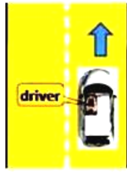
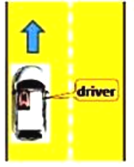
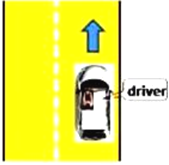
There are two ways of driving in the world: if the driver’s seat is on the left and cars travel on the right side of the road, it is called “left-hand driving”, as it is in China, while the other way of driving is called “right-hand driving”, as it is in Britain. Nowadays, around 65% of the world’s population drives on the right of the road, while the rest is used to driving on the left.

Though no one knows the exact reasons, it seems likely that people in ancient times travelled on the left of the road. Roman coins show pictures of horsemen passing on each other’s right. And right-hand people generally got on a horse from the animal’s left. Obviously, it’s safer to do this at the left side of the road, and it makes sense (行得通) for the horse to be ridden on the left.

A change happened in the late1700s. When Napoleon (拿破仑) conquered (攻占) nations, he forced them to travel on the right side of the road, which spread left-hand driving throughout Europe. However, Britain still stuck with the right-hand driving rule and countries which were part of the British Empire were made to follow. This is why India, Australia and the former British colonies (前英国殖民地) in Africa continue to drive on the left. One exception (例外,除外) is Egypt, as that country was defeated by Napoleon before becoming part of the British Empire.

Some countries changed sides until modern times. Sweden only moved to driving on the right in 1967 and Iceland changed the following year. Ghana changed sides in 1974. On September 7, 2009, Samoa became the third country ever to change from left-to- -right-hand- driving for the reason that it made it easier to import (进口) cheap cars from right-hand- driving Japan, Australia and New Zealand.

So if you want to travel to another country or go on business, make sure you know whether it is left-or right-hand driving to avoid unnecessary troubles.

1.Which picture shows the correct driving in Britain?

A. B.
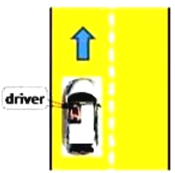
C. D.

2.When did Iceland moved to driving on the right?

A.1967. B.1974. C.In 1968 D.the late1700s.

3.In modern times, countries follow the same driving way except ________.

A.Australia B.Egypt C.Sweden D.China

4.Which of the following is TRUE according to the passage?

A.Sweden changed to drive on the right in 1974.

B.People drive on the left side of the road in Egypt.

C.People have known the exact reasons for driving on the left.

D.Napoleon helped with the spread of left-hand driving.

5.What is the writer’s purpose for writing this passage?

A.To explain the advantages of the two ways of driving.

B.To introduce the development of the two ways of driving.

C.To complain about the change of the two ways of driving.

D.To compare the differences of the two ways of driving.
练习册系列答案
相关题目

Tuesday, 1stSeptember

I had mixed feelings today, nervous, worried, happy, excited… My heart went down when Miss Chan, our head teacher, said that Matthew and Beth, two students from England, would spend three months with us! I was worried that I had to speak English so much! But at the end of the school day, I was happier than I thought: the morning with them today was more enjoyable than I expected.

Today is the most unforgettable first day I have had! Matthew is fantastic! His English is clearer and easier to listen to than I thought. The other English student, Beth, is the most helpful girl I’ve ever met. There were lots of things to do on the first day. Beth offered to help Miss Chan put up all the notices. Of course, some of the credit (功劳) should also go to ME because I translated some of the notices for her. Miss Chan praised us!

We finished all the preparations 10 minutes earlier than expected, then Beth and I talked for a while, Matthew sang several English songs and did some stand-up comedy (单人喜剧表演) at the party. We all praised him. When the bell rang to end the first school day, none of us wanted to leave.

When I went back home, I had a little headache. I have probably spoken more English today than the whole of last year.

It was really a happy day! I hope our friendship can continue, even after they gone back to England!

1.The writer felt ______ when he heard the news from Miss Chan.

A.excited B.angry

C.fantastic D.worried

2.Beth helped Miss Chan with the ______.

A.comedy B.speeches

C.notices D.translation

3.Matthew ______ at the party.

A.had a talk

B.rang the bell

C.sang several songs

D.made a preparation

4.Matthew and Beth ______ on the first day.

A.spoke much Chinese B.got lots of praise

C.had a little headache D.forgot to leave the school

5.From the passage, we know that the writer ______.

A.caught a bad cold that day

B.went back home with Beth

C.expects to travel to England

D.likes the two English students

某英文报纸的中学生专栏,下一期将举办以“绿色交通”为主题的论坛。现向同学们标稿,请你以 Green transport is ________ for protecting the environment为题,向该杂志投稿。(词数80-100),步骤与要点如下:

1. 确定主题,并在文中说明原因;

2. 围绕主题,进行论述;

3. 可以写出具体计划,也可讲述一段与主题有关的故事或经历。

要求:

1. 补全标题(参考词汇 important;necessary;useful;useless等);

2. 字迹工整,内容完整连贯,语言准确规范。

3. 鼓励写出真情实感,对紧扣主题的适当发挥不扣分。短文的开头已给出,不计入总词数。

4. 作文中可以写出具体计划内容,也可以使用亲身经历或虚构的故事,但要注意时态的运用;如果参照短文中的内容,不可以直接引用短文中的句子;

5. 作文中不要出现考生和相关人物的真实校名和姓名。

Green transport is ________ for protecting the environment

Nowadays people pay more and more attention to our living environment. It’s everybody’s duty to protect it. I think ________________________________________________________________________________________

__________________________________________________________________________________________________________________________________________________________________________________________________________________________________________________________________________________________________________________________________________________________________________________________________________________________________________________________________________________________________________________________________________________________

违法和不良信息举报电话:027-86699610 举报邮箱:58377363@163.com

精英家教网