题目内容

Have you found the information about famous people you can use for your report?

Not yet. I’ll search after school.

A. which B. who C. what D. whom


A

【解析】

试题分析:句意:你找到了你报告中能用的有关那个著名的人的信息了吗?还没有,放学后我会搜的。定语从句用来充当句中定语的结构,被修饰的名词叫先行词,连接主从句的是关系词。关系词分:1关系代词:who , whom , whose , which , that 。2 关系副词:where,when why 等。一般的who 用于指代人的先行词,which 用来指代物的先行词,that既可指认又可指物。根据句意,可知先行词是information,故选A。

考点:考查定语从句的用法。


练习册系列答案

相关题目

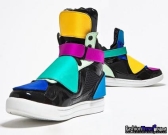
Sneakers are a kind of shoes worn by many people all over the world. , no one really knows where the word “sneaker” came from. Some say it came from the old English verb “sneak”, which means to move silently and quickly. The only thing we are     is that when you put on a pair of sneakers, you feel light-hearted, light-footed and ready to play.

Sneakers of some kind are used by those who play tennis, basketball, and other sports. New design has been made    for people who run slowly. In fact American children of     ages would much rather play in sneakers than anything else.

New York City once held a poetry competition for children. The subject was only “sneaker”. One prize winner called    poem “The Sneaker and the World Peace”. “When everyone is wearing sneakers,” she said, “it will be impossible to    .”

American school children can be seen every day    sneakers of all colors. They put them on in the morning and take them off at bedtime. Sneakers are   washed. Some children think the older and dirtier they are, the   loveable they are. When their sneakers wear out, children hate to throw them off. How do you explain the closeness between and sneakers? Perhaps another young winner in the New York Poetry Contest said it best. “A shoe is just a shoe,” he said. “But a sneaker is a friend.”

1.A. However B. If C. Or D. And

2.A. excited about B. pleased with C. surprised at D. sure of

3.A. lovely B. lively C. specially D. cheaply

4.A. all B. some C. little D. old

5.A. his B. her C. its D. their

6.A. explain B. guide C. hate D. love

7.A. dressing B. wearing C. putting on D. having

8.A. always B. usually C. sometimes D. seldom

9.A. much B. many C. more D. most

10.A. children B. boys C. other shoes D. winners


People use their mouths for many things. They eat, talk, shout, and smile. So there are many expressions about mouth. For example, if you say things about a person, the person will be unhappy and say “Do not bad mouth me.”

Sometimes, people say something to a friend or family member that later they regret they hurt that person’s feelings. The speaker might say: “ I really put my foot in my mouth this time.” If this happens, the speaker might feel down in the mouth.

Information is spread through the mouth. This is general communication people, like friends talking to each other. “How did you hear about that movie?” Someone might ask. The may be : “Oh, by word of mouth.” A more official way of getting information is through a company or government mouthpiece.

Sometimes, a person has a bad or unpleasant with another person. He might say: “It left a bad taste in my mouth.” Or a person might have a very experience, like being chased by an angry dog. He might say: “I had my in my mouth.”

Some people have lots of money because they were into a very rich family. You might say such a person “was born with a silver spoon in his mouth. ” And this rich person is the opposite of a person who lives from hand to mouth.

1.A. dance B. sing C. walk D. think

2.A. beautiful B. nervous C. bad D. crazy

3.A. because B. so C. and D. until

4.A. never B. seldom C. sometimes D. often

5.A. with B. between C. during D. on

6.A. letter B. answer C. key D. report

7.A. experiment B. expression C.experience D. explanation

8.A. frightening B. surprising C. pleasing D. exciting

9.A. eye B. tongue C. finger D. heart

10.A. taken B. brought C. grown D. born


违法和不良信息举报电话:027-86699610 举报邮箱:58377363@163.com

精英家教网