题目内容
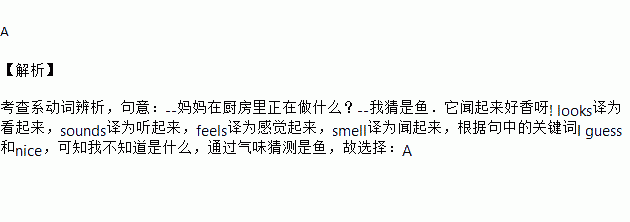
— What’ s Mum cooking in the kitchen?
— Fish, I guess. How nice it !
A. smells B. feels C. sounds D. looks

阅读下面短文及图表,按要求完成所给任务,并将答案写在答题卡相应的位置上。
Parents with high expectations for their children are nothing new to Chinese kids. However, people often don’t realize that children also have expectations for their parents. What expectations do Chinese children have for parent-child relationships?
China Youth & Children Research Center did a survey on this topic in the United States, Japan, South Korea and China. The survey found that 83.8 percent of Chinese children want to be friends with their parents, the greatest amount among the four countries. This means that they want a more equal(平等的) relationship with their parents.
According to China Youth Daily, traditional Chinese values (价值观) such as respecting one’s elders and the concept of hierarchy (等级观念) are preventing parents from becoming friends with their children. Many Chinese parents criticize (批评) and push their children, as there is lots of competition in school. It requires efforts from both parents and children to create a friendship in family. As children, what can you do to create a pleasant atmosphere (氛围) at home and make friends with your parents? Read on to find out.
Tips to make home a happy place
How can we get along better with our parents, and at the same time, grow into adults ourselves? Here are some tips.
●Act like an adult
If you want your parents to give you more freedom, you should show them that you’re ready to be treated differently. For example, learn to use self-control. Show them that you can manage your time well.
●Open your heart
US psychologist (心理学家) Carl E. Pickhard wrote in Psychology Today that sharing feelings with our parents can lead to positive changes, while not sharing them can cause misunderstandings.
●Care for your parents
Do something nice or helpful for your parents. For example, help them with some home chores, make them gifts or teach them some computer skills. Their trust in you will grow.
More results from the survey
China | US | Japan | South Korea | |
Kids often talk to their parents | 57.7% | 81.0% | 81.7% | 79.0% |
Kids think their parents understand them | 80.6% | 86.8% | 89.0% | 93.3% |
Kids have arguments with their parents | 82.1% | 75.6% | 72.0% | 75.0% |
Kids have the most arguments with their parents because of | Schoolwork (55.8%) | Chores (20.0%) | Schoolwork (43.4%) | Schoolwork (44.7%) |
Source:CHINA YOUTH&CHILDREAN RESEARCH CENTER.2018
1.What percent of Chinese children want to be friends with their parents?
______________________________________________________
2.What are preventing Chinese parents from making friends with their children?
______________________________________________________
3.Why do many Chinese parents criticize or push their children?
______________________________________________________
4.According to the chart, do children in China have worse relationship than those in other countries?
_______________________________________________________
5.Do you have a good relationship with your parents? What do you expect them to do?
_______________________________________________________
书面表达
你的老师要求你以“My Dream Home”为题来谈谈自己的梦想家园。可根据下面提示的内容适当发挥。
社区情况 | 社区很大,干净,明亮。 |
周围环境 | 附近有一条河流,可以划船、钓鱼。 |
房子概况 | 三层,后面有足球场,旁边有花园,有许多的花和树。 |
内部设施 | 一楼是电脑房和书房 二楼是餐厅和浴室。 卧室在三楼,有一个大的阳台(balcony)。 |
一个适宜居住的好地方 |
要求:1.语句通顺、语言规范。
2.书写工整、标点符号正确。
3.词数:100词左右。
____________________________________________________________________________