题目内容
 The widespread number of food scandals (丑闻) in China is making many people pause before they put their chopsticks in their mouth. They are wondering if the food they are eating is clean, healthy and nutritious(有营养的) or does it contain(包含) something harmful that will cause diseases?
Most of the food we eat today is processed food(加工食品). That means the foods we buy in stores and supermarkets, especially packaged foods, are prepared in factories. Chemicals are added to the foods in these factories to make them look better, taste better and last longer on the shelf. The chemicals(化学制品) are supposed to be harmless and there are laws that control which chemicals can and cannot be used. Unfortunately, some producers do not obey the laws.
A producer of steamed buns(馒头)in Zhejiang Province was recently discovered to be breaking the law. He was adding yellow dye(染色) and other banned chemicals to the buns. He was also taking old buns and using them to make new buns. Most of the buns were sold to schools and eaten by students like you.
Why did he do it? Why did he break the law and endanger people’s health? The answer is simple: he wanted to make more money. It was a moral failing(道德滑坡), and this is at the heart of the food scandals in China. Too many people focus on(集中于) making money and not on the effects their actions can have on others.
36. From the first paragraph we can infer that _____.
A. something harmful will cause diseases B. all the food we eat is harmful to people’s health
C. food scandals in China have bad effects on people
D. people are afraid to put the chopsticks in their mouth
37. The laws that regulate which chemicals can and cannot be used have been made _____.
A. for food safety B. to make more money
D. to make food look better D. for people’s taste
38. Why did the writer mention a producer of steamed buns in Zhejiang Province?
A. Because this producer broke the law.
B. Because this producer added yellow dye.
C. Because this producer used old buns to make new ones.
D. Because the writer wanted to take this producer for example.
CAD

阅读下列短文,根据短文内容填写表格 (每空限填一词)。
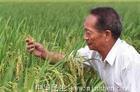 Every scientist has a childhood dream. A scientist in China once had a dream. He wished to grow a new type of rice. This new type of rice would be as big as peanuts. This person is Yuan Longping—"Father" of Hybrid rice(杂交水稻).
Yuan Longping was born in 1930. He graduated from the Southwest Agricultural (农业) University in 1953. He came up with an idea for a Hybrid rice in the 1960s. Since then, he has devoted himself to research and to the development of new varieties.
In 1973, together with other people, he succeeded in the development of Hybrid rice. This made China a worldwide leader in rice production(生产). In 1980, the technology (技术) for hybrid, rice was introduced to the United States. Now his "super rice" has been introduced to more than 20 other countries.
Because of Professor Yuan's hard work, China now produces enough rice to feed her people every year. Last November an online survey showed that most Chinese believed that Yuan deserved (应得) a Nobel Peace Prize.
In his spare time, Yuan Longping loves playing the violin and listening to music. Every night, he reads for half an hour before he goes to sleep. He likes swimming, too. It is said that Professor Yuan is one of the richest people in China. But he cares about nothing but his research.
Yuan Longping--- 76 of Hybrid rice
| Childhood 77 | He wished to grow a new type of rice which would be the same 78 as peanuts. |
| His 79 | He is 80 of playing the violin, listening to music and 81 . |
| Personal details | He was born in 1930. He graduated from the Southwest Agricultural University at the age of 82. |
| Achievements | In 1973, together with other people, he was 83 in the development of Hybrid rice. In 1980, the technology for hybrid rice was 84 to the United States and more than 20 other countries. China now 85 enough rice to feed her people every year. Most Chinese believe that Yuan deserved (应得) a Nobel Peace Prize. |