完形填空

  The summer holiday are the best part of the year for most children. The 1 is usually good, so that one can 2 most of one's time 3 in the garden or if one lives in the country, out in the 4 and fields. 5 one lives in a big town, one can usually go to a 6 to play.

  The best place for a summer holiday, 7 , is the seaside. Some children are lucky enough to 8 near the sea, but for 9 who do not. A week or two at one of the 10 towns is something 11 , they will talk about for the 12 of the following year.

  In England, it's not only the 13 who can take their children to the seaside; if a factory worker or a bus driver, a street cleaner or a waiter 14 to take his wife and children to South end or Margate, Blackpool or Clacton, 15 is usually quite able to do so.

  Now, what is it that 16 like so much about the seaside? I think it is the sand, sea and sun 17 , any other things. Of course, there are lots of new 18 , nice things to eat, and 19 things to do, but it is the 20 of sand under one's feet, of salt water on one's skin, and of the warm sun on one's back that make the seaside what it is.

1.

[  ]

A.time
B.place
C.weather
D.life

2.

[  ]

A.spend
B.enjoy
C.take
D.use

3.

[  ]

A.staying
B.playing
C.living
D.working

4.

[  ]

A.country
B.river
C.woods
D.car

5.

[  ]

A.Usually
B.Sometimes
C.Though
D.Even if

6.

[  ]

A.park
B.cinema
C.museum
D.shop

7.

[  ]

A.and so on
B.however
C.or so
D.in a way

8.

[  ]

A.live
B.fish
C.swim
D.watch

9.

[  ]

A.you
B.her
C.others,
D.many

10.

[  ]

A.foreign
B.seaside
C.fishing
D.new

11.

[  ]

A.necessary
B.bad
C.good
D.which

12.

[  ]

A.whole
B.rest
C.beginning
D.part

13.

[  ]

A.men
B.women
C.rich
D.people

14.

[  ]

A.refuses
B.wants
C.asks
D.waits

15.

[  ]

A.all
B.one
C.they
D.he

16.

[  ]

A.ladies
B.children
C.parents
D.teachers

17.

[  ]

A.more than
B.together with
C.not only
D.and so

18.

[  ]

A.fish
B.ships
C.things
D.faces

19.

[  ]

A.exciting
B.funny
C.difficult
D.easy

20.

[  ]

A.warmth
B.feeling
C.number
D.finding
Having a part-time job is an important part of growing up for American teenagers. It can teach them important skills that will be useful for the rest of their lives. And many teenagers find that making their own money gives them a sense of pride and freedom.
American teenagers are allowed to do part-time jobs at the age of 14. During the school year, teenagers may go to work a few times a week after school, and work for longer at weekends.
In summer, top part-time jobs for teenagers include at camps, swimming pools and amusement parks. These jobs are great for those who want to be active and have fun while making money.
Some of the most stressful jobs include teaching, nursing, and police work. These skills help to prepare teenagers for their later lives. When they grow up, the students with work experience are more likely to succeed than those without work experience.
A favorite job for many teenagers is babysitting, and they can start before the age of 14 if their parents agree. As long as they stay in the house and make sure the kids are okay, babysitters can do their homework, watch TV, or talk on the phone with friends. After the kids go to bed and before the parents come home, babysitters have lots of freedom.
It can be stressful to balance school, homework, and a part-time job. However, many American teenagers value their work experience and the skills they get from the job.
【小题1】Why do American teenagers like to have a part-time job?
A.Because they don’t want to be stressed out.
B.Because they can learn skills and get money.
C.Because they can get a good job in the future.
D.Because they can do anything they like.
【小题2】Which kind of part-time job is less stressful for American teenagers?
A.Working at police.B.Nursing
C.Working at camps.D.Teaching.
【小题3】Which kind of part-time job can a 13-year-old girl do in America?
A.Working at parks.B.Working at a swimming pool.
C.Looking after babies.D.Doing the dishes in a restaurant.
【小题4】 What’s the meaning of the underlined word “value”?
A.喜欢B.追求C.向往D.珍视

One day, a boy found the cocoon(茧) of a butterfly and brought it home. A few days later, the boy saw a small     in the cocoon. He sat and watched for several hours as a butterfly struggled to make    body through that little hole. Suddenly it stopped. So the boy  to help the butterfly, thinking the butterfly might be      .He took a pair of scissors and cut the hole    .The butterfly came out of the cocoon but it    a little different. It had a weak body and small, thin      . The butterfly didn’t start to fly. In fact, the butterfly spent the rest of its life crawling(爬行) around with a weak body and thin wings. It was never able to fly.

The boy acted with        but he didn’t understand why it could be like this. When a butterfly crawls out of the cocoon, it must struggle. The hard work of       out of the cocoon makes the fluid(液体) from the butterfly’s body into its wings. It helps the butterfly be       to fly. If the butterfly never has to squeeze(挤压) itself out of the cocoon, its wings will never get the fluid and it can never fly.

    struggles are what we need in our lives. If we lived our lives without any problems, we would never learn or grow. We would not be        we could have been and we would never fly.

In our lives, pain and suffering is the key to all windows, and sometimes even         growth, without it , there's no way of life. We can't avoid        or problems. So, next time you are     a problem or difficulty, remember the butterfly. Struggle a little—then fly!

1.A. hole              B. worm          C. tall           D. snake

2.A. it                B. it's             C. itself         D. its

3.A. decided          B. asked          C. showed      D. ordered

4.A. afraid            B. interested     C. surprised     D. grateful

5.A. slimmer         B. bigger         C. shorter       D. smaller

6.A. touched         B. sounded       C. looked       D. smelt

7.A. wings            B. feet            C. eyes          D. head

8.A. success          B. excitement    C. kindness      D. humour

9.A. get              B. getting         C. to get         D. got

10.A. ready           B. quiet           C. glad           D. used

11.A. Somewhere    B. Something     C. Some time    D. Sometimes

12.A. as helpful as   B. as weak as    C. as strong as    D. as creative as

13.A. repeats        B. recommends   C. requires      D. represents

14.A. happiness     B. difficulties     C. pleasure       D. hope

15.A. served with   B. growing into    C. bringing in    D. faced with


In one’s life, one spends the most time being with oneself. But one has the least understanding of oneself. When you are successful, you may be very1. When you2, you may lose heart. If you don’t get a thorough understanding of yourself, you may miss many chances in life.
To get a thorough understanding of yourself is to know well about yourself. You may realize your strong points and weak3. You may hope for a wonderful future, but be sure not to expect too much because not4dreams can come true. You may be confident enough to meet challenges,but first you should know5.
To get a thorough understanding of yourself needs self-appreciation(自我欣赏). Maybe you think you are a tall tree6just small grass, but you can always have your own way of being there. As soon as you get full confidence in yourself, you are sure to face any trouble.
To get a thorough understanding of yourself also7to take care of yourself. When you are angry, find a quiet place so that you won’t be hurt. When you are8, tell your friends about it to change the mood(情绪) into a good one. When you are tired, get a good sleep. If you don’t know when and how you should look after yourself, you9be able to stay away from illness.
10can tell what will happen in the future. Get a thorough understanding of yourself, and you will get a full control of yourself and find your life full of color.

  1. 1.
    1. A.
      sad
    2. B.
      busy
    3. C.
      proud
    4. D.
      interested
  2. 2.
    1. A.
      fail
    2. B.
      win
    3. C.
      succeed
    4. D.
      fall
  3. 3.
    1. A.
      one
    2. B.
      ones
    3. C.
      place
    4. D.
      places
  4. 4.
    1. A.
      every
    2. B.
      each
    3. C.
      both
    4. D.
      all
  5. 5.
    1. A.
      where to do
    2. B.
      how to do
    3. C.
      what to do
    4. D.
      when to do
  6. 6.
    1. A.
      or
    2. B.
      and
    3. C.
      but
    4. D.
      so
  7. 7.
    1. A.
      tells
    2. B.
      speaks
    3. C.
      means
    4. D.
      looks
  8. 8.
    1. A.
      happy
    2. B.
      glad
    3. C.
      comfortable
    4. D.
      sad
  9. 9.
    1. A.
      will
    2. B.
      won’t
    3. C.
      would
    4. D.
      mustn’t
  10. 10.
    1. A.
      No one
    2. B.
      Everyone
    3. C.
      Someone
    4. D.
      Anyone

听力测试

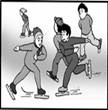
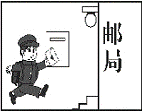
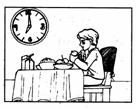
(一)听句子,选择与画面一致的选项。每个句子听一遍:

1. ( A  B  C )        2. ( A  B  C )      3. ( A  B  C  )      4. ( A  B  C  )

(二)、请听句子,选出恰当的答语。每个句子听一遍:

(    )5. A. It’s Sunday.            B. It’ April 21.                           C. It’s half past eleven.

(    )6. A. It’s very hot.           B. It’s very heavy.          C. It’s very large.

(    )7. A. Yes, please.              B. You are welcome.      C. Sorry, I can’t.

(    )8. A. No, it isn’t.             B. Yes, it is.                   C. Thank you.

(    )9. A. About 40 minutes.                

B. About half an hour’s walk.

         C. About 5 meters long.

(    )10. A. I think it is interesting.

B. I like a story. 

C. I’m reading.

(三)听对话,宣战正确答案。每组对话听两遍。

(    )11. When was Edison born?

A. In 1874.  B. In 1931.  C. In 1847.

(    )12. Why wasn’t the boy at school yesterday?

A. He had to look after his mother.

B. He had to look after his father.

C. He was ill in bed.

(    )13. What’s the woman’s telephone number?

A. 3897244.  B. 3879224.  C. 3789244.

(    )14. Why was the girl late again for school?

A. She was ill.  B. She got up late.  C. She met a traffic accident.

(    )15. When does the dialogue happen?

A. During class.  B. After class.  C. Before class.

(    )16. What does the girl’s mother do?

A. A nurse.  B. A doctor.  C. A worker.

(    )17. What size does the man wear?

A. The large size.  B. The small size.  C. The medium size.

(四)对话理解: 对话听两遍:
听第一段对话,回答第18-21小题。
(    )18. What’s wrong with the boy?
     A. He’s got a headache. B. He’s got a high temperature.
     C. He’s got a cold.
(    )19. How long has he been like this?
     A. For one day. B. For two days. C. For three days.
(    )20. Is he seriously ill?
      A. Yes, he is. B. Yes. But he will be well soon. C. No, he isn’t.
(    )21. How many times should he take the medicine a day?
      A. One time. B. Two times. C. Three times.
听第二段对话,回答第22-25小题。对话听两遍:
(    )22. Where does the man want to go?
      A. London. B. Hong Kong. C. America.
(    )23. When will he go there?
      A. June 29th. B. June 30th. C. July 1st.
(    )24. When will the earliest flight leave?
      A. At 7:00 in the evening. B. At 8:00 in the morning.
      C. At 7:00 in the morning.
(    )25. Does it stop in Beijing?
      A. Yes, it does. B. No, it doesn’t. C. We don’t know.
(五)听短文回答问题,短文听两遍。
(    )26. Where did Mr. White work?
      A. France. B. America. C. England.
(    )27. Why was Mrs. White angry?
      A. Her husband wouldn’t go to see their son.

B. Her husband was hit by a car.

C. Her husband didn’t love her.
(    )28. How did Mr. and Mrs. White go to Paris?
      A. By ship. B. By train. C. By plane.
(    )29. Mr. White didn’t know how they had got to Paris because _____ on their way.
      A. he was asleep

B. he was thinking about his work

C. he was worried about his son
(    )30. From this passage we know_____.
      A. Mr. White loved nobody except himself 

B. Mr. White couldn’t get on well with anybody

C. Mr. White was always interested in his work

违法和不良信息举报电话:027-86699610 举报邮箱:58377363@163.com

精英家教网