题目内容
【题目】
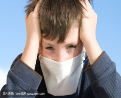
People all over the world are now taking action to fight against COVID-19. But what they do may depend on their own culture and traditions.
On Feb 26, when an Italian lawmaker (议员) went into the country’s Lower Chamber with a mask to prevent the novel coronavirus, he was criticized (批评) by his workmates for “causing panic (恐慌)”. Articles from Western media carry headlines such as “No, you do not need face masks to prevent coronavirus.” You might be surprised, as in China and other Asian countries, people have willingly put masks on during the outbreak.
Western thoughts about masks
In the West, people are taught to wear masks only when they get sick. Masks are seen as a tool to protect sick people and prevent the disease from spreading, so healthy people don’t need to wear them. Therefore, during the novel coronavirus outbreak, overseas Chinese students said that they would be “stared at like a virus spreader” if they go out with a mask. According to a survey done by Global Times among some European and American people, wearing a mask in public can make them feel “worried”, “shy”, and “afraid of being looked at differently”.
But as the number of COVID-19 cases continues to grow around the world, many people in the West are changing their attitudes (态度). In the US, for example, the need for masks is very high now. The US surgeon general (卫生局局长) has been asking people to avoid hoarding (囤积) masks, as they are more needed in hospitals than by the general public.
Mask culture in the East
In Asian countries like China and Japan, there has been a long tradition of mask-wearing. In China, for example, when doctor Wu Liande invented the modern medical mask during the pneumonic plague (肺鼠疫) in 1910, the mask became a symbol of China’s position as a modern, scientific nation. The 2003 SARS epidemic again led to the wide use of masks as a form of anti-viral (抗病毒的) protection in China and elsewhere in East Asia.
In Japan, wearing masks has long been seen as a manner to reassure (使安心) others when one catches a cold or flu. Some Japanese also turn masks into fashion accessories (配饰), with different colors and styles to match their clothes. Wearing masks is also a way to “hide” for young women when they don’t have their makeup (化妆) on.
In more collectivist (集体主义的) cultures in Asia, wearing masks might also be a symbol of solidarity (团结) during the outbreak, according to Christos Lynteris. “Mask culture in Asia creates a sense of a fate (命运) shared, common obligation (责任) and civic (公民的) duty.” People wear masks “to show that they want to stick together” in the face of danger, Lynteris wrote.
【1】Why don’t healthy people in the West wear masks?
A.They don’t think masks can prevent disease.B.They think masks are for sick people to wear.
C.Only medical workers need to wear masks.D.Wearing a mask looks funny.
【2】Masks have been widely used in China since ________.
A.the invention of the modern medical maskB.the pneumonic plague in 1910
C.Christos Lynteris wore one publiclyD.the outbreak of SARS in 2003
【3】What isn’t the reason for Japanese wearing masks?
A.They wear masks to reassure others when catching a cold or flu.
B.Some Japanese wear masks as fashion accessories.
C.Some young women wear masks when they don’t make up.
D.They wear masks to make others feel worried.
【4】What does Lynteris mean in the last paragraph?
A.People have no sense of duty if they don’t wear masks.
B.Mask culture creates a sense of collective obligation.
C.Asian people are more united in the face of danger.
D.We are a community with a shared future for mankind.
【5】The purpose of the story is to ________.
A.explain why Westerners don’t wear masks
B.prove the importance of wearing masks during an epidemic(流行病)
C.show how opinions about masks differ between different countries
D.explain the history of masks
【答案】
【1】B
【2】D
【3】D
【4】B
【5】C
【解析】
世界各地的人们现在都在采取行动来对抗COVID-19。由于不同的文化和传统,大家对戴口罩的看法不一,文章描述了出现这种情况的原因。
【1】
细节理解题。根据第三段In the West, people are taught to wear masks only when they get sick. Masks are seen as a tool to protect sick people and prevent the disease from spreading, so healthy people don’t need to wear them.可知,在西方,人们被告知只有生病时才戴口罩。口罩被认为是保护病人并防止疾病蔓延的工具,因此健康的人不需要戴口罩。故选B。
【2】
细节理解题。根据倒数第三段The 2003 SARS epidemic again led to the wide use of masks as a form of anti-viral (抗病毒的) protection in China and elsewhere in East Asia.意为“2003年的SARS流行再次导致口罩在中国和东亚其他地区被广泛用作一种抗病毒的保护措施。”可知,口罩在中国广泛使用是在2003年的SARS流行时。故选D。
【3】
细节理解题。根据倒数第二段In Japan, wearing masks has long been seen as a manner to reassure (使安心) others when one catches a cold or flu. Some Japanese also turn masks into fashion accessories (配饰), with different colors and styles to match their clothes. Wearing masks is also a way to “hide” for young women when they don’t have their makeup (化妆) on.
意为“在日本,长期以来,戴口罩被视为一种在感冒或流感时安抚他人的方式。一些日本人还将面具变成配饰,配以不同的颜色和样式以匹配他们的衣服。当年轻女性没有化妆时,戴口罩也是一种“隐藏”的方式。”可知,他们戴口罩让别人感到担心不是日本人戴口罩的原因。故选D。
【4】
细节理解题。根据最后一段In more collectivist (集体主义的) cultures in Asia, wearing masks might also be a symbol of solidarity (团结) during the outbreak, according to Christos Lynteris. “Mask culture in Asia creates a sense of a fate (命运) shared, common obligation (责任) and civic (公民的) duty.” People wear masks “to show that they want to stick together” in the face of danger, Lynteris wrote.意为“Christos Lynteris认为,在亚洲更多的集体主义文化中,戴着口罩可能也是爆发期间团结的象征。“亚洲的面具文化营造了一种命运共同承担,共同义务责任和公民义务的意识。”可知,口罩文化营造了集体责任感。故选B。
【5】
主旨题。由全文可知,世界各地的人们现在都在采取行动来对抗COVID-19,但是由于不同的文化和传统,大家对戴口罩的看法不一,文章描述了出现这种情况的原因,展示不同国家对口罩的看法如何不同。故选C。

 新课标同步训练系列答案
 一线名师口算应用题天天练一本全系列答案