题目内容

The universal two-child policy(政策) will possibly add about 2.5 million newborn babies every year, said a professor of Peking University. According to a statement made on Thursday by the Chinese government, about 90 million couples will be able to have a second child.

The universal two-child policy will tell us the country's aging trend and if no action is taken to change this situation, there will be labor shortages in the future because of the low birth rate in recent years. Low birth rate means less adults of working age, which will cause some danger for our country’s development and the future of us.

However, before the new policy was made, the one-child policy influenced Chinese people for a long time. It was put forward in the 1970s aimed at slowing the fast population growth caused by a baby boom (爆炸)after the country recovered from three years of natural disasters in the early 1960s. Besides, with the only child becoming the center of a family, the child may be too spoiled, which can be seen in many news reported nowadays. Still, if the only child dies before his parents, it's hard to imagine how the parents will spend the rest of their lives, especially when they are old.

In late 2013, the government first relaxed the family planning policy, allowing couples to have a second child in situations where one spouse was an only child. However, as of June, only 1.5 million of the 11 million couples had decided to have a second child.

"This policy change could have a good influence on our society, and it will help to develop the economy in our country, but any such influence can only appear over the long term," Atsi Sheth, an director of Moody’s, said in a report on Friday.

1.How many newborn babies may be added in two years after the two-child policy?

A. 2.5 million

B. 1.5 million

C. 5million

2.The following are the influences of low birth rate EXCEPT_____

A. There will be labor shortages.

B. There will be more adults of working age.

C. It will cause some danger to our country’s development.

3.How long did the one-child policy last for?

A. About 35 years

B. about 45years

C. about 55years

4.Why should we stop the one-child policy?

A. Because the parents may spend the rest of their lives to raise the only child.

B. Because the only child will become the center of the family and be spoiled.

C. Because it will cause the labor shortage.

5.When did the government completely relax the family planning policy?

A. In 2013 B. In 2014 C. In 2015

练习册系列答案
相关题目

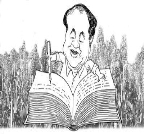
Born into a farmer’s family, life was not easy when I was a kid. We were so poor that we often did not know where our next meal was coming from. I had to sell cabbages at the marketplace to support my family.

A storyteller once came to the marketplace, and I went to listen to him. My mother was unhappy with me for forgetting my job. But that night, while she was making clothes for us under the weak light of an oil lamp, I couldn't help retelling stories I'd heard that day. She listened impatiently at first, since in her eyes professional (职业的) storytellers were smooth-talking men—nothing good ever came out of their mouths. But slowly she was attracted by my retold stories, and from that day on, she never gave me any task on market days, unspoken agreement to enjoy new stories. As a repayment(回报)for Mother's kindness and a way to show off my memory, I'd retell the stories for her in lively detail. Soon, she wasn't the only member of my audience, which later included my elder sisters, my aunts, even my stubborn grandmother.

I knew she was worried about me. Talkative kids are not well thought of in our village, for they can bring trouble to themselves and to their families when they talk too much. Mother often reminded me not to talk so much, wanting me to be a silent and modest teenager. However, my natural desire(渴望)to talk never went away, and that is what makes my name – Mo Yan, which means ‘no speaking’. This strong wish to talk also improved my ability to express myself, which is important for writers who are also considered as storytellers.

1.Mo Yan lived a/an ________ life when he was young.

A. difficult B. colourful C. easy D. rich

2.From the second paragraph, we can learn that ________.

A. little Mo Yan was interested in selling vegetables

B. his mother was attracted by the retold story at first

C. his mother didn’t let him listen to the new stories again

D. little Mo Yan had quite a good memory

3.Why did his mother dislike the professional storytellers?

A. Because she thought they never said anything good.

B. Because she thought they couldn’t make much money.

C. Because she thought they would affect Mo Yan’s schoolwork.

D. Because she thought most people didn’t like listening to stories.

4.In Mo Yan’s opinion, a writer should be a ________ child when they were young.

A. silent B. modest

C. talkative D. trouble-making

5.Which is the best title(标题)of the passage?

A. My Unlucky Childhood

B. A Storyteller’s Childhood

C. My Kind Grandmother

D. More talking leads to success

完形填空,先通读下面的短文,掌握其大意,然后在每小题所给的四个选项中,选出可以填入相应空白处的最佳选项。

A mother planted many kinds of vegetables in her garden. One day, she said to her ________ , “Betty, come here. Look at all these little yellow marks (斑点)on the ________ of the cabbages ( a kind of vegetable ). They are eggs of a kind of insect. They are very beautiful but very bad for cabbages. This afternoon you must ________ all the eggs on the leaves and kill them. In this way, you will help us have ________ , greener and bigger cabbages.”

Betty didn’t think she could do it ________ and in the end she forgot all about it. The mother was ill for a few days and ________work in her garden. When she was well, she took Betty with her to the garden to see the cabbages. To ________ surprise, the insects have eaten every leaf. When Betty saw this, she began to ________ . Then her mother said to her, “We should never put off (推迟) what we have to do today till ________. And you must learn to deal (处理) with the bad things ________ they are small, or it will turn into a big problem.”

1.A. son B. mother C. daughter D. sister

2.A. trees B. leaves C. grass D. top

3.A. see B. look at C. find D. look for

4.A. better B. worse C. thinner D. newer

5.A. at most B. at last C. at the moment D. at once

6.A. mustn’t B. couldn’t C. needn’t D. can’t

7.A. my B. our C. her D. their

8.A. cry B. shout C. run D. work

9.A. yesterday B. today C. tomorrow D. later

10.A. but B. while C. and D. before

违法和不良信息举报电话:027-86699610 举报邮箱:58377363@163.com

精英家教网