题目内容
Now there is a family problem. Nearly every parent says that we never grow up. In fact we are probably 16 or 17 years old. In their eyes, we are always little ones and often do wrong things.
Most parents always think that they have offered the best things they can to make their children live in a comfortable world. In return, they only want their children to get good results in the exams.
But why still can’t their children understand them? Does it mean that we still want more material(物质) things? No. In fact, what we want is a true family. What does a true family mean”? I think it means that we can get warmth, we can get consolation(安慰), and we can get happiness from it.
So I think that parents should sit down to talk with their children and let them know that they have a true family, so the children and their parents could understand each other more and more. Then, parents will not treat their children as little ones.
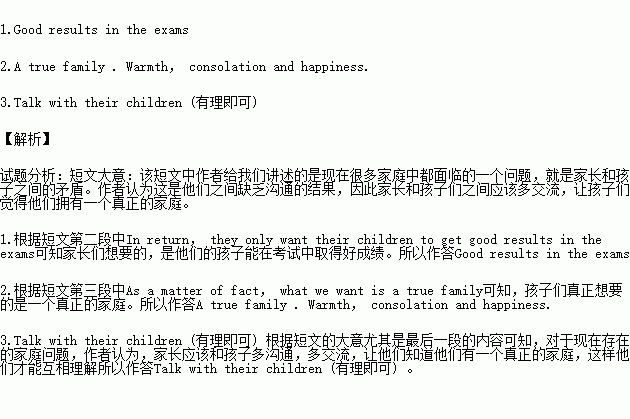
1.What do most parents want to get from their children? ( 1 )
2.What do the children really want and what can they get from it? ( 2 )
3.What do you think parents should do to make their children understand them more? ( 2 )

 期末冲刺100分创新金卷完全试卷系列答案
There are 50 students in Class 7. Now they are doing a survey about how they spend their pocket money. Some spend it on books, and others spend it visiting. What about you? Please read the form and answer the questions.
5 | 15 | 12 | 5 | 13 |
Buy some CDs and computer games. | Buy some snacks and drinks. | Buy some books in the bookshop. | Save it up and spend it traveling on holiday. | Buy some gifts for friends. |
1.How many students will spend money on CDs and computer games?
A. 10. B. 12. C. 13. D. 5.
2.What do the most students do with their pocket money?
A. Buy some CDs and computer games.
B. Buy some snacks and drinks.
C. Buy some gifts for their friends.
D. Buy some books in the bookshop.
3.How many students spend their pocket money traveling?
A. 10. B. 5. C. 12. D. 13.
4.Which students are more than the students who spend money on gifts?
A. The students who buy CDs.
B. The students who buy some books.
C. The students who buy some snacks and drinks.
D. The students who spend money traveling.
5.Which of the following is TRUE?
A. Students who spend money on CDs and computer games are more than those who spend money on snacks and drinks.
B. 10% students save up their pocket money and spend it traveling on holiday.
C. There are 60 students in Class 7 and no one wants to save up their pocket money.
D. Students in Class7 spend their pocket money mainly in four ways.