【题目】阅读理解D

What would happen if there were no electricity? Doing homework by candle? Walking to school? Boiling water over a little fire? Life is like that in many parts of Malawi, a small country in Africa.
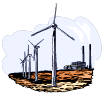
In 2001, William Kankwamba, a 14-year-old boy, had a simple wish — a light in his room. At that time, his family was so poor that he had to leave school. But he loved reading and wanted a light in his room so that he could read when it was dark. One day, he borrowed an 8th grade American textbook called Using Energy from a local library. He saw a picture of a windmill in it and decided to build one.
People in his village thought that he was crazy when he asked for things to make it. "I was really sad when people laughed at me and took me as a fool." William said, "Even my parents thought it was too difficult for a little boy to do that." But William didn't give up. After thousands of tries of almost four years, he succeeded in the end! People all came to see the windmill he made from old cars and broken bikes.
William has built three windmills in his 60-person village. They make enough electricity for lights, radios and a public TV, and helped pump clean water for both farms and family use.
Now William wants to build more windmills across Malawi. "A windmill means more than just power, it means freedom."
Money to help with this project has come from all over the world, including China. The village children can all afford to go to school now. Many have been encouraged to work on science. William says people now see that if they make their minds on something, they can get success.
(1)William saw a picture of windmill from ________.
A.a poster
B.a magazine
C.an advertisement
D.a textbook
(2)William's parents thought building a windmill was ________.
A.important
B.easy
C.difficult
D.possible
(3)How many windmills has William built for his village?
A.three
B.five
C.fourteen
D.sixty
(4)In the paragraph "A windmill means more than just power, it means freedom." probably means that with the help of windmills, ________.
A.people can live a rich life
B.people can do lots of things easily
C.people can make lots of money
D.people don't need to work anymore

【题目】阅读下面短文,并用英语回答问题(请注意每小题后面的词数要求).
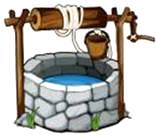
There was once an old and deep well.People got water by dropping a bucket(木桶) tied to a rope.The rope passed over a wheel just above the well.On the other side of the rope was another bucket.
A strong pull brought one bucket to the top while the other down to the water.They always passed each other on the way up and down,but never had time to speak.
At last,the rope became worn.So a new rope had to be put in its place.While this was being done,the two buckets were left standing together near the well.
"What a boring life we have!"said one bucket to the other."I am quite tired of it.No matter how full we come up,we are always sent down empty."
But the other bucket laughed and said,"What a funny way you have of looking at things!Don't you see that whenever we are sent down empty,we always come up full?'
Boys and girls sometimes talk like these two buckets.You may hear one of them say,"Just as we are having a good game,we are made to stop and go to work again.""Yes,"the other will reply,"but as soon as work is over,we always get to go out and have fun again."
There are two ways of looking at things.If you want to be happy,look at the bright side.

(1)What were the buckets tied to?(不超过10个词)
(2)Where did the two buckets talk with each other?(不超过10个词)
(3)What does the story tell us?(不超过15个词).

【题目】任务型阅读。

Today a Ferris wheel is usually 40 to 60 feet tall. That seems very high when you are on the top looking down. But the first Ferris wheel was 264 feet high — taller than a twenty-story building! Can you imagine the view from the top of that?
The first Ferris wheel was built for the 1893 World's Fair in Chicago. The people who planned the fair were looking for an attraction that would bring people to Chicago. George Ferris handed a drawing of a giant wheel that people could ride on. At first everyone laughed at his strange idea. But Mr. Ferris did not give up, and finally the idea was accepted. The ride opened in June of 1893.
Today's Ferris wheels have 12 to 16 seats, which each carry 2 or 3 people. But that first one had 36 enclosed cars, each holding 60 passengers. When filled, it carried 2, 160 people. During that summer in Chicago, about 1.5 million people rode the Ferris wheel.
After the fair the ride was moved to a nearby amusement park built especially to show off the wheel. In 1904, it was moved again – to St. Louis for the Louisiana Purchase Exposition. After the fair there, the wheel stood unused. In 1906 it was finally sold to a company for scrap metal (废铁).
Luckily a Chicago bridge builder, W.E. Sullivan, figured out how to make a smaller Ferris wheel that could easily be taken apart and put together. In 1906 he started the company that still makes many of the Ferris wheels used today.
But, whenever you ride one, remember that it all began with George Ferris's strange idea!
(1)How tall is a Ferris wheel today?

(2)What was the first Ferris wheel built for?

(3)What did people think of Ferris's idea at first?

(4)How many people rode the first Ferris wheel during the summer in 1893?

(5)Compared with today's Ferris wheels, what was the first Ferris wheel like?

违法和不良信息举报电话:027-86699610 举报邮箱:58377363@163.com

精英家教网