Do you know some great inventors and their inventions?

What factors (因素) are needed for their success?

Well, good timing for a start. You can have a great idea which the public simply doesn’t want … yet. The Italian Giovanni Caselli invented the first fax(传真)machine in the 1860s. Although the quality is excellent, his invention quickly died a commercial(商业的) death. It was not until the 1980s that the fax became very common in every office… too late for Giovanni Caselli.

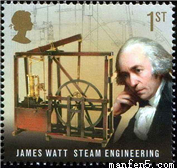
Money also helps. The Frenchman Denis Papin (1647-1712) had the idea for a steam engine (蒸汽机)almost a hundred years before the better-remembered Scotsman James Watt was even born… but he never had enough money to build one.

You also need to be patient (it took scientists nearly eighty years to develop a light bulb which actually worked)… but not too patient. In the 1870s, Elisha Gray, a professional inventor from Chicago, developed plans for a telephone. Gray saw it as no more than “a beautiful toy”. However, when he finally sent details of his invention to the Patent Office(专利局) in February,1876, it was too late. Almost the same invention had arrived two hours earlier and the young man who sent it , Alexander Graham Bell, will always be remembered as the inventor of the telephone.

Of course what you really need is a great idea—but if you haven’t got one, a walk in the country and a careful look at nature can help. The Swiss scientist, George de Mestral, had the idea for Velcro(魔术贴) when he found his clothes covered in sticky seed pods after a walk in the country. During a similar walk in the French countryside some 250 years earlier, Rene Antoine Ferchault de Reaumur had the idea that paper could be made from wood when he found an abandoned wasps’ nest(蜂巢).

You also need good commercial sense. Willy Higinbotham was a scientist doing nuclear (核能的)research in the Brookhaven National Laboratory in Upton, USA. In 1958 the public were invited to an exhibition in the Laboratory to see their work, but both parents and children were more interested in a tiny 120cm screen with a white dot which could be hit back and forth over a “net” using a button and a knob. Soon hundreds of people were ignoring the other exhibits to play the first ever computer game—made from a simple laboratory instrument called an “oscilloscope”. Higinbotham, however, never made money from his invention: he thought people were only interested in the game because the other exhibits were so boring!

1.How many factors do inventors need?

A. 3. B. 4. C. 5. D. 6.

2.The word “ignoring” in last paragraph probably mean?

A. having no idea of B. making no sense to

C. getting no chance of D. paying no attention to

3.What can you learn from the passage?

A. Giovanni Caselli invented the first fax machine in the 1980s.

B. Denis Papin afforded to build a steam engine a hundred years ago.

C. Elisha Gray missed the chance to be the inventor of the telephone.

D. George de Mestral got the idea from a walk in a French countryside.

4.What is the best title for the passage?

A. How to be a successful inventor.

B. How to get a great idea from nature.

C. How to have good commercial sense.

D. How to make money from inventions.

A 13-year-old American boy was born without fingers on his left hand, but with the help of his new 3D printed hand, he has become a member of a baseball team!

Dawson Riverman is a sports loving teenager. He was born without fingers on his left hand, but he has never let that stop him. He has always found a way to live with it. Last year, he got a hand created by a 3D printer and it has changed his life.

Corban University invited Dawson, his family and his best friend to their home opener (主场揭幕赛). Dawson signed a letter and joined the baseball team.

“They’ve just opened up their hearts to us and just made it an amazing journey.”

His parents were just as excited as their son. Watching the boy, his best friend and younger brother warm up with the team was more than they hoped for. The family even got to throw out the first pitch (投球).

While the team can get encouragement from Dawson, his family hopes Dawson will draw more confidence from the experience. It’s something his new hand has already given him. Dawson is a man of few words, but the look on his face said it all!

Dawson’s mother says they plan to develop a program to teach students to print 3D hands for other children.

根据材料内容判断正(T)误(F)。

1.Dawson Riverman lost his fingers during an accident.

2.For Dawson Riverman, life was very hard because of his hand.

3.Dawson Riverman felt excited to become a member of the baseball team.

4.Dawson Riverman is a boy who doesn’t talk much.

5.The Riverman family will start a program to make 3D printed hands.

违法和不良信息举报电话:027-86699610 举报邮箱:58377363@163.com

精英家教网