题目内容

完形填空

Santa Can Come before Christmas

It was last June. I entered a supermarket to pick some vegetables, when a young man asked me, “Can you tell me where the ________ counter(柜台) is? ”

“Well, the milk is in the lower right corner.” I replied.

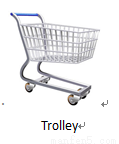
Picking up my things, I finally came to the milk counter where I met the same man ________ almost 10 bottles of milk in his hands. I asked him ________ he needed a trolley or not?

“Sure, thank you.” he answered.

I was ________ he was still picking more bottles and after a few minutes his trolley was full of milk. There were over twenty bottles of milk ________ it.

I laughed and asked, “Why so many bottles?”

He smiled and said, “These are for my street dogs. Today, I want to be a Santa for ________ .”

I said, “Well, it’s too ________ for you to be a Santa. It is still June and Christmas comes in December.”

He ________ at me and walked a few steps, as if he wanted to say something but he left the counter without saying ________ .

________ ,we met again at the bread counter.

“So these bread and cakes are also for the street dogs, Mr. Santa.”

He smiled and said, “Yes, these are also for the dogs and I love to be Mr. Santa in the month of June, Santa is a symbol of surprises and ________ . Santa comes in December as we ________ him around Christmas. But in real life there is a Santa in each one of us, no matter which month it is. Maybe when you offered help to me by getting me a trolley, there was a ________ Santa in you. When we offer food to a poor man or a(n) ________ to someone who is caught in the rain, we are being Santa there, So when you offer help to others or get help from others, just think that Santa has come all the way for you.”

He left and I was happy that I had met him. It was right to understand that Santa can come before Christmas. We just need to realize that he is around us by ________ love and joy.

1.A. vegetable B. milk C. bread D. fish

2.A. putting B. choosing C. holding D. bringing

3.A. that B. what C. why D. whether

4.A. sad B. excited C. angry D. surprised

5.A. in B. on C. by D. of

6.A. it B. him C. them D. you

7.A. easy B. early C. helpful D. important

8.A. pointed B. laughed C. shouted D. turned

9.A. something B. anything C. everything D. nothing

10.A. Luckily B. Suddenly C. Aloud D. Wisely

11.A. love B. success C. friendship D. knowledge

12.A. call B. show C. expect D. invite

13.A. lost B. frozen C. forgotten D. hidden

14.A. camera B. umbrella C. apple D. box

15.A. storing B. facing C. spreading D. increasing

练习册系列答案
相关题目

Liang Huili is the leader of Huana International Volunteer Service Group,with hundreds of students, young professionals and business leaders. They held a basketball match to help 150 poor students in western China with school supplies(用品) and winter clothes. She also worked with an organization in the US to raise money for children with heart disease.

Born in Guangdong Province in 1942, Liang moved with her family to Taiwan at the age of seven. Liang taught at a primary school for seven years until her boyfriend went to America in 1969, one year after they got married.

“We didn’t have much money,” she says, “ so I started babysitting for other Chinese families and taking care of my own daughter at the same time.” She also taught children Chinese at Chinese schools. What’s more, she would help newly arrived Chinese families find apartments and work, and sometimes lend them money.

“I remember those students from China who first came in 1986. They didn’t have much money, and idea of what to do,” Liang told us. “ I then asked people in my neighborhood and my Chinese friends for donations(捐赠)-not only some money but also small electronic appliances needed for daily living.”

One of her experiences in Dayton, Ohio made her want to make volunteering a vocation(职业). She remembers how she once collected(接走) two Chinese professors who had missed their flight and had no one there to pick them up. A friend told Liang about it, and she went to meet them herself around midnight. She found the men feeling lost in that strange country, where no one spoke their language. They didn’t want to go to an American hotel, and didn’t know how they would get to Columbus the next day. “ So I talk to them and took them home with me,” she says, “ and today, I am still in touch with those two professors. We are good friends.”

1.Liang helped poor students in western China by______.

A.holding a basketball match

B.working with an American organization

C.asking her Chinese friends for donations

D.taking the poor students to her home

2.Liang moved with her family to Taiwan when she was_____ years old.

A.six

B.seven

C.eight

D.nine

3.Her experience of_______ made her decided to make volunteering her vocation.

A.moving from place to place

B.helping students in 1986

C.being a primary school teacher

D.helping the two professors in Dayton

4.What can we learn about Liang from the passage? ______

A.She didn’t have to worry about money.

B.She likes helping others when they are in trouble.

C.Many Chinese families lent her money.

D.She asked people to take care of her daughter.

It’s time for school! But on May 14th, 170 students at Duncanville High School in Texas, US,

were told to go back home. Why? Because they were wearing the wrong clothes to school.

Schools in the US don’t always ask students to wear uniforms. But they have dress codes (着装要求). For example, Duncanville High School tells students to wear belts, shirts without logos(标识). Schools’ most-hated clothes are different.

In 2011, the saggy(松垮的) trousers law was passed in Florida. It stops students from wearing trousers that show body parts. Now, “the favorite new target(目标) of the school dress code” is leggings(紧身裤), reported the Associated Press. Some schools don’t allow leggings. Other schools ask students to wear a shirt or a skirt over leggings.

Some students complain(抱怨) that schools are going too far. But schools say dress codes help protect students’ safety and make sure they grow up with good taste.

“We want to teach them that they must meet the expectations(期望) not only here in school, but also outside school,” said Andre Smith.

1. What happened to 170 students at Duncanville High School on May 14th?

A. They were told to go back home

B. They were wearing the uniforms to school.

C. They followed the school dress codes.

D. They didn’t know it was time for school.

2. In Duncanville High School, students are allowed to wear .

A. the wrong clothes

B. belts, shirts without logos

C. their favorite clothes

D. schools’ most-hated clothes

3. How long has the saggy trousers law been used in Florida

A. For a few weeeks. B. For several months

C. For about two years. D. For about three years.

4.We can infer(推断) from the text that Andre Smith may be .

A. the head of Duncanville High School

B. a student from Duncanville High School

C. the head of the Associated Press

D. a news reporter from the Associated Press

We have to accept the truth: sometimes, we just want to shout out loud.

For example, we all have days like this: our dog has made a mess on the floor we just cleaned, or our friend called to tell us he or she couldn't come at the last minute when we had cooked dinner for him or her.We may be really angry but we tried to bear things like those. According to ancient Chinese wisdom (智慧).We should shout in a loud voice instead of keeping silent. In fact, it's good for our health.

“Chinese people have passed on the practice from ancient times to now as a part of traditional medicine.” said Mrs.Li, a 60-­year-­old woman from Hangzhou .“My parents taught me to do this.It's a part of our folk (民间的) culture.”

Mrs.Li is a member of a group of people who love shouting. Each morning, she and some of her friends climb to top of the hill, and let out loud shouts before starting their daily exercise. They believe that shouting is good exercise for their lungs (肺) and it brings them a lot of fun.

“Sometimes I shout out and other shout back,” said Mrs.Gu, another shouting lover.“It makes you happy. You laugh and then you feel very comfortable.”

Dr. Peter Calafiura, an American doctor, agrees that shouting can have a positive influence on people's health. So , next time you start your morning run, why not try to shout out first? It will make you healthier.

1.What does the underline word “bear” in Paragraph 2 mean in Chinese?

A.纠正 B.忍受 C.铭记 D.杜绝

2.Where does Mrs.Li shout every day?

A. In a park. B. At a square.

C. In her house. D. On a hill.

3.What does Dr.Caliafiura think of shouting?

A. It's great fun.

B. It's good for people's health.

C. It's easy to learn.

D. It's good exercise especially for kids.

4.What is the passage is mainly about?

A. A shouting lover.

B. A shouting club.

C. The advantages of shouting.

D. The history of shouting.

违法和不良信息举报电话:027-86699610 举报邮箱:58377363@163.com

精英家教网