题目内容
阅读理解。
S: Excuse me, is this Class One?
T: Yes, come in, please.
S: Sorry, I'm late.
T: That's_all_right. What's your name?
S: My name is Sam.
T: Can you spell that, please?
S: Yes. S-A-M, Sam.
T: Nice to meet you, Sam. I'm your teacher, Ms. Gao. How old are you?
S: I'm thirteen. Which row am I in, Ms. Gao?
T: You are in Row 4 and this is your student card.
S: Thank you.
T: You're welcome.
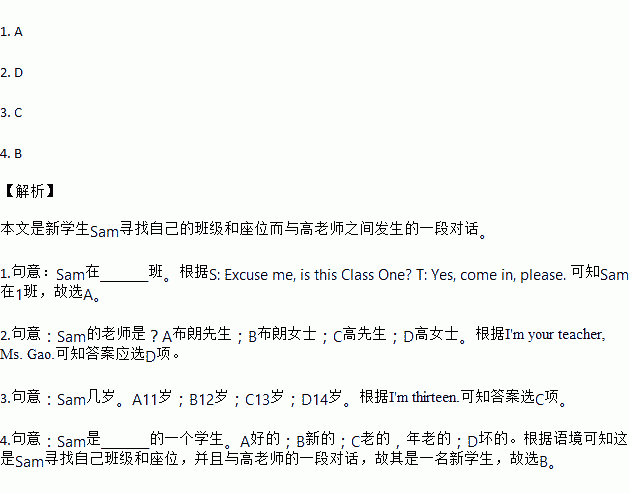
1.Sam is in Class ________.
A. 1 B. 2 C. 3 D. 4
2.Sam's teacher is ________.
A. Mr. Brown B. Ms. Brown C. Mr. Gao D. Ms. Gao
3.Sam is ________.
A. eleven B. twelve C. thirteen D. fourteen
4.Sam is a(n) ________ student.
A. good B. new C. old D. bad

For students’ safety, some safety rules are necessary. Here are some rules in different countries.
In China, fire training at school is common to teach students to deal with emergencies(紧急情况). During the training, students hurry to the playground with a wet cloth covering their mouth. Fire training is held each term. |
In Japan, public elementary schools hold earthquake training once a month. They teach students how to leave dangerous places safely during an earthquake without pushing. |
In many middle schools in the UK, students can choose to take a bicycle course. There, they learn how to ride to school safely. |
1.Students should receive right safety training because .
A. it is easy
B. it could avoid most of these safety accidents
C. it is interesting
D. it is accepted by the teachers
2.This passage mainly talks about .
A. how to escape from earthquakes
B. how to put out the fire
C. some school safety rules in some countries
D. a bicycle course