网址:http://m.1010jiajiao.com/timu3_id_3052055[举报]
The Florida sun baked my shoulders as I worked along the I-595 freeway near Fort Lauderdale, picking up rubbish. I paused to 36 the sweat off my forehead and look up at the cloudless blue sky.“ 37 can’t it rain?” I thought. That would 38 things down.
I thought about my 39 , who were probably sitting in an air-conditioned 40 right now. I’d had some problems in school, 41 my parents decided to let me 42 full-time with my dad, We both worked for my uncle, who had taken 43 of a maintenance(道路养护)company. It was up to us to keep the roads 44 of rubbish. The job was 45 and dirty, especially on hot days 46 this. I wondered why I ever agreed to do it.
We continued our 47 route along the I-595, 48 for the overpass bridge. Then I noticed an area where some 49 were broken on the ground. It wasn’t like that before.
“Dad! Pull over! I want to 50 something out.”
I jumped off the truck and rushed to the bridge. Something was telling me to 51 …there wasn’t much time. 52 I saw a Toyota that 53 upside down in the tree. Maybe it was a stolen car that somebody 54 there, I thought. Then, just at that 55 , I noticed something moving. It was a bloody leg poking out of the driver’s side window!
“Help!” a lady moaned.
1. A.wipe B.cut C.put D.send
2. A.When B.How C.Why D.Where
3. A.turn B.keep C.make D.cool
4. A.parents B.school-times C.friends D.school yards
5. A.office B.classroom C.restaurant D.living room
6. A.but B.or C.for D.so
7. A.work B.study C.stay D.spend
8. A.business B.possession C.position D.place
9. A.away B.from C.far D.clear
10. A.easy B.lonely C.smelly D.noisy
11. A.for B.like C.after D.as
12. A.regular B.common C.unusual D.normal
13. A.reaching B.going C.looking D.heading
14. A.cars B.bottles C.branches D.glasses
15. A.check B.help C.take D.bring
16. A.decide B.hurry C.consider D.stop
17. A.Above B.Behind C.Ahead D.Below
18. A.hung B.trapped C.caught D.fell
19. A.stored B.deserted C.lost D.hid
20. A.bridge B.tree C.moment D.way
查看习题详情和答案>>
When I came in, I saw her sitting in the sofa ______ in thought.
A. to lose B. losing C. lost D. being lost
查看习题详情和答案>>
Jack was a heavy smoker. His mother didn't like him smoking,and 1. ________
he couldn't give it up. At about 9 o'clock in one evening, Jack was seen 2. ________
smoking in the living-room again. “Don't smoke in the living-room, 3. ________
Jack!”said his mother in an unhappy voice. Heared this,Jack went 4. ________
back his own room and shut the door. While he was sitting in bed, 5. ________
he couldn't help smoke again. About an hour later,Jack's mother 6. ________
smell heavy smoke. She got up and opened Jack's bedroom. Good heavens! 7. ________
Jack's quilt was burning while he was sleep! She quickly got some 8. ________
water and put up the fire. Jack was given a good lesson.“I'll give up 9. ________
smoking from now on, Mum.”Jack said in low but determined voice. 10. ________
查看习题详情和答案>>English was always my favorite subject. In my freshman year of high school, I could write a killer composition. In my junior year, my 1 allowed me to give spelling tests to the class. I had wonderful 2 of this year. Mrs. Alexander 3 me to sit at her desk and take over the class when she had to leave the room. Only my senior English class was 4 , as we had a teacher right out of college who expected college-level work. Every student received a “C” or “D” grade the first quarter. 5 English was still my subject.
I graduated from high school, 6 early and had children. 7 about my English, I often helped my kids with their English homework. And I 8 long articles and beautiful poetry for a newspaper. Fifteen years later, I went to college, and because I had been an “A” student, I 9 an “A” student. I lived up to my own expectations.
Yesterday, I 10 my high school report cards when I was reading old papers. That bundle (捆) of report cards 11 back the old days. I remembered sitting in my advisor’s office, explaining that I had always been excellent at English and complaining that I did not 12 a “D” from that inexperienced teacher of my senior year. The advisor was 13 but unable to change a grade.
My old 14 cards showed something else too. I wanted to tear them up or 15 them. I was not an “A” student in high school English! Somehow, I had convinced myself of this, when the grades clearly reflected an 16 student with an occasional “A” or “B”, but mostly “C”s.
Had I lived up to those 17 and define (定义) myself according to those letters, I would have never confidently 18 my writing career. Had I believed in my early grades instead of myself, I would have allowed my fear of 19 to defeat my enthusiasm and damage my creativity. 20 , I regarded my younger self as an “A” English student, except for that undeserved “D”.
1. A.teacher B.headmaster C.classmate D.monitor
2. A.memories B.thoughts C.expectations D. impressions
3. A.forced B.appointed C.permitted D.begged
4. A.active B.creative C.interesting D. disappointing
5. A.So B.But C.And D.Or
6. A.worked B.married C.succeeded D. progressed
7. A.Confident B.Happy C.Sorry D. Anxious
8. A.wrote B.edited C.read D. copied
9. A.met B.lost C.admired D.remained
10. A. counted B.remembered C.discovered D.approached
11. A. turned B.brought C.held D. put
12. A. deserve B. make C.receive D. learn
13. A. sympathetic B. energetic C.angry D. sad
14. A. birthday B. post C.invitation D. report
15. A. keep B. correct C.hide D. send
16. A. silent B. bright C.average D. outstanding
17. A. figures B. grades C.papers D. words
18. A. changed B. ended C.damaged D.sought
19. A. change B. risk C. stress D. failure
20. A. Otherwise B. Besides C.Instead D. Still
查看习题详情和答案>>
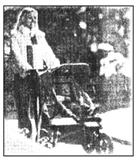
Children pushed in buggies which face away from their parents may suffer longterm emotional(情感的)and language problems,according to a study published on Friday.
The research,believed to be the first of its kind,found that children who were not facing the person pushing them were less likely to talk,laugh and communicate with their parents.
The findings were based on a study of 2,722 parents and babies and an experiment where 20 babies were wheeled in buggies for a mile,facing their parents for half the journey and facing away for the other half. Parents using facetoface buggies were twice as likely to talk to their children while the babies’ heart rates fell and they were twice as likely to fall asleep,showing that they were feeling relaxed and safe.
In addition,only one baby out of the 20 studied laughed while sitting in an awayfacing buggy.
“Our data(数据) suggests that for many babies today,life in a buggy is emotionally impoverished and possibly stressful. Stressed babies grow into anxious adults,” said Dr Suzanne Zeedyk,Developmental Psychologist at Scotland’s Dundee University who carried out the research.
The study,which was published by National Literacy Trust as part of its “Talk To Your Baby” campaign,found that 62 percent of all children observed travelled in awayfacing buggies.
Zeedyk said it would have a negative effect on babies’ development if they spent a long time in awayfacing buggies,which would be bad to their ability to communicate with their parent at a time when their brain was developing rapidly.
Laura Barbour of the Sutton Trust,a social mobility charity which funded the research,said buggy manufacturers(制造商) should look closely at the findings.
1.Using awayfacing buggies may________.
A.benefit both the babies and their parents
B.affect babies’ language ability permanently
C.help babies communicate with their parents
D.have positive effect on babies’ development
2.Which of the following is TRUE according to the passage?
A.Parents may talk twice with the babies in awayfacing buggies.
B.The study suggests children feel relaxed and safe in buggies.
C.The samples (案例)of the study were 20 babies wheeled in buggies.
D.One of the 20 babies was twice as likely to fall asleep in buggies.
3.Which of the following would be the best title for the text?
A.Best for Kids to Face Parents in Buggy
B.Best for Kids to Communicate with Parents
C.Stressed Babies Grow into Anxious Adults
D.Buggy Manufacturers Care about the Finding
查看习题详情和答案>>