网址:http://m.1010jiajiao.com/timu3_id_2962651[举报]
听力
第一节:
听下面5段对话或独白。每段对话或独白后有几个小题,从题中所给的A、B、C三个选项中选出最佳选项。听完每段对话或独白前,你将有时间阅读各个小题,每小题5秒钟;听完后,各小题将给出5秒钟的作答时间。每段对话读两遍。
听第1段材料,回答第1至2题。
1.What is the man doing?
A.Asking for help.
B.Making an apology.
C.Expressing dissatisfaction.
2.Where does the conversation probably take place?
A.At an airport.
B.At a hospital.
C.At a school.
听第2段材料,回答第3至5题。
3.Why doesn’t the man want to see Mrs Cathy?
A.He thinks she is not kind
B.He is tired of waiting for people.
C.He thinks she is boring.
4.Whom does the man have to see at 10 a. m?
A.Mr White.
B.Mr Potter.
C.Mrs Cathy.
5.What is the relationship between the speakers?
A.Father and daughter.
B.Husband and wife.
C.Boss and secretary.
听第3段材料,回答第6至8题。
6.Where was the woman when the hurricane took place?
A.In her father’s friend’s house.
B.In the house with her husband.
C.On her way home.
7.When did the hurricane hit the area where the woman lived?
A.At 3∶30 a. m. on August29.
B.At 5∶00 a. m. on August 30.
C.At noon on August 30.
8.Why did they chive very slowly?
A.Too many cars were on the road.
B.Broken branches were everywhere.
C.There was a very strong wind.
听第4段材料,回答第9至11题。
9.Who is the speaker?
A.A student.
B.A player.
C.A manager.
10.What time does the center open?
A.9∶00a. m.
B.9∶00p. m.
C.5∶00 p. m.
11.What is the speaker mainly talking about?
A.Different sports rules.
B.Different indoor sports.
C.Different sporting activities.
听第5段材料,回答第12至15题。
12.Why are people interested in vegetable gardening?
A.Because people can make money from it.
B.Because people can relax themselves.
C.Because people can sell vegetables.
13.In what season(s)can a well-kept garden provide fresh, vegetables?
A.In late autumn.
B.From late spring to autumn.
C.From spring to late autumn.
14.What is needed to keep the garden well?
A.Great efforts.
B.A lot of money.
C.little time.
15.What can you learn from Professor Smith?
A.Tips on how people grow vegetables.
B.Reasons for doing vegetable gardening.
C.Kinds of vegetables people prefer.
第二节:听取信息
听下面一段独白,请根据题目要求,从所听到的内容中获取必要的信息。听力材料朗读两遍。你有90秒钟的答题时间。
A summary of research into the ways Chinese students in Auckland spend their leisure time.
How many?On 8th November 2004, a survey was conducted among(16)________ Chinese students.
In what way?Conducted by means of a(17)________ given to the students to complete.
Ways(18)________ of the students went shopping
56% of the students spend time(19)________ or doing nothing at all
(20)________ of the students said they spend all their time on school and homework
听力(共三节,满分
30分)第一节
(共5小题;每小题1.5分,满分7.5分)听下面
5段对话。每段对话后有一个小题,从题中所给的A、B、C三个选项中选出最佳选项。听完每段对话后,你都有10秒钟的时间来回答有关小题和阅读下一小题。每段对话仅读一遍。1.What does the woman ask the man to do?
A.Take her to the Smith Hotel.
B.Show her the way to the Smith Hotel.
C.Show her the way to the hospital.
2.What does the woman want to do?
A.Open the door.
B.Let the man in.
C.Open the window.
3.What will the woman help the man to do?
A.Carry some books.
B.Pick up some books.
C.Buy some books.
4.What do the man’s parents usually do in the evening?
A.Do some shopping.
B.Watch TV.
C.Do some reading.
5.Why couldn’t the woman get through to the man?
A.His mobile had been stolen.
B.His mobile wasn’t working.
C.His mobile was power off.
第二节
(共12小题;每小题1.5分,满分18分)听下面
4段对话,每段对话或独白后有几个小题,从题中所给的A、B、C三个选项中选出最佳选项。听每段对话前,你将有时间阅读各个小题,每小题5秒钟,听完后,各小题将给出5秒钟的作答时间,每段对话读两遍。请听第
6段材料,回答第6至7题。6.What will the two speakers do tomorrow morning?
A.Invite Mr.Green to dinner.
B.Visit Mr.Green’s new house.
C.Go to see their parents.
7.What will the man do tomorrow afternoon?
A.Do some writing.
B.Go swimming.
C.Go fishing.
请听第
7段材料,回答第8至10题。8.What does the man want to drink?
A.Water.
B.Tea.
C.Coffee.
9.What is the man doing?
A.Watching TV.
B.Writing some reports.
C.Listening to the radio.
10.When does this conversation take place?
A.Late at night.
B.In the afternoon.
C.In the morning.
请听第
8段材料,回答第11至14题。11.What is the relationship between the two speakers?
A.Manager and secretary.
B.Husband and wife.
C.Neighbours.
12.Why did the man’s classmates come to Guangzhou?
A.To attend a meeting.
B.To visit the city.
C.To see the man.
13.What did the man ask his classmates to do at first?
A.He invited them to dinner in a hotel.
B.He asked them to go shopping with him.
C.He invited them to have a chat in his office.
14.What does the woman suggest doing?
A.Preparing some more food for them.
B.Showing them around the whole city.
C.Treating the two classmates at home.
请听第
9段材料,回答第15至17题。15.How did Charles Dickens earn most of his money?
A.By writing novels.
B.By his reading tours.
C.By acting.
16.How long did his tour of America last?
A.Three weeks.
B.Three months.
C.Three years.
17.What was his last performance?
A.David Copperfield.
B.The Mystery of Edwin Drood.
C.Oliver Twist.
第三节
(共3小题;每小题1.5分,满分4.5分)听下面一段材料,将第
18至第20三个小题的信息补充完整,每空限填一个词或一个数。听材料前,你将有时间阅读各个小题,每小题5秒钟;听完后,各小题将给出5秒钟的作答时间。本段材料读两遍。听第
10段材料,回答第18至20题。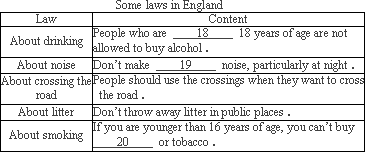
听力(共三节,满分30分)
第一节(共5小题;每小题1.5分,满分7.5分)
听下面5段对话。每段对话后有一个小题,从题中所给的A、B、C三个选项中选出最佳选项。听完每段对话后,你都有10秒钟的时间来回答有关小题和阅读下一小题。每段对话仅读一遍。
1.What do you know from the talk?
A.The woman said hi to Jim and Debbie.
B.The woman didn’t see Jim and Debbie.
C.The woman was looking for Jim and Debbie.
2.What will the man do next?
A.Leave right away.
B.Stay for dinner.
C.Catch a train.
3.What do we know about the man?
A.He will not learn to use the computer.
B.He uses the computer every day.
C.He will learn to use the computer.
4.How many sports does the Olympics have?
A.50.
B.28.
C.32.
5.What are the speakers talking about?
A.His job interview.
B.His meeting with a friend.
C.His good behaviour.
第二节(共12小题;每小题1.5分,满分18分)
听下面4段对话或独白。每段对话或独白后有几个小题,从题中所给的A、B、C三个选项中选出最佳选项。听每段对话或独白前,你将有时间阅读各个小题,每小题5秒钟;听完后,各小题将给出5秒钟的作答时间。每段对话或独白读两遍。
听第6段材料,回答6至8题。
6.How many people does Tom bring?
A.6.
B.5.
C.7.
7.Where is Tom?
A.At a restaurant.
B.In a hotel.
C.In a club.
8.Why can’t Tom get a table reserved under Tom?
A.Because there’s no table reserved.
B.Because there’s no table available.
C.Because the service is over.
听第7段材料,回答第9至11题。
9.What show does the club have tonight?
A.A dance show.
B.A music show.
C.A talk show.
10.What food can the man have in the club?
A.French food.
B.Japanese food.
C.Italian food.
11.When will the man come to the club?
A.At 8∶40.
B.At 9∶00.
C.At 11∶00.
听第8段材料,回答第12至14题
12.Where is the man now?
A.At a restaurant.
B.At a fast-food shop.
C.At a shopping center.
13.What is the man’s order?
A.A milk-shake.
B.A burger and a cola.
C.A burger and fries.
14.What statement of the following is TRUE according to the dialogue?
A.The man got his order.
B.The man was angry with the woman.
C.The woman looks nice.
听第9段材料,回答第15至17题
15.What is the woman going to do this weekend?
A.To go shopping.
B.To go bird-watching.
C.To watch a game.
16.What else can the woman enjoy by doing that?
A.Relaxing.
B.Picking up red leaves.
C.Skiing.
17.What does the man mean by saying “Live and let live!”?
A.He doesn’t want to live with the woman.
B.He wants to live alone.
C.Don’t be strict to others.
第三节(共3小题;每小题1.5分,满分4.5分)
请听下面一段独白,用所听到的独白中的词或数填空,每空限填一个词或一个数。在听本段独白前,你将有时间阅读各个小题,每小题5秒钟;听完后,各小题将给出5秒钟的作答时间。本段独白读两遍。
请听第10段材料,回答第18至20题。

听力(共三节,满分30分)
第一节(共5小题;每小题1.5分,满分7.5分)
听下面5段对话。每段对话后有一个小题,从题中所给的A、B、C三个选项当中选出最佳选项。听完每段对话后你都有10秒钟的时间来回答有关小题和阅读下一小题。每段对话仅读一遍。
1.What does the woman mean?
Jane is looking for a summer job.
Jane is eager to go home for the summer holiday.
Jane doesn’t want to go home.
2.What book has the woman bought?
A.A music book.
B.A history book.
C.An English book
3.What does the woman imply about the sale?
A.She missed it.
B.She bought something for her aunt.
C.She was there only briefly
4.When does the man have to check his ticket at the latest?
A.At 2∶15 p. m.
B.At 2∶05 p. m.
C.At 1∶45 p. m
5.What does the woman mean?
A.They should buy a new typewriter.
B.They should find a better typist.
C.They should find a new place for the typewriter.
第二节(共12小题;每小题1.5分,满分18分)
请听下面4段对话或独白。每段对话或独白后有几个小题,从题中所给的A、B、C三个选项中选出最佳选项。听每段对话或独白前,你将有时间阅读各个小题,每小题5秒钟;听完每小题后,各小题将给出5秒钟的作答时间。每段对话或独白读两遍。
听第6段材料,回答第6至第8题。
6.How many corners does the man have to turn?
A.One
B.Two.
C.Three.
7.What does the man want to find a bank for?
A.He wants to change his money.
B.He wants to keep some money.
C.He wants to borrow some money
8.Where is the post office?
A.In the big new shopping center.
B.On the right of the big new shopping center.
C.On the left of the big new shopping center.
请听第7段材料,回答第9至11题。
9.Where did the conversation most probably take place?
A.In the street.
B.At the woman’s.
C.In a park
10.What did the man want to have after dinner?
A.A cup of tea.
B.Milk.
C.A cake.
11.Why did the man leave suddenly?
A.His car was broken.
B.He doesn’t feel well
C.His sister was in an accident.
请听第8段材料,回答第12至14题。
12.What is the relationship between the two speakers?
A.Neighbor
B.Doctor and patient.
C.Friends.
13.When did the woman cough most seriously?
A.At night.
B.In the afternoon.
C.In the morning
14.What did the man do for the woman?
A.He gave her some medicine and some advice as well.
B.He examined the woman carefully.
C.He just told her not to worry too much.
请听第9段材料,回答第15至17题。
15.What’s the man doing recently?
A.He is traveling.
B.He is writing paper.
C.He is finding a job.
16.What is the first choice for the man?
A.A lawyer
B.A guide.
C.An engineer.
17.Why does the woman say the recruitment agency(招聘中介)would hire the man?
A.Because of his knowledge.
B.Because of his job hunting experience.
C.Because of his major.
第三节(共3个小题;每小题1.5分,满分4.5分)
请听下面一段独白,用所听到的独白中的词或数填空,每空限填一个词或一个数。填入的内容。在听本段独白前,你将有时间阅读各个小题,每小题5秒钟;听完后,各小题将给出5秒钟的作答时间。本段独白读两遍。
请听第10段材料,回答第18第20小题。

听力
第一节
听下面5段对话.每段对话后有一个小题,从题中所给的A、B、C三个选项中选出最佳选项.听完每段对话后,你都有10秒钟的时间来回答有关小题和阅读下一小题.每段对话仅读一遍.
1.What is the job of the girl's mother?
A.An engineer.
B.A teacher.
C.A lawyer.
2.What does the man offer to do?+-
A.Drive her to the game.
B.Call her a taxi.
C.Telephone Lisa.
3.How does the woman feel about having fish for breakfast?
A.It's unusual.
B.It's unhealthy.
C.It's unacceptable.
4.When will the speakers discuss the agenda?
A.Before dinner.
B.During dinner.
C.After dinner.
5.What does the man mean?
A.The fruit look delicious.
B.Fresh fruit are not necessarily good.
C.The fruit are good since they're in season.
第二节
请听下面5段对话或独白.每段对话或独白后有几个小题,从题中所给的A、B、C三个选项中选出最佳选项.听每段对话或独白前,你将有时间阅读各个小题,每小题5秒钟;听完后,各小题将给出5秒钟的作答时间.每段对话或独白读两遍.
听第6段材料,回答第6、7.
6、What will the weather be like?
A.Snowy.
B.Windy.
C.Rainy.
7、What do we know about Jean?
A.She was ill all night.
B.She will have a birthday party tomorrow.
C.She is still in the bed.
听第7段材料,回答第8、9题.
8.Why did the students write to Martin?
A.They hope to meet and talk with him.
B.They want him to teach them.
C.They want him to go back to school to study.
9.What does Martin decide to do in the end?
A.He won't go as he still hates the school.
B.He will go to show that he's not the bad boy he used to be.
C.He will go because he doesn't want to disappoint the kids.
听第8段材料,回答第10至12题.
10.How many children does the woman's brother have?
A.8.
B.4.
C.2.
11.Why doesn't the woman want a big family?
A.It is a great task to take care of a big family.
B.She dislikes having too many kids.
C.A big family is too noisy.
12.What do we know about the man?
A.He has a big family.
B.He seldom meets his uncle.
C.He lives in Australia.
听第9段材料,回答第13至16题.
13.How long is David planning to stay in China?
A.Four nights.
B.Two weeks.
C.A month.
14.Where is he from?
A.Britain.
B.America.
C.Australia.
15.Why won't he go to Shanhai?
A.He's been there before.
B.His time is limited.
C.The city is similar to the cities in his country.
16.Which place won't he go to?
A.Xi'an.
B.Hangzhou.
C.Guilin.
听第10段材料,回答第17至20题.
17.What is the talk about?
A.The rising crime rate in modern society.
B.Lack of the sense of security in big cities.
C.A useful device that can protect your houes.
18.What do we know about Protect Alarms?
A.They're expensive.
B.One can learn to use them easily.
C.They may not work on special occasions.
19.What does the house owner want to say if his house is protected by Protect Alarms?
A.You cannot break into my house easily.
B.Get away, there're valuable things in my house.
C.Only invited guests are welcome.
20.What can we do if we want more information?
A.We can call at 327-3721.
B.We may call anytime we like.
C.We have to pay to get the information.