网址:http://m.1010jiajiao.com/timu3_id_2775557[举报]
Simon hardly listened to his teachers or worked hard in class. For him, talking was so much better. He never stopped talking. He wanted to be heard. “If you listen carefully, you’ll learn something.” Mrs. Jacobs told him many times, but it didn’t work.
Last Sunday, Simon had a sore throat (喉咙痛) and he lost his voice the next morning. “Can I stay home?” he tried to ask, but words didn’t come out. His mother thought he could go to school. He felt upset.
When he got to school, he didn’t say anything to his friends or teachers. Everyone started talking at once. They were excited, worried and surprised. Mrs. Jacobs seemed happy. Simon was bored because he couldn’t talk.
But it wasn’t so bad. He could do his homework. The next day, even though his voice was coming back, he stayed quiet again. He listened and put up his hand to speak. What a great difference!
根据材料内容选择最佳答案,并将其标号填入题前括号内。
1.Simon before last Sunday.
A. was hard-working B. was shy C. kept silent D. liked talking
2. Mrs. Jacobs once asked Simon to many times.
A. leave school B. listen to her
C. get to school early D. talk loudly
3. What happened to Simon on Monday?
A. He lost his dog. B. He had the flu.
C. He had a fight with his friend. D. He lost his voice.
4. Simon felt when he got to school.
A. excited B. worried C. bored D. surprised
5.According to the passage, Simon finally learned to .
A. listen to his teacher B. listen to his friends
C. do his homework alone D. talk with his classmates
查看习题详情和答案>>
Three small "fish lived in the sea. When they were very young, their parents died. They had to 61 each other day after day. Finally, they grew up and 62 to swim deeper and further.
One morning, the three fish were 63 to a shallow (浅) water by a big wave (浪). A small boat was taken there, too. It was hard for the fish to go back to the sea because the boat was fight in front of them. The largest fish realised that they were 64 , and said they had to find a way to leave there as fast as possible. The second largest fish 65 with his elder brother, but the youngest one did not. He said that there was much 66 for their activities, so he would not worry at all and still swam around 67
At last, the largest fish returned to the 68 by jumping over the lowestpart of t-he boat. The second largest fish also succeeded in 69 his eider brother in the other side of water. But the youngest one didn't follow them and still swam joyfully.
Two hours later, when the 70 rose up, the water in the small shallow corner dried up. The fish who did not try to return to the sea died of lack(缺乏)of water.
1. A. listen to B. look after C. talk with D. worry about
2. A. dared B. hated C. refused D. stopped
3. A. allowed B. given C. invited D. taken
4. A. in safety B. in doubt C. in danger D. in peace
5. A. agreed B. talked C. compared D. discussed
6. A. time B. food C. water D. air
7. A. slowly B. sadly C. luckily D. happily
8. A. sea B. river C. lake D. pond
9. A. catching B. joining C. taking D. telling
10. A. storm B. stars C. moon D. sun
查看习题详情和答案>>
In the 1920s and 30s the airlines were just beginning. It was unusual for people to travel by air because it was expensive and dangerous. In those days, there were no flight attendants to look after the passengers. Young men, or "stewards" helped the passengers onto the airplane and carried the passengers' luggage (行李) but they did not provide food and drinks. But then in 1930, a woman called Ellen Church invented the "stewardess".
Ellen Church was born in 1904 on a farm in Iowa. She was a different child. She didn't want to work on a farm or marry a farmer—she wanted a more adventurous (冒险的) life. Ellen studied to be a nurse at the University of Minnesota and then got a job in a hospital. For the next few years she stayed at the hospital but also took flying lessons and got her pilot's license.
Ellen was twenty-five years old when she first got in touch with Boeing Air Transport. She loved flying but she understood that airlines were a man's world. Although women like Emelia Earheart were becoming famous, she realized it was impossible for a woman to have a career as a pilot. But she had another idea. Most people were frightened of flying because flying was still an unreliable (不可靠的) way to travel. There were often delays (延误), many crashes and the bad weathers made many passengers sick. Ellen thought nurses could take care of passengers during flights and B.A.T. Agreed.
The young woman from Iowa and seven other nurses became the first air stewardesses.
At first pilots were unhappy because they did not want stewardesses on airplanes, but passengers loved the stewardesses. In 1940 there were around 1000 of them working for different airlines. The early "stewardesses" had to be under twenty-five-year old, single and slim. When a woman joined an airline, she had to promise not to get married or have children. It was hard job and not well paid. They worked long hours and earned $1 an hour.
In the 1970s, stewardesses were unhappy in their job and airlines had to make some changes. Since the 1970s, "stewardesses" have been called flight attendants. They are well paid and work fewer hours than in the past.
【小题1】The last sentence of the first paragraph suggests that _________.
| A.the word "stewardess" was made up by Ellen Church |
| B.Ellen Church was the first woman who flew a plane |
| C.Ellen Church was the first woman who worked on a plane |
| D.Ellen Church was the first woman passenger on a plane |
| A.Ellen did not behave in the same way as most as other girls |
| B.Ellen's family was not rich enough to support her education |
| C.Ellen was fond of working as a nurse in the hospital |
| D.Ellen has an unhappy childhood that changed her completely |
| A.her flying experience | B.her university education |
| C.her nursing experience | D.her life attitudes |
| A.be a nurse | B.be married |
| C.be a mother | D.be young |
| A.the background of early flying pilots |
| B.the experience of flying passengers |
| C.the history of early flight attendants |
| D.the development of airplanes |
26.The girl felt uncomfortable because the bed was not soft at all.
A.hard B.not bright C.thin D.not clean
查看习题详情和答案>>
用方框中所给词语的适当形式填空,使短文正确、通顺、连贯(每词限用一次)。
| home, work, happy, try, cross, six, before, too, make, I |
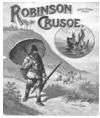 During all this time I never stopped thinking about escape. When I traveled 【小题1】 to the other side of the island (岛屿), I could see the other islands, and I said to 【小题2】, “Perhaps I can get there with a boat. Perhaps I can get back to England one day.”
So I decided 【小题3】 myself a boat. I cut down a big tree, and then began to make a long hole in it. It was hard 【小题4】, but about six months later, I had a very fine canoe (独木舟). Next, I had to get it down to the sea. How silly I was! Why didn’t I think 【小题5】I began work? Of course, the canoe was too heavy. I couldn’t m
 ove it! I pulled and pushed and 【小题6】 everything, but it didn’t move. I was very 【小题7】 for a long time after that.
That happened in my fourth year on the island. In my 【小题8】 year I did make myself a smaller canoe, but I did not try to escape in it. The boat was 【小题9】 small for a long journey, and I did not want to die at sea. The island was my 【小题10】 now, not my prison, and I was just happy to be alive. 查看习题详情和答案>>