网址:http://m.1010jiajiao.com/timu3_id_2702319[举报]
exchange
1)n.(a case of)the act or action of exchanging
e.g.There was an ________ of shots between our army and the enemy's.
2)n.a place where business men meet to buy and sell(goods of the stated type)
e.g.People sell shares in the companies at the STOCK ________.
3)v.(of a person or organization)to give and receive(something in return for something else)
e.g.Football players always ________ their T-shirt after the match.
Where can I ________ my dollars for pounds?
4)exchange words:to quarrel
e.g.Some teenage girls like ________ when they are not satisfied with others.
5)exchange blows:fight
e.g.It's better to talk with each other than ________.
6)exchange rate:the value of the money of one country compared to that of another country
e.g.What's the ________ today?
| |||||
王曾,字孝先,青州益都人。少孤,从学于里人张震,善为文辞。咸平中,由乡贡试礼部、廷对皆第一。杨亿见其赋,叹曰:“王佐器也。”宰相寇准奇之,特试政事堂,授秘书省著作郎、直史馆、三司户部判官。帝尝晚坐承明殿,召对久之;既退,使内侍谕曰:“向思卿甚,故不及朝服见卿,卿勿以我为慢也。”其见尊礼如此。
出知应天府。天禧中,民间讹言有妖起若飞帽。夜搏人,自京师以南,人皆恐。曾令夜开里门,敢倡言者即捕之,卒无妖。天圣四年夏,大雨。传言汴口决,水且大至,都人恐,欲东奔。帝问曾,曾曰:“河决奏未至,第民间妖言尔,不足虑也。”已而果然。
陕西转运使置醋务,以榷其利,且请推其法天下,曾请罢之。
曹利用恶曾班己上,尝怏怏不悦。及利用坐事,太后大怒,曾为之解。太后曰:“卿尝言利用强横,今何解也?”曾曰:“利用素恃恩,臣故尝以理折之。今加以火恶,则非臣所知也。”太后意少释,卒从轻议。
以彰信军节度使复知天雄军,契丹使者往还,敛车徒而后过,无敢哗者。人乐其政,为画像而生祠之。曾进退士人,莫有知者。范仲淹尝问曾曰:“明扬士类,宰相之任也。公之盛德,独少此耳。”曾曰:“夫执政者,恩欲门己,怨使谁归?”仲淹服其言。
曾资质端厚,眉目如画。在朝廷,进止皆有常处,平居寡言笑,人莫敢干以私。少与杨亿同在侍从,亿喜谈谑,凡僚友无不狎侮。至与曾言,则曰:“余不敢以戏也。”平生自奉甚俭,有故人子孙京来告别,曾留之具馔,食后,合中送数轴简纸,启视之,皆他人书简后裁取者也。
(《宋史·王曾传》)
【小题1】对下列句子中划线的词的解释,不正确的一项是( )
| A.出知应天府知:主持、掌管 |
| B.曹利用恶曾班己上,尝怏怏不悦班:等级、次第 |
| C.人莫敢干以私干:求取 |
| D.太后大怒,曾为之解解:解决 |
①夫执政者,恩欲归己,怨使谁归?
②在朝廷,进止皆有常处,平居寡言笑。
③明扬士类,宰相之任也。公之盛德,独少此耳。
④利用素恃恩,臣故尝以理折之。今加以火恶,则非臣所知也。
⑤契丹使者往还,敛车徒而后过,无敢哗者。
⑥曾令夜开里门敢倡言者即捕乏,卒无妖。
| A.①③④ | B.②④⑤ | C.①②④ | D.②④⑥ |
| A.宋代咸平年间,王曾参加会试和殿试,都考了第一。宰相寇准看了他的文赋,慨叹道: “这真是王佐之材啊 !”认为他是奇才。 |
| B.陕西转运使以地方特产醋来谋利并且请求朝廷在全国推行这一办法的行为,被王曾上 奏废止,表现了王曾的爱民思想。 |
| C.大臣曹利用与王曾的个人感情上有嫌隙,王曾对他的专横跋扈也常常加以抵制,但是 关键时刻却没有落井下石,表明了他的不畏权势和胸怀坦荡。 |
| D.王曾之所以赢得朝廷内外、黎民百姓甚至外族使者的尊敬,除了他的文章才华、为政 |
【小题4】把文言文阅读材料中画横线的句子翻译成现代汉语。(10分)
(1)向思卿甚,故不及朝服见卿,卿勿以我为慢也。(4分)
(2)河决奏未至,第民间妖言尔,不足虑也。(3分)
(3)人乐其政,为画像而生祠之。(3分) 查看习题详情和答案>>
One Sunday afternoon, I went shopping at Wal-Mart . But I never thought I would have a life changing experience at WalMart.
Although my thoughts were only on speed, the checkout line I was standing in wasn’t moving as quickly as I wanted, and I looked towards the cashier.
There stood a man in his seventies, wearing glasses and a nice smile. I thought, well, he’s an old guy!
For the next few minutes I watched him. He greeted every customer before scanning the items. Sure, his words were the usual, “How’s it going?” But he did something different—he listened to people carefully and then he would reply to what they had said
I thought it was strange. I has grown used to people asking me how I was doing simply out of conversational habit. I could say, “I just found out I have six months to live,” and someone would reply, “Have a great day!”
But that wasn't the end.
He gave them the change, walked around the counter (柜台), and hugged them with his right hand in an act of friendship. He looked at the customers in the eyes. “I want to thank you for shopping here today,” he told them. “You have a great day. Bye-bye.”
The smiling looks on the faces of the customers were priceless. All had been touched by his simple gesture—and in a place they never expected. They would gather their things and walk out, smiling.
Of course, he did the same to me and I got to know his name—Marty.
Who was that guy? It was as if Sam Walton (沃尔玛的创始人)had come back from the dead and invaded this old guy’s body.
I had never walked away from that shop feeling like that.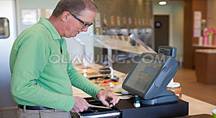
【小题1】The underlined word “customer” mean________ in Chinese.
| A.营业员 | B.顾客 | C.经理 | D.供货商 |
| A.there were some big purchases |
| B.the writer was not patient enough |
| C.the cashier couldn't work as fast as others |
| D.the cashier did more than scanning the items |
| A.they don’t really care what you may answer |
| B.they are just practicing their conversation ability |
| C.they are asking for your personal information |
| D.they don’t expect to hear any answers |
| A.clever and imaginative | B.strange andstubborn |
| C.kind and sincere | D.practical and creative |
| A.Our everyday life is always full of surprises. |
| B.Most customers enjoy being treated this way. |
| C.Being different is a good way of doing business |
| D.A little positive (积极的)action can make a big difference. |
孔子游乎缁帷之林,休坐乎杏坛之上。弟子读书,孔子弦歌鼓琴。奏曲未半,有渔父者,下船而来,须眉交白,被发揄袂,行原以上,距陆而止,左手据膝,右手持颐以听。曲终而招子贡、子路二人俱对。
客指孔子曰:“彼何为者也?”子路对曰:“鲁之君子也。”客问其族。子路对曰:“族孔氏。”客曰:“孔氏者何治也?”子路未应,子贡对曰:“孔氏者,性服忠信,身行仁义,饰礼乐,选人伦。上以忠于世主,下以化于齐民,将以利天下。此孔氏之所治也。”又问曰:“有土之君与?”子贡曰:“非也。”“侯王之佐与?” 子贡曰:“非也。”客乃笑而还,行言曰:“仁则仁矣,恐不免其身。苦心劳形以危其真。呜呼!远哉其分于道也!”
子贡还,报孔子。孔子推琴而起,曰:“其圣人与!”乃下求之,至于泽畔,方将杖拏而引其船,顾见孔子,还乡而立。孔子反走,再拜而进。
客曰:“子将何求?”孔子曰:“曩者先生有绪言而去,丘不肖,未知所谓,窃待于下风,幸闻咳唾之音以卒相丘也。”客曰:“嘻!甚矣,子之好学也!”孔子再拜而起,曰:“丘少而修学,以至于今,六十九岁矣,无所得闻至教,敢不虚心!”
客曰:“同类相从,同声相应,固天之理也。吾请释吾之所有而经子之所以。子之所以者,人事也。天子、诸侯、大夫、庶人,此四者自正,治之美也;四者离位,而乱莫大焉。官治其职,人忧其事,乃无所陵。故田荒室露,衣食不足,征赋不属,妻妾不和,长少无序,庶人之忧也;能不胜任,官事不治,行不清白,群下荒怠,功美不有,爵禄不持,大夫之忧也;廷无忠臣,国家昏乱,工技不巧,贡职不美,春秋后伦,不顺天子,诸侯之忧也;阴阳不和,寒暑不时,以伤庶物,诸侯暴乱,擅相攘伐,以残民人,礼乐不节,财用穷匮,人伦不饬,百姓淫乱,天子有司之忧也。今子既上无君侯有司之势而下无大臣职事之官而擅饰礼乐选人伦以化齐民不泰多事乎!”
(节选自《庄子·渔父》)
【小题1】下列对划线的字解释不正确的一项是( )
| A.身行仁义身:亲自 | B.顾见孔子,还乡而立乡:故乡 |
| C.孔氏者何治也治:研习 | D.人忧其事,乃无所陵陵:侵扰 |
| A.休坐乎杏坛之上胡为乎惶惶欲何之 |
| B.行原以上,距陆而止去以六月息者也 |
| C.其圣人与其如土石何 |
| D.乃下求之乃幽武置大窖中 |
| A.今子既上无君侯/有司之势而下/无大臣职事之官/而擅饰礼乐/选人伦以化齐民/不泰多事乎! |
| B.今子既上无君侯有司之势/而下无大臣职事之官/而擅饰礼乐/选人伦以/化齐民/不泰多事乎! |
| C.今子既上无君侯/有司之势而/下无大臣/职事之官而擅饰礼乐/选人伦以化齐民/不泰多事乎! |
| D.今子既上无君侯有司之势/而下无大臣职事之官/而擅饰礼乐/选人伦/以化齐民/不泰多事乎! |
(1)左手据膝,右手持颐以听。曲终而招子贡、子路二人俱对。
(2)幸闻咳唾之音以卒相丘也。 查看习题详情和答案>>