网址:http://m.1010jiajiao.com/timu3_id_2685894[举报]
-Really? Which country ________you ____________ ?
B. have ; been to
C. did ; go
D. have ; gone
Now many young people are traveling around the world on their own not because they have no one to travel with, but because they prefer to go alone.
Kristina Wegscheider from California first traveled alone when she was at college and believes that it is something everyone should do at least once in their life. “It opens up your mind to new things and pushes you out of your comfort zone.” Wegscheider has visited 46 countries covering all seven continents.
In foreign countries, with no one to help you read a map, look after you if you get ill, or lend you money if your wallet is stolen, it is challenging. This is what drives young people to travel alone. It is seen as character building and a chance to prove that they can make it on their own.
Chris Richardson decided to leave his sales job in Australia to go traveling last year. He set up a website, The Aussie Nomad, to document his adventures. He says he wished he had traveled alone earlier.“ The people you meet, the places you visit, or the things you do, everything is up to you and it forces you to grow as a person,” said the 30-year-old man.
Richardson describes traveling alone like “a shot in the arm”, which “makes you a more confident person that is ready to deal with anything.” He said, “The feeling of having conquered something on my own is a major part of what drives me each day when I’m dealing with a difficult task.” “I walk around with my head up because I know deep down inside that nothing is impossible if you try.”
The great 19th century explorer John Muir once said, “Only by going alone in silence can one truly get into the heart of the wilderness.”
【小题1】Which of the following will Kristina Wegscheider agree with?
| A.Traveling alone is a necessary experience for everyone. |
| B.It is more meaningful to travel in foreign countries. |
| C.It is comfortable to travel around without a friend. |
| D.Traveling abroad helps people to find new things. |
| A.you have to make things on your own |
| B.it is hard for you to prove yourself to others |
| C.you can only depend on yourself whatever happens |
| D.it will finally build your character |
| A.He started traveling alone at an early age. |
| B.He was once shot in the arm. |
| C.He used to work as a salesman. |
| D.His website encourages others a lot. |
| A.Travel Abroad | B.Travel alone |
| C.Travel Light | D.Travel Wide and Far |
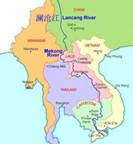
My sister has one serious shortcoming(缺点). She can be really stubborn(固执的). Although she didn't know the best way of getting to places, she insisted(坚持) that she organize the trip properly. Now, I know that the proper way is always her way. I kept asking her, "When are we leaving and when are we coming back?" I asked her whether she had looked at a map yet. Of course, she hadn't; my sister doesn't care about details(细节). So I told her that the source (源头)of the Mekong River is in Qinghai Province. She gave me a determined look—the kind that said she would not change her mind. When I told her that our journey would begin at an altitude of more than 5,000 metres, she seemed to be excited about it. When I told her the air would be hard to breathe(呼吸) and it would be very cold, she said it would be an interesting experience. I know my sister well. Once she has made up her mind, nothing can change it. Finally, I had to give in.
Several months before our trip, Wang Wei and I went to the library. We found a large atlas with good maps that showed details of world geography. From it we could see that the Mekong River begins in a glacier on a mountain in Qinghai Province. At first the river is small and the water is clear and cold. Then it begins to move quickly. It becomes rapids as it passes through deep valleys, travelling across western Yunnan Province. Sometimes the river becomes a waterfall. We were both surprised to learn that half of the river is in China. After it leaves China, the Mekong becomes wide, brown and warm. As it enters Southeast Asia, its pace slows. At last, the river delta enters the South China Sea.
小题1:Who planned the trip to the Mekong River?
| A.Wang Kun | B.Wang Wei | C.Dao Wei | D.Yu Hang |
| A.Kunming | B.western Yunnan Province | C.Qinghai Province | D.the South China Sea |
| A.An island. | B.Taiwan. | C.Some lions. | D.A waterfall. |
| A.Wang Kun and Wang Wei dreamed about taking a bike trip and finally they got the chance. |
| B.Wang Kun thought that it would be easy to start their trip in Qinghai. |
| C.Wang Kun had to stop arguing with Wang Wei and accept her idea finally. |
| D.Wang Kun and Wang Wei didn’t know that half of the river is in China before they went to the library. |
| A.The Dream And The Plan | B.A Trip In The Mountain |
| C.The Mekong River | D.A Great Bike Trip |
In modern society, people use money every day. It seems that it is very important in our life. That’s because without money you can’t buy any goods(商品) you want. But I think few people know the history of money.
Long ago, people did not need money. They lived on wild animals, fruits and other plants. As time passed, people learned to raise animals and crops. Sometimes, families produced more than they needed, so they started to trade with other families. Later, people began to use money as a means of exchange. However, it was not the kind of money we use today. They used shells, rice, salt, large stones, etc.
During the 600s BC, people began using coins as money. They soon found that coins were easier to carry than goods and lasted a long time. Later, countries began to make their own coins.
The Chinese were the first to use paper money, probably as early as the 11th century. The Italian traveler Marco Polo saw the Chinese using money when he visited China in the 1200s. However, European countries did not start using paper money until 1600s.
Today, we have many ways to pay for things. We do not use coins or paper money. Often, people prefer to pay for things by card. Paying with a card is easier and safer than carrying around a lot of “real” money.
【小题1】 People used ________ as a means of exchange before the 7th century BC.
A. paper money B. card
C. large stone D. coins
【小题2】From the passage, we know that European countries used paper money in the ________.
| A.11th century | B.12th century |
| C.16th century | D.17th century |
| A.Marco Polo was from Canada. |
| B.Chinese used paper money earlier than Italy. |
| C.Today people often prefer to pay for things by salt. |
| D.Carrying around much “real” money is easier and safer than Paying with a card. |
Long ago, people did not need money. They lived on wild animals, fruits and other plants. As time passed, people learned to raise animals and crops. Sometimes, families produced more than they needed, so they started to trade with other families. Later, people began to use money as a means of exchange. However, it was not the kind of money we use today. They used shells, rice, salt, large stones, etc.
During the 600s BC, people began using coins as money. They soon found that coins were easier to carry than goods and lasted a long time. Later, countries began to make their own coins.
The Chinese were the first to use paper money, probably as early as the 11th century. The Italian traveler Marco Polo saw the Chinese using money when he visited China in the 1200s. However, European countries did not start using paper money until 1600s.
Today, we have many ways to pay for things. We do not use coins or paper money. Often, people prefer to pay for things by card. Paying with a card is easier and safer than carrying around a lot of “real” money.
小题1: People used ________ as a means of exchange before the 7th century BC.
A. paper money B. card
C. large stone D. coins
小题2:From the passage, we know that European countries used paper money in the ________.
| A.11th century | B.12th century |
| C.16th century | D.17th century |
| A.Marco Polo was from Canada. |
| B.Chinese used paper money earlier than Italy. |
| C.Today people often prefer to pay for things by salt. |
| D.Carrying around much “real” money is easier and safer than Paying with a card. |