网址:http://m.1010jiajiao.com/timu3_id_2683603[举报]
根据短文内容及首字母提示,填写所缺单词,使短文意思完整。每空限填一词。
Parents sometimes learn much from their children.
Many years ago, a 1 my friend David worked day and night, he was still not rich. One day, when he arrived h 2 after work, he found his 3-year-old daughter was decorating a box with some expensive wrapping paper. He thought she was w 3 money and became angry with her. He even p 4 his daughter by beating her. However, the little girl brought the box to her father the next morning and said, “This is for you, Daddy. Merry Christmas!” He was embarrassed (尴尬) by his overreaction (过激反应), but he became angry a 5 when he found the box was empty.
He shouted at her, “Don’t you know that when you give someone a present, there should be s 6 inside it?”
The little girl looked up at him with t 7 in her eyes and said, “Oh, Daddy. I blew kisses in the box. I filled it with my l 8 . All for you, Daddy.”
The father was very surprised. He put his arms around his little girl, and said s 9 to her. Later, David told me that he kept that box by his bed for years. When he was discouraged(情绪低落), he would take out an imaginary (想像的) kiss from the box and r 10 the love of the child.
查看习题详情和答案>>
Mrs. Thompson came to the 5th grade class and noticed that Teddy was always alone. Also, he did badly in his studies.When she reviewed Teddy’s past records,she find he was a good child at first,but he began to change when his mother got ill. Finally he lost interest in school after his mother’s death.
Mrs. Thompson realized the problem and felt sorry for him.She felt even worse when her students brought her beautifully-covered Christmas presents.His presents were covered with some old paper. Some children laughed when she found a bracelet(手镯)with some of the stones missing, and a bottle with a little perfume(香水). But she said how pretty the bracelet was, putting it on, and dabbing some perfume on her hand.Teddy stayed after school for a long time just to say,“Mrs. Thompson,today you smelled just like my mom used to.”After the child left,she cried for quite a long time.
On that very day,she taught not only knowledge but also children. As she worked with Teddy,his mind seemed to come alive. By the end of the year,Teddy had become one of the smartest children in the class.
A year later,Teddy left school. She found a note under her door,from Teddy,saying that she was the best teacher he ever had in his life. After that, these words were repeated in each of his letters to her.
Then after he finished college, Teddy wrote telling her that he had met a pretty girl and was going to get married. He explained that his father was dead,and that he wondered if Mrs. Thompson might sit at the wedding in the place for the mother of the groom(新郎).
Of course,Mrs. Thompson did. She wore the bracelet and the perfume that Teddy remembered his mother wearing on their last Christmas together.
They hugged(拥抱)each other,and Teddy whispered in Mrs. Thompson’s ear,“Thank you,Mrs. Thompson,for making me feel important,and showing me that I could make a difference.”
Mrs. Thompson,with tears in her eyes,whispered back,“Teddy,it’s not like that. You were the one who taught me that I could make a difference. I didn’t know how to teach until I met you.”
【小题 1 】What made Teddy change before Mrs. Thompson came?
A. His mother’s illness and death. B. His classmates’’ laughing at him.
C. His past records by his teachers. D. His interest in some other things.
【小题 2 】Teddy left a note for Mrs. Thompson when he left school mainly to say _______.
A. sorry B. hello C. thanks D. goodbye
【小题 3】What kind of person was Mrs. Thompson?
A. Wise and humorous. B. Kind and helpful.
C. Selfish and impatient. D. Strict and stubborn.
【小题 4 】 We can learn from the passage that _______.
A. Mrs. Thompson became Teddy’s mother at last.
B. Mrs. Thompson didn’t know how to teach all her life.
C. Teddy didn’t finish college before he got married.
D. Mrs. Thompson and Teddy each made a difference.
查看习题详情和答案>>
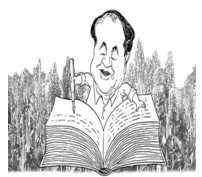
Born into a farmer’s family, life was not easy when I was a kid. We were so poor that we often did not know where our next meal was coming from. I had to sell cabbages at the marketplace to support my family.
A storyteller once came to the marketplace, and I went to listen to him. My mother was unhappy with me for forgetting my job. But that night, while she was making clothes for us under the weak light of an oil lamp, I couldn't help retelling stories I'd heard that day. She listened impatiently at first, since in her eyes professional(职业的) storytellers were smooth-talking men—nothing good ever came out of their mouths. But slowly she was attracted by my retold stories, and from that day on, she never gave me any task on market days, unspoken agreement to enjoy new stories. As a repayment(回报)for Mother's kindness and a way to show off my memory, I'd retell the stories for her in lively detail. Soon, she wasn't the only member of my audience, which later included my elder sisters, my aunts, even my stubborn grandmother.
I knew she was worried about me. Talkative kids are not well thought of in our village, for they can bring trouble to themselves and to their families when they talk too much. Mother often reminded me not to talk so much, wanting me to be a silent and modest teenager. However, my natural desire(渴望)to talk never went away, and that is what makes my name – Mo Yan, which means ‘no speaking’. This strong wish to talk also improved my ability to express myself, which is important for writers who are also considered as storytellers.
【小题1】Mo Yan lived a/an ________ life when he was young.
| A.hard | B.colourful | C.easy | D.rich |
| A.little Mo Yan was interested in selling vegetables |
| B.his mother was attracted by the retold story at first |
| C.his mother didn’t let him listen to the new stories again |
| D.little Mo Yan had quite a good memory |
| A.Because she thought they never said anything good. |
| B.Because she thought they couldn’t make much money. |
| C.Because she thought they would affect Mo Yan’s schoolwork. |
| D.Because she thought most people didn’t like listening to stories. |
| A.silent | B.modest | C.talkative | D.trouble-making |
| A.My Unlucky Childhood | B.A Storyteller’s Childhood |
| C.My Kind Grandmother | D.More talking leads to success |
If I ask you to shut your eyes and gave you a piece of apple to eat, would you be able to tell me what it is just by tasting it? Of course, you could. Your tongue is covered with tiny “taste buds” which help you know what different foods taste like. Do you know that foods would taste different if you did not have a nose? This experiment shows how important your nose is when you taste things.
What You Need:
• a friend to help
• small pieces of any food like carrot, orange, banana
• small pieces of apple, raw(生的) potato, and onion
What You Do:
There are actually three different experiments. You and your friend should take turns to try them on each other.
Experiment 1:
Have your friend close her eyes and open her mouth.
Give her a piece of the food and ask her to taste it.
Then, ask her what she thinks it is. She will probably guess correctly.
Experiment 2:
While your friend has her eyes closed, give her a piece of the raw potato. At the same time, hold a piece of apple right under her nose. Ask her to eat the potato (but don’t call it by name) and tell you what she thinks it is. She will say it is a piece of apple!
Experiment 3: (for the brave)
Take a piece of raw onion. You don’t have to close your eyes this time. Squeeze your nose closed with your other hand so that no smells can get into your nose. Now take a nibble of the onion. Surprise! As long as you hold your nose, you will not be able to taste the onion.
The Science Secret
You already know the science secret. Your nose and your tongue work together to make food taste the way it does. Your tongue, however, can taste only certain flavors like salty, bitter, sour, and sweet. All of the other “tastes” are actually “smells,” and you need your nose to “taste” them. Oh, and you might use this science secret the next time you are told to eat something you don’t like the taste of. If you hold your nose while you eat it, you won’t “taste” it at all.
1. According to this article, what could a reader know about food?
A. People hold their noses to eat onions. B. If you can smell potatoes, you will taste apples.
C. People need a sense of smell to taste some food. D. If you close your eyes, food will taste better.
2.What is the most likely reason Experiment 3 is called “for the brave”?
A. You keep your eyes open. B. You have to eat a raw onion.
C. You have to squeeze your nose. D. You do the experiment alone.
3.What’s the best title of the passage?
A. Your Eyes Knows B. Your Nose Knows
C. Your Mouth Knows D. Your Tongue Knows
查看习题详情和答案>>
根据对话内容,从方框中选择适当的句子填入相应的空白处。
Zhou Jie: Hello, Liu Hong. (1)__________
Liu Hong: I feel happy. (2)__________ She is from Canada.
Zhou Jie: Does she look the same as us?
Liu Hong: No, she doesn’t.
Zhou Jie: Really? (3)__________
Liu Hong: Her hair is long and blond.
Zhou Jie: What colour are her eyes?
Liu Hong: Blue. She has blue eyes.
Zhou Jie: (4)__________
Liu Hong: She is 1.58 meters tall.
Zhou Jie: (5)__________
Liu Hong: Her name is Helen.
Zhou Jie: Oh, I know. She is a good student in our school.
|
A. What colour is her hair? B. How tall is she? C. I have a new friend. D. What’s her name? E. How do you feel today? |
查看习题详情和答案>>