网址:http://m.1010jiajiao.com/timu3_id_2641779[举报]
遣词造句。根据每题所提供图画的情景,提示词,写一个与图画情景相符的句子。(每小题2分,共10分)
1. what, cute !

2. be popular with, young people .

3. had better, before meals .

4. play the violin, at 9:00 yesterday ?

5. tall, than .
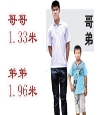
查看习题详情和答案>>
To protect the environment, we are on the way. Here are a few things we can do.
Unwanted gifts? Give them away!
Have you ever received a gift that you didn’t like? Did you throw it away? If so, you can have another choice now. Two British companies hopes people will give away their unwanted gifts to them. And they will resell the gifts to raise money for the poor. In this way, the gifts can be refused and have a future life. And people can make a difference to the world.
Wear the trousers that reduce(减少) pollution!
A chemistry scientist and a fashion designer (时装设计师) have created a new kind of trousers. The trousers are made of a new material which can help reduce air pollution around us. Scientists have tested the material. The result shows that it isn’t harmful to human. This new kind of trousers may appear at the market in two years. Professor Ryan said, “If thousands of people wear the trousers, the air quality will be improved.”
Plant trees with Felix
Felix Finkbeiner, a 14-year-old German boy, is not famous as a child actor but an environment hero. At the age of 9, Felix got the idea that children could do something to protect the environment. So he started a club. Felix soon got support from children all over the world. Some of them have become his good friends. The club has an aim of planting 212 million trees. They have planted over 3.5 million trees all around the world. Felix said, “The answer to controlling global(全球的) warming is trees—lots of trees!”
1.The companies resell the unwanted gifts .
A. to make the unwanted gifts useful B. to help people learn to think carefully
C. to save money from it D. to make money for themselves.
2.The trousers mentioned in the passage .
A. have been created by a physics scientist and a fashion designer
B. can help make air pollution less
C. will do harm to people
D. will be popular in two years
3.Felix started a club .
A. to become famous
B. to become a child actor
C. to protect the environment with other children
D. to make friends with the children around the world
查看习题详情和答案>>
Once when I was a teenager, my father and I were standing in line to buy tickets for the circus. Finally, there was only one family between the ticket office and us. This family made a big impression on me.
There were eight children, all probably under the age of 12. You could tell they didn’t have a lot of money. Their clothes were not expensive, but they were clean. The children talked excitedly about the clowns. It was clearly a very important day out for them. The father and mother seemed happy as they could be.
The tickets lady asked how many tickets the father wanted, he proudly answered, “Please let me buy eight children’s tickets and two adults’ tickets, so I can take my family to the circus.”
The ticket lady told him the price.
The man’s wife lowered her head. There was no longer a smile on the man’s face. He quietly asked, “How much did you say?”
The ticket lady again told him the price.
The man obviously didn’t have enough money. But how could he tell his kids the bad news?
Seeing what was happening, my dad took a $20 note from his pocket and dropped in on the ground. (We were not rich ourselves at all!) He then tapped the man on the shoulder and said, “Excuse me, sir, you dropped this.”
The man understood my father was helping him. He picked up the money, looked straight into my dad’s eyes, and in tears replied. “Thank you. This really means a lot to me and my family.”
Although we did not go to the circus that night, we didn’t go without.
1.Why does the writer say “Their clothes were not expensive, but they were clean” ( Paragraph 2)?
A. To show the children were well looked after.
B. To show cheap clothes could be popular.
C. To show how hard the mother worked.
D. To show how rich the family were.
2.Why was the poor man unhappy after he spoke with the ticket lady?
A. He had lost his money. B. His children were noisy.
C. The tickets were sold out. D. The tickets were too expensive.
3.Who did the $20 note belong to?
A. The poor man . B. The writer’s father.
C. The poor man’s wife. D. The ticket lady.
4.Why was the poor man in tears at the end of the story?
A. He found the money he lost. B. He wanted others to help him.
C. He made his children unhappy. D. He was thankful for the kindness.
5.Which of the following statements is probably true according to the passage?
A. The poor mans saw the circus that night.
B. The two families became close friends.
C. The writer’s father earned some money.
D. The writer saw the circs that night.
查看习题详情和答案>>
In the West, some people believe that personality can be predicted according to the time of the year the person was bor. From China comes the belief that the year of birth influences one’s personality. In the past century, a new belief ahs arisen: the idea that personality is related to one’s ABO blood type. People with blood type A, for example, are considered more likely to be serious, hard-working, and quiet, while people with blood type O are likely to be popular and outgoing, yet often unable to finish what they start. Though this belief continues to be strong, some people question whether it is true.
The blood-type personality theory(理论) started in Japan in 1927 when Furukawa Takehi noticed personality similarities and differences among his workers. This idea soon went out of fashion, but was brought back by a Japanese television host named Toshitaka Nomi in the 1970s. The belief is still strong in Japan and is increasingly popular in neighboring countries. Some young Koreans have taken to the theory. A recent study showed 76 percent of Koreans aged between13 and 64 believing in the blood-type personality connection. Though most Asians might believe in the blood-type theory, for many it seems harmless and not something to be taken too seriously.
Is the belief true? The scientists in Asia largely dismiss the belief as a modern-day superstition(迷信). Most studies have failed to find any strong connection between blood and personality. Generally, scientists warn against making predictions or important decisions based on this questionable theory.
1. The writer uses blood type A and O as an example to explain ________.
A. the difference between to two blood types
B. the relationship between the two blood types
C. the influence of blood type on one’s behavior
D. the connection between personality and blood type
2.What does the underlined sentence in Paragraph 2 mean?
A. It was lightly believed. B. It was brought to them.
C. They liked and accepted it. D. They stole the idea from others
3. Which of the following is true according to the passage?
A. Most scientists in Asia don’t believe in the theory.
B. The blood-type theory began in Japan in the 1970s.
C. The blood-type personality theory is about blood type.
D. People don’t change their personality to match the theory.
4. What is the best title for the passage?
A. Is the blood-type theory poplar? B. Is the personality changeable?
C. Is it in your blood? D. Is it in you mind?
查看习题详情和答案>>
In the West, some people believe that personality can be predicted according to the time of the year the person was bor. From China comes the belief that the year of birth influences one’s personality. In the past century, a new belief ahs arisen: the idea that personality is related to one’s ABO blood type. People with blood type A, for example, are considered more likely to be serious, hard-working, and quiet, while people with blood type O are likely to be popular and outgoing, yet often unable to finish what they start. Though this belief continues to be strong, some people question whether it is true.
The blood-type personality theory(理论) started in Japan in 1927 when Furukawa Takehi noticed personality similarities and differences among his workers. This idea soon went out of fashion, but was brought back by a Japanese television host named Toshitaka Nomi in the 1970s. The belief is still strong in Japan and is increasingly popular in neighboring countries. Some young Koreans have taken to the theory. A recent study showed 76 percent of Koreans aged between13 and 64 believing in the blood-type personality connection. Though most Asians might believe in the blood-type theory, for many it seems harmless and not something to be taken too seriously.
Is the belief true? The scientists in Asia largely dismiss the belief as a modern-day superstition(迷信). Most studies have failed to find any strong connection between blood and personality. Generally, scientists warn against making predictions or important decisions based on this questionable theory.
【小题1】 The writer uses blood type A and O as an example to explain ________.
| A.the difference between to two blood types |
| B.the relationship between the two blood types |
| C.the influence of blood type on one’s behavior |
| D.the connection between personality and blood type |
| A.It was lightly believed. | B.It was brought to them. |
| C.They liked and accepted it. | D.They stole the idea from others |
| A.Most scientists in Asia don’t believe in the theory. |
| B.The blood-type theory began in Japan in the 1970s. |
| C.The blood-type personality theory is about blood type. |
| D.People don’t change their personality to match the theory. |
| A.Is the blood-type theory poplar? | B.Is the personality changeable? |
| C.Is it in your blood? | D.Is it in you mind? |